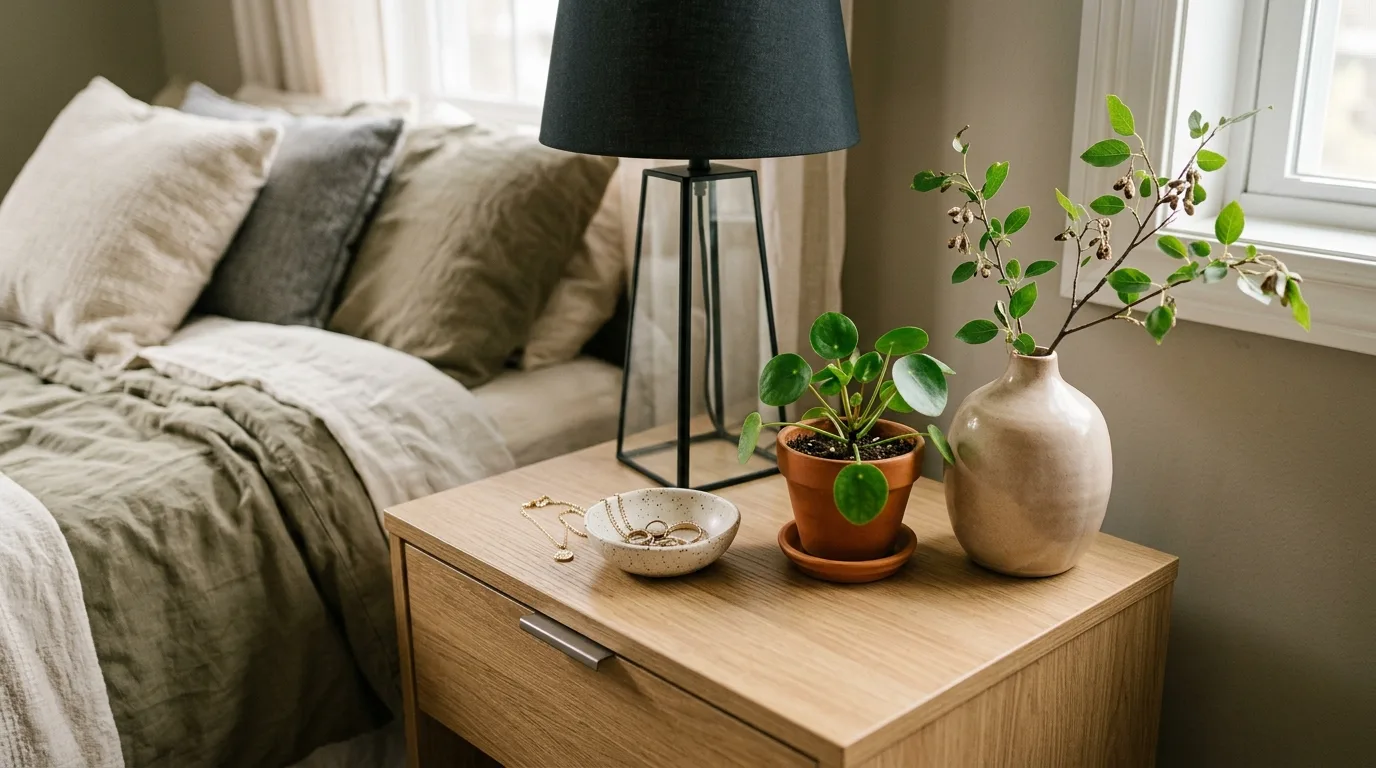
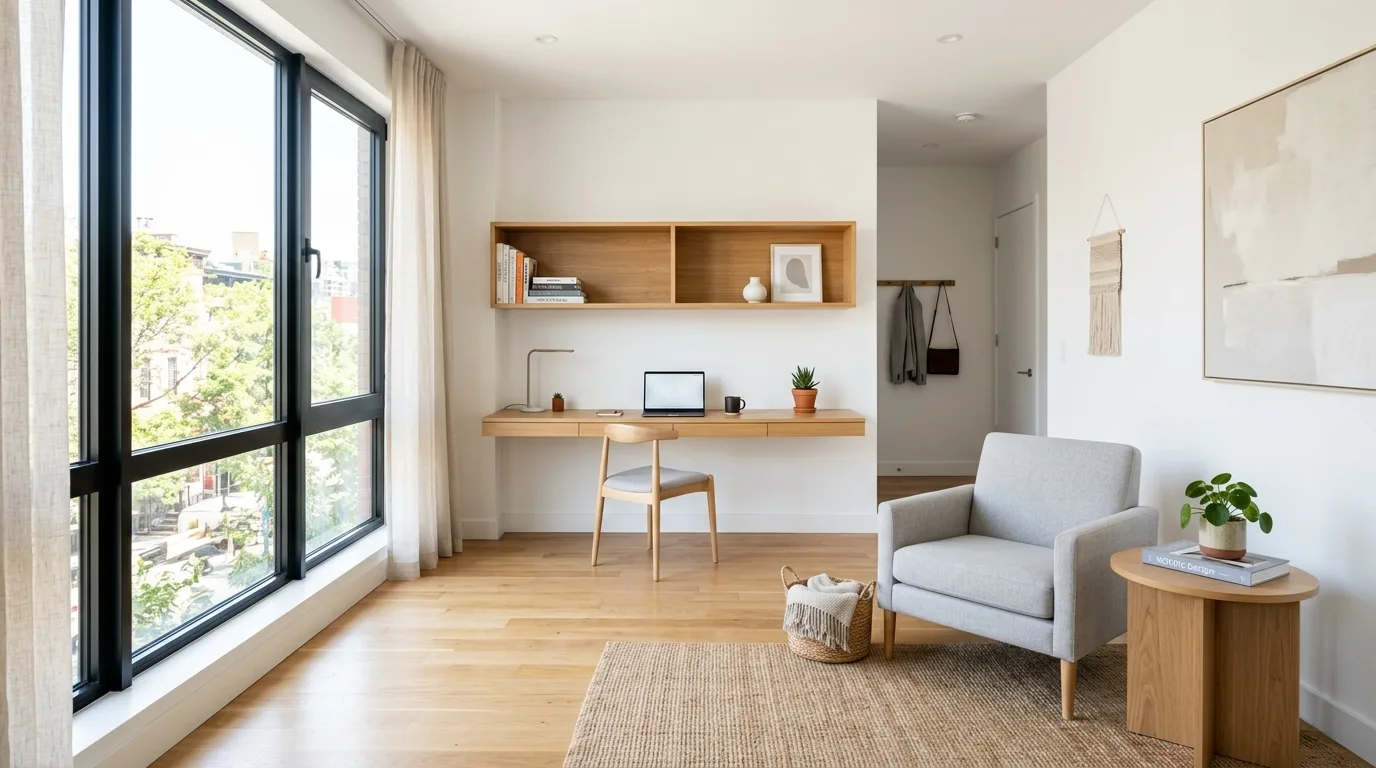
In a small bedroom, the bed is the piece that controls everything else. Choosing the right position can create better walking space, improve storage options, and make the room feel more restful instead of cramped.
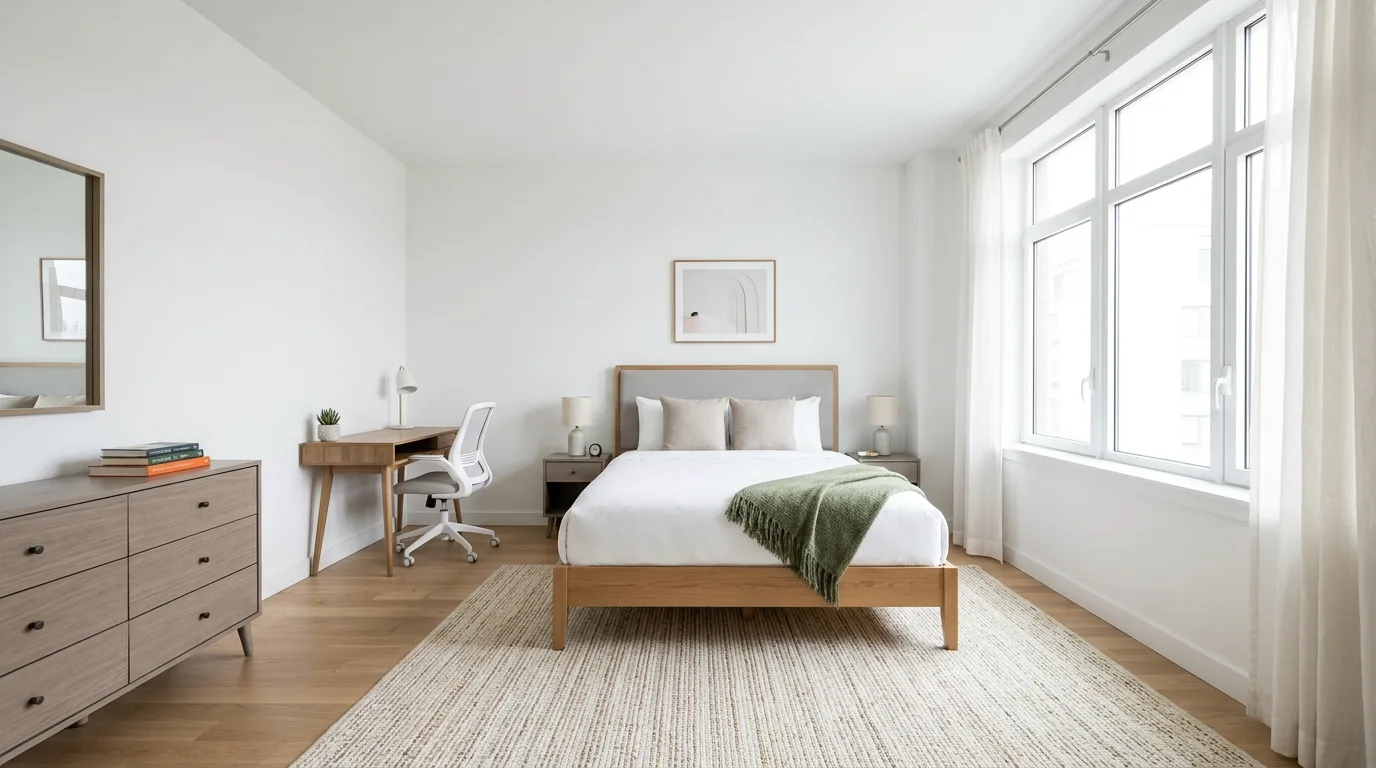
Place the bed on the longest wall
This is often the most straightforward layout because it frees up the remaining walls for storage or a dresser. It also tends to create the cleanest walking path through the room.
Styling tip: Use one contained storage zone so the room stays easier to maintain day to day.
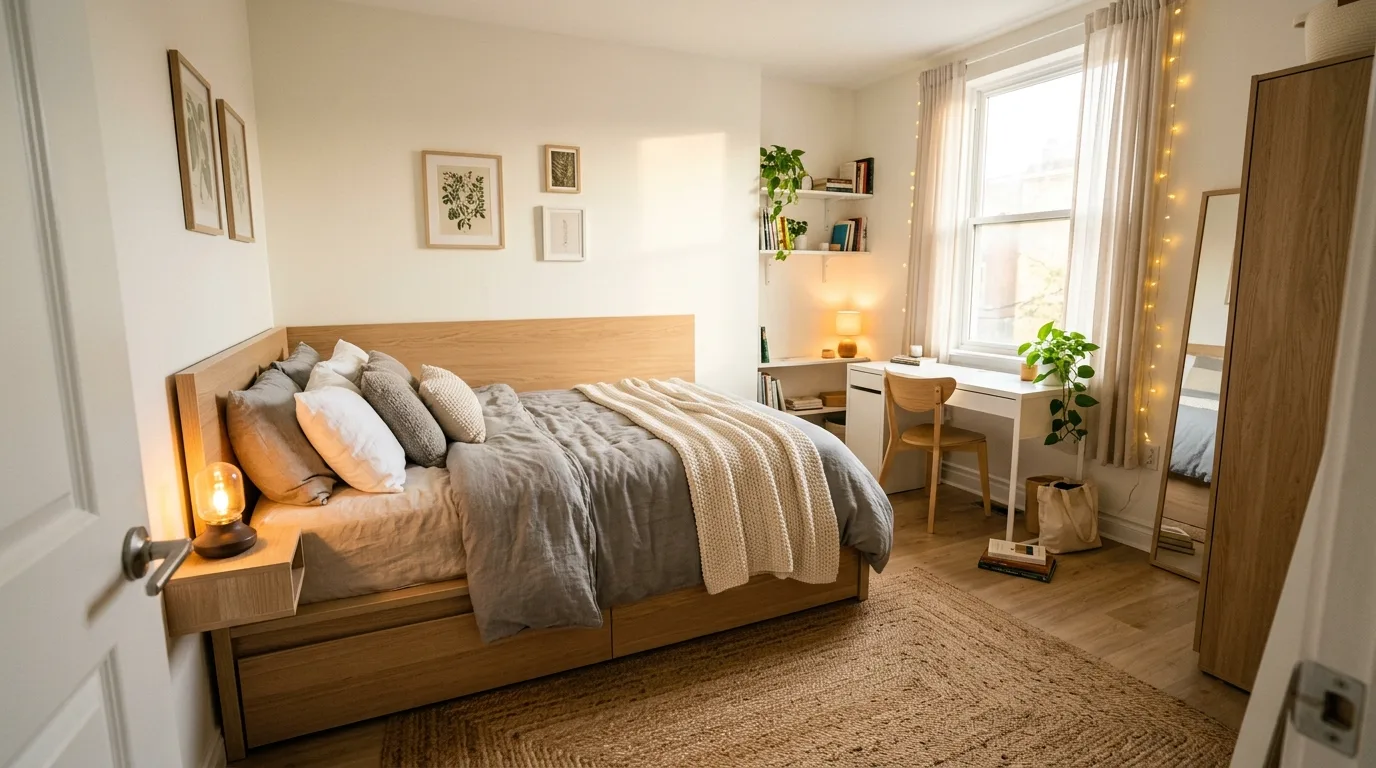
Tuck the bed into a corner
Corner placement can be a smart choice in especially tight bedrooms where a centered bed wastes too much usable space. It is practical for kids' rooms, guest rooms, and narrow layouts.
Styling tip: Leave a little breathing room around the main pieces so the space does not feel crowded.
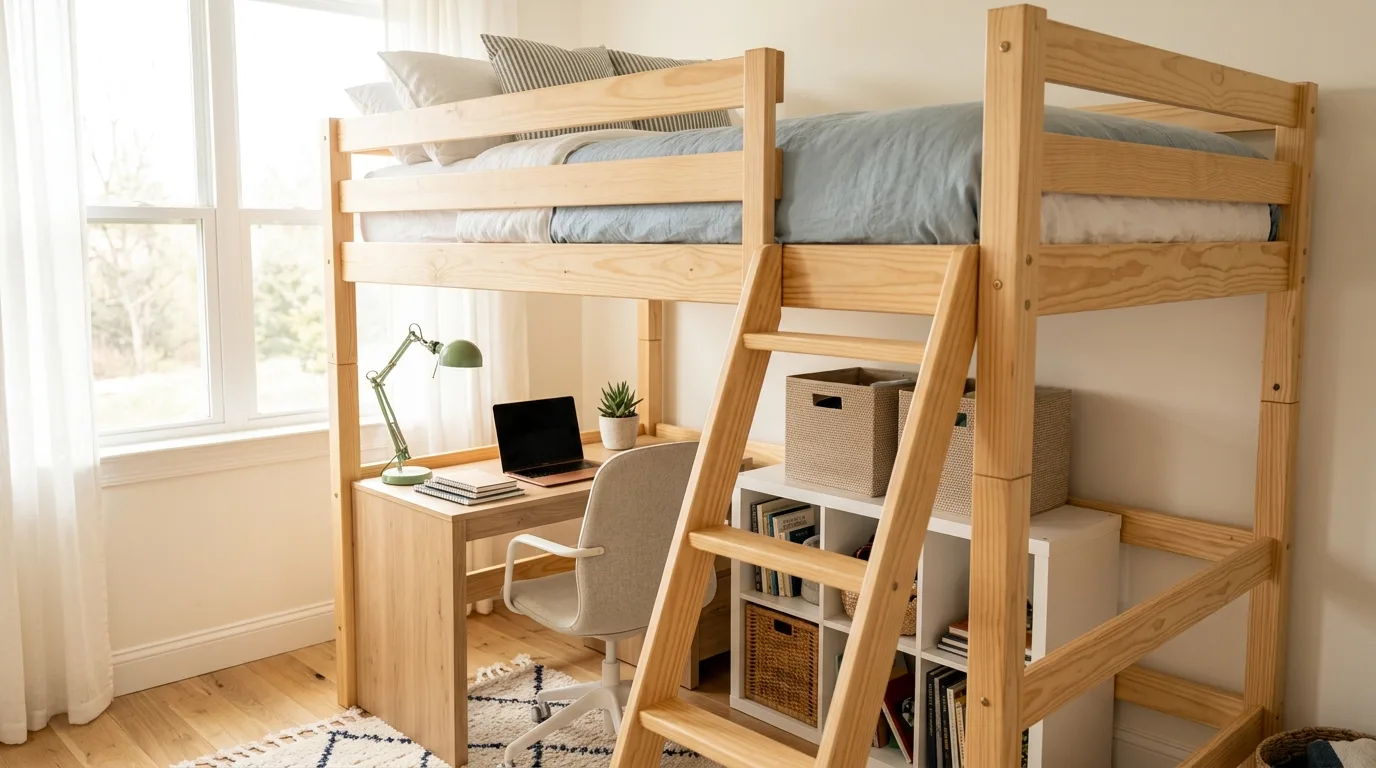
Consider a lofted bed
A lofted setup opens the area underneath for a desk, storage, or seating, making it one of the best solutions for very limited square footage. It works especially well in teen rooms or studio-style spaces.
Styling tip: Use one contained storage zone so the room stays easier to maintain day to day.
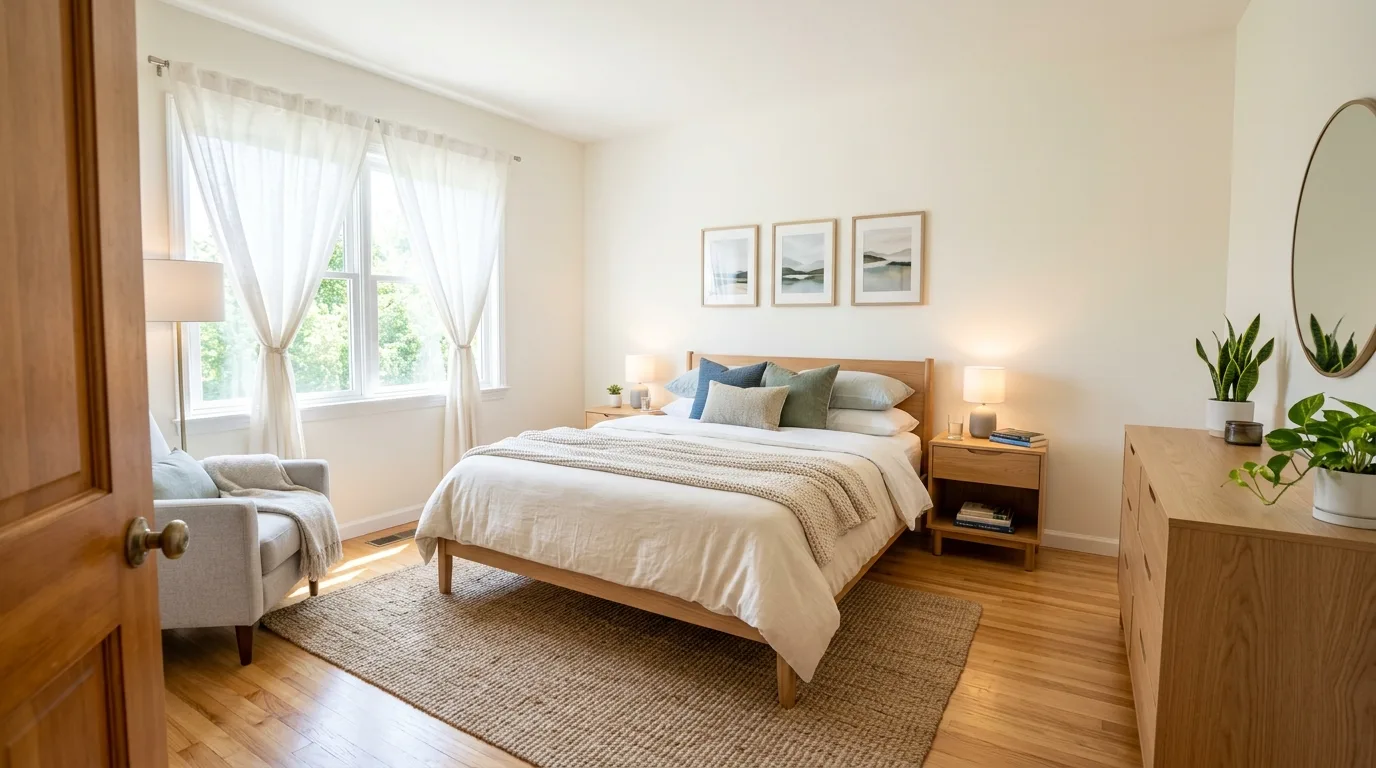
Face the bed toward the door
Placing the bed across from the door can make the room feel more balanced and easy to navigate. This layout often gives a nice visual anchor as soon as you enter.
Styling tip: Focus on the longest wall or a corner to recover valuable floor space.
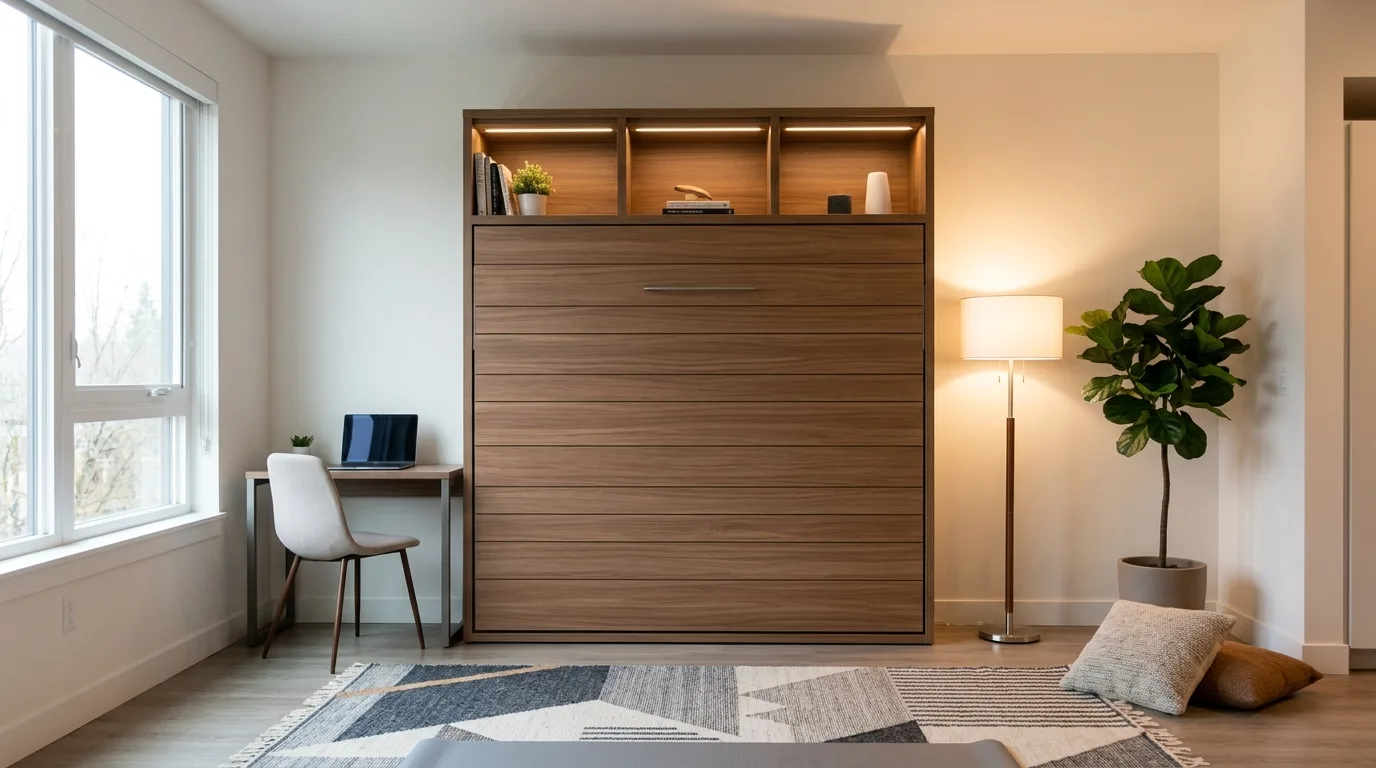
Use a Murphy or fold-down bed
If the room needs to serve multiple purposes, a bed that folds away can dramatically increase flexibility. It is a strong choice for home offices, guest rooms, or very compact apartments.
Styling tip: Leave a little breathing room around the main pieces so the space does not feel crowded.
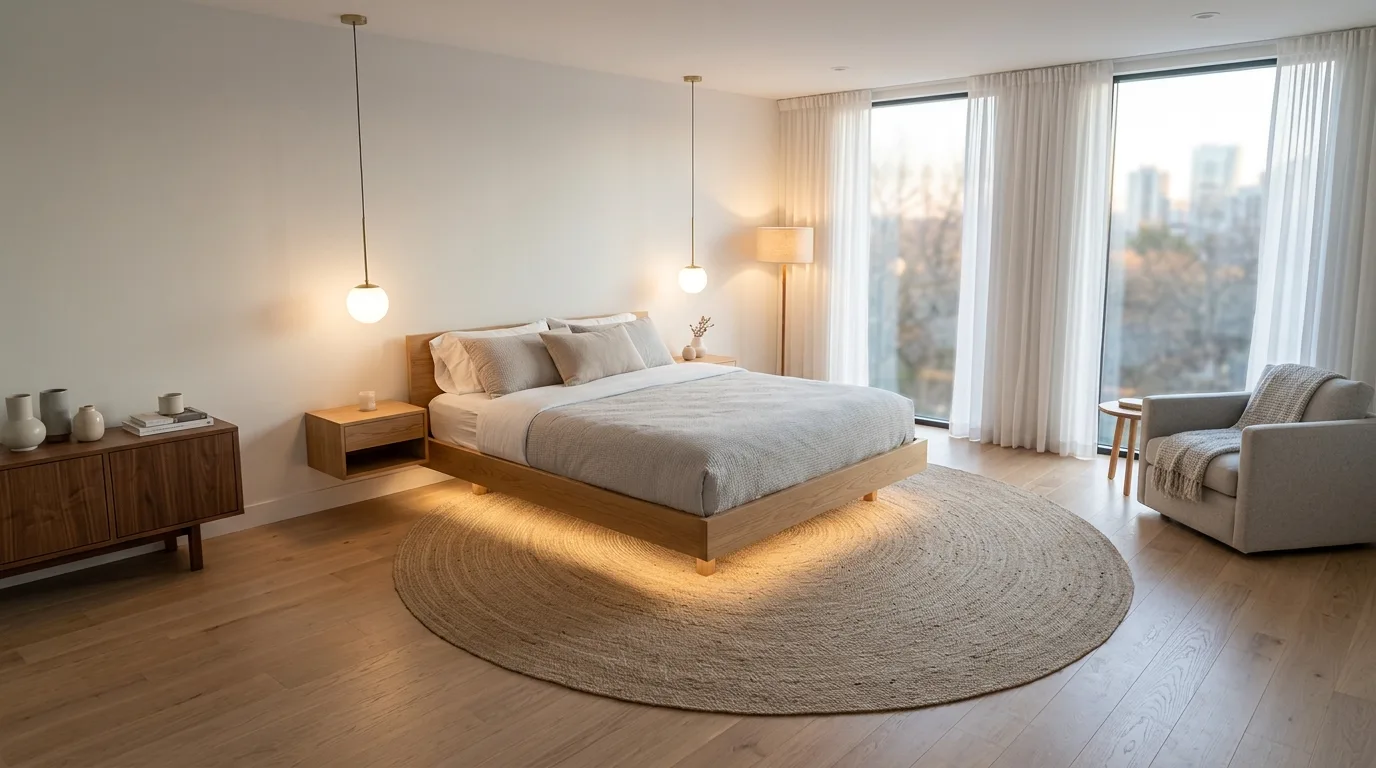
Try a floating arrangement when space allows
A centered bed can still work in a small room if there is enough clearance around it to move comfortably. This layout feels especially polished when symmetry is important to the overall design.
Styling tip: Leave a little breathing room around the main pieces so the space does not feel crowded.
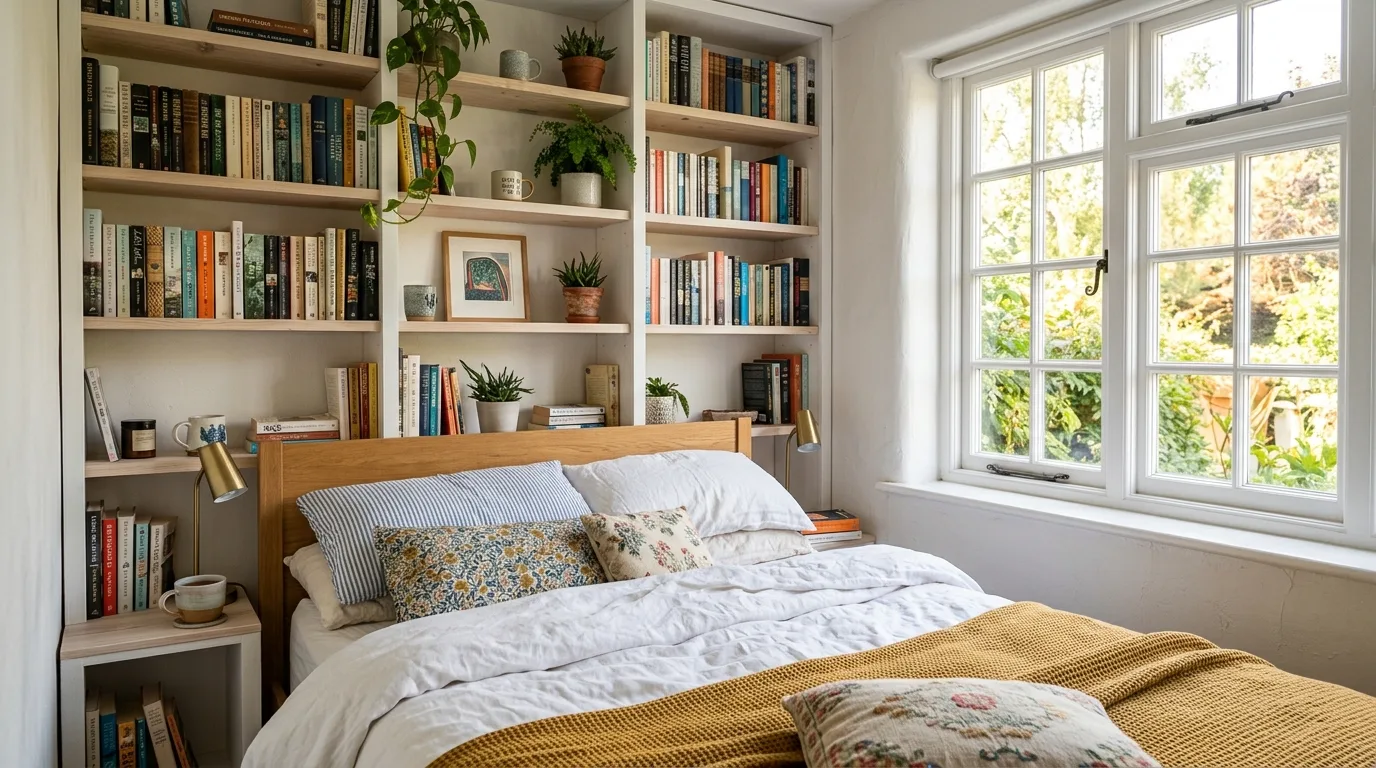
Pair the bed with built-in shelves
Built-in storage around or above the bed can reduce the need for extra furniture. It is one of the easiest ways to gain storage without eating into precious floor space.
Styling tip: Use one contained storage zone so the room stays easier to maintain day to day.
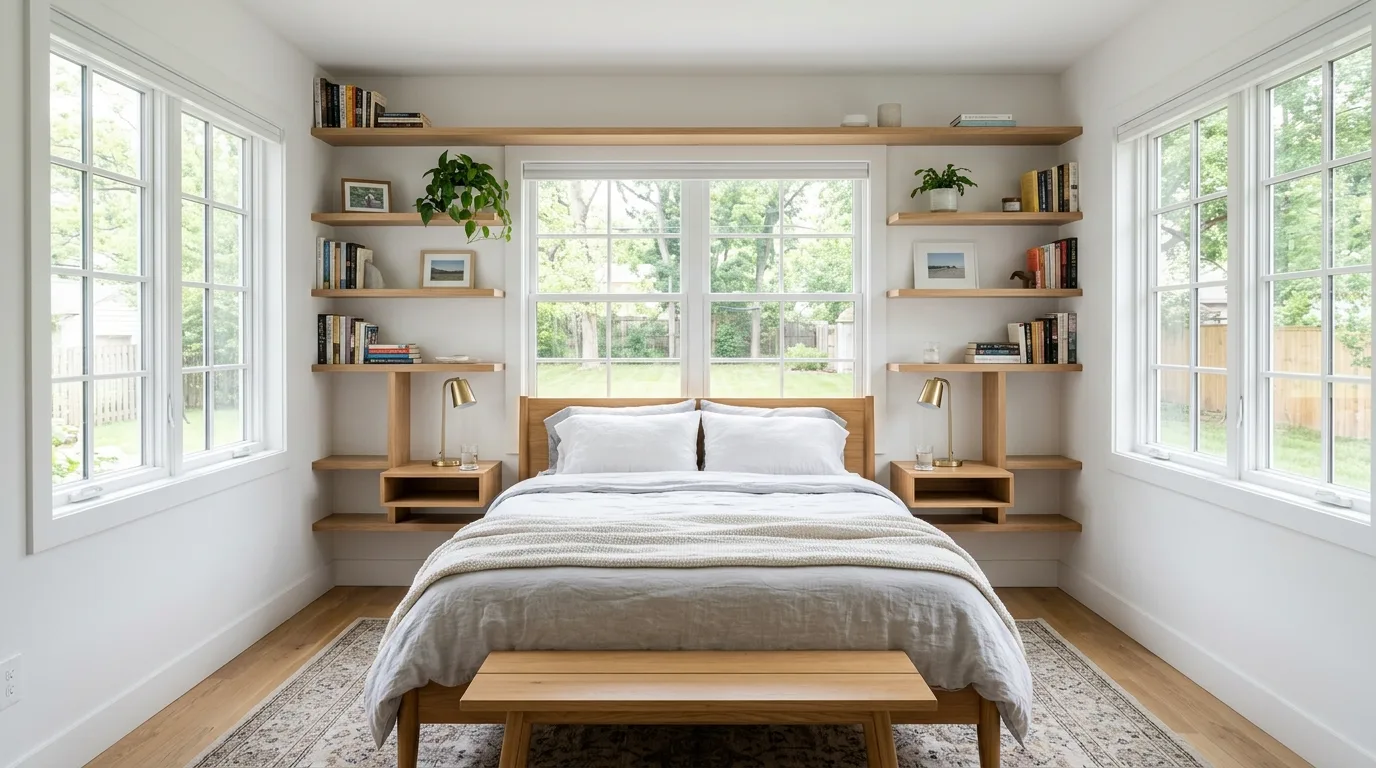
Use the window wall carefully
Placing the bed near a window can make the room feel lighter and more open, as long as you still have enough support for curtains, privacy, and side access. It often works best with low-profile headboards.
Styling tip: Keep the lighting warm and soft so the setup feels inviting instead of harsh.
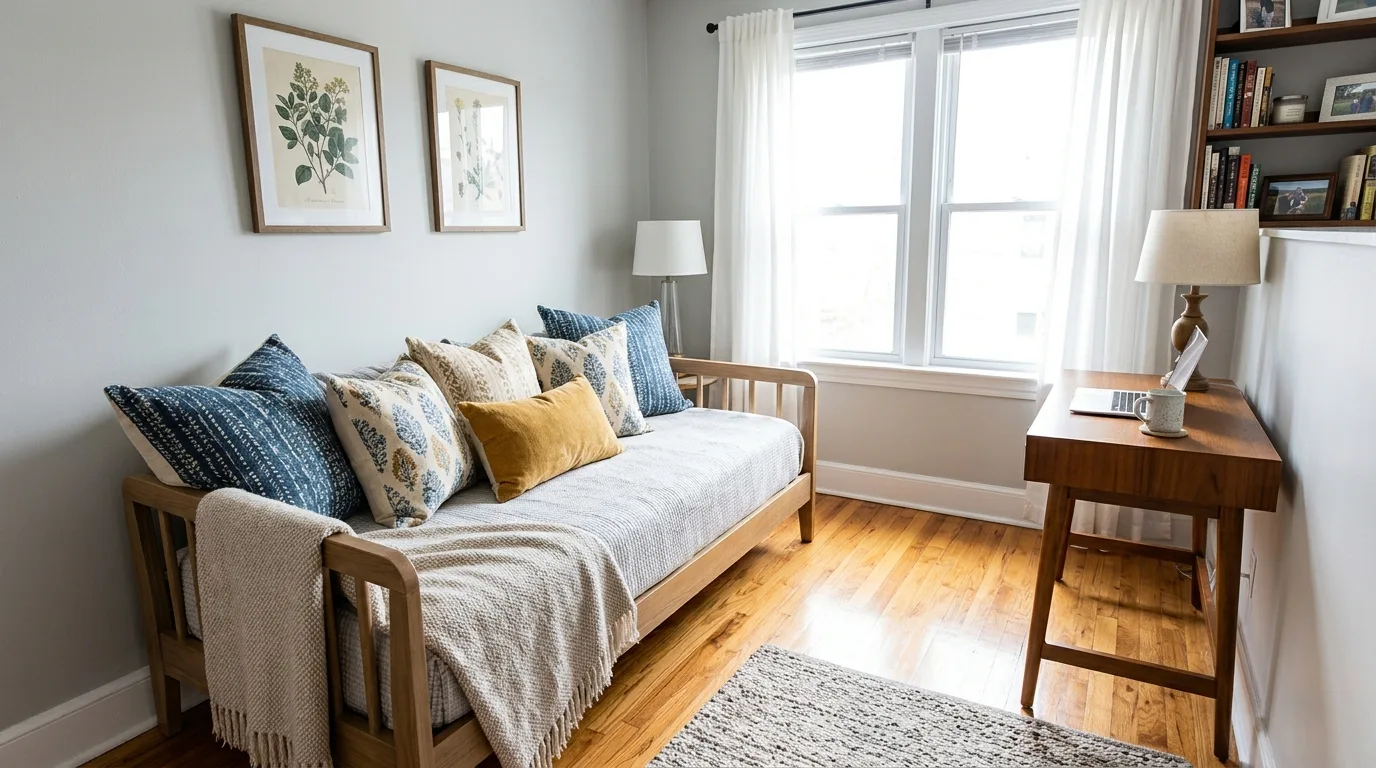
Choose a daybed for double duty
A daybed gives you seating during the day and sleeping space at night, which is ideal for multipurpose rooms. It helps small bedrooms feel less dominated by a full-time bed presence.
Styling tip: Leave a little breathing room around the main pieces so the space does not feel crowded.
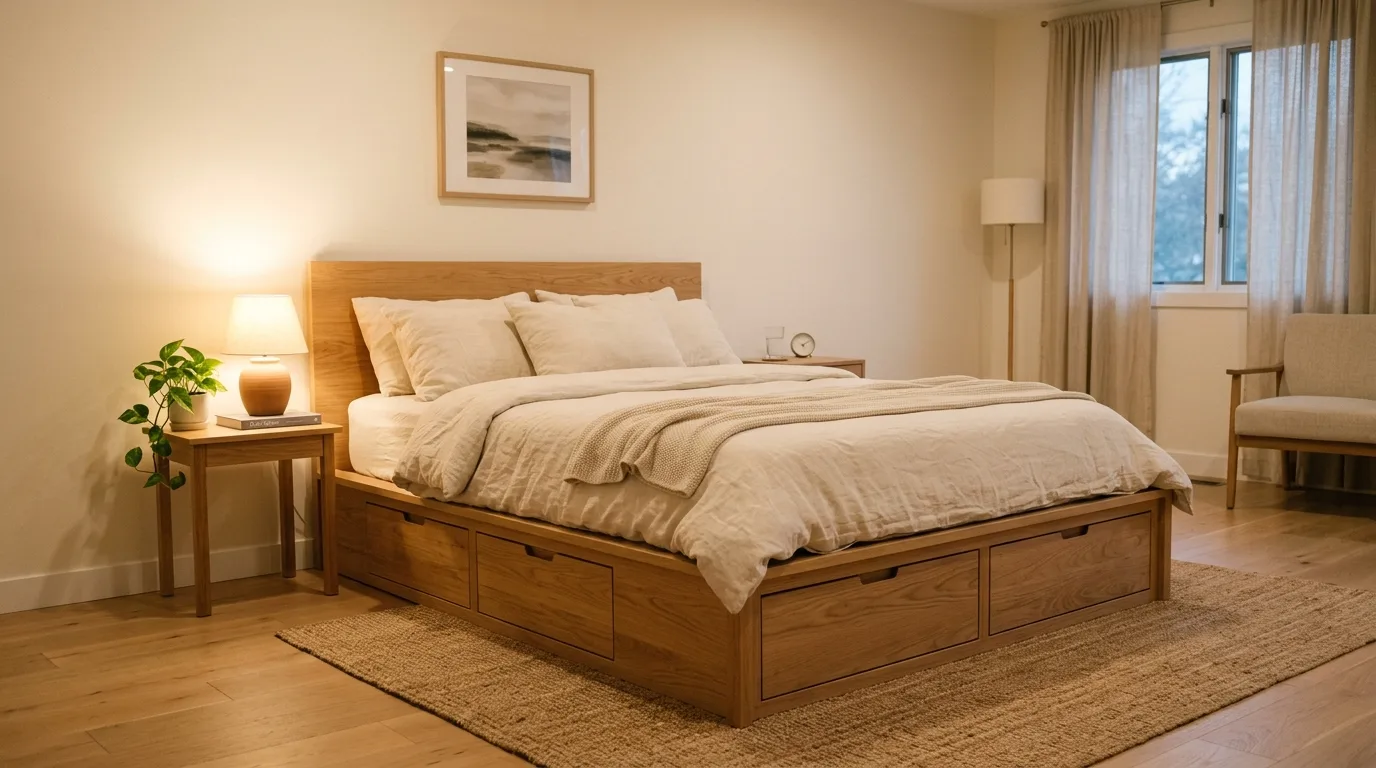
Pick a platform bed with storage
Built-in drawers underneath the mattress can replace bulky dressers or bins elsewhere in the room. This is one of the most effective ways to keep a small bedroom tidy and functional.
Styling tip: Use one contained storage zone so the room stays easier to maintain day to day.
Final Takeaway
In a small bedroom, the bed is the piece that controls everything else. Start with the longest wall or a corner to recover valuable floor space, then build around the pieces that make the space feel easier to use and nicer to look at every day.