Boho industrial style works because it balances opposites. Industrial elements bring structure through metal, concrete, brick, and darker tones, while boho details soften the room with textiles, plants, woven pieces, and a more relaxed rhythm.
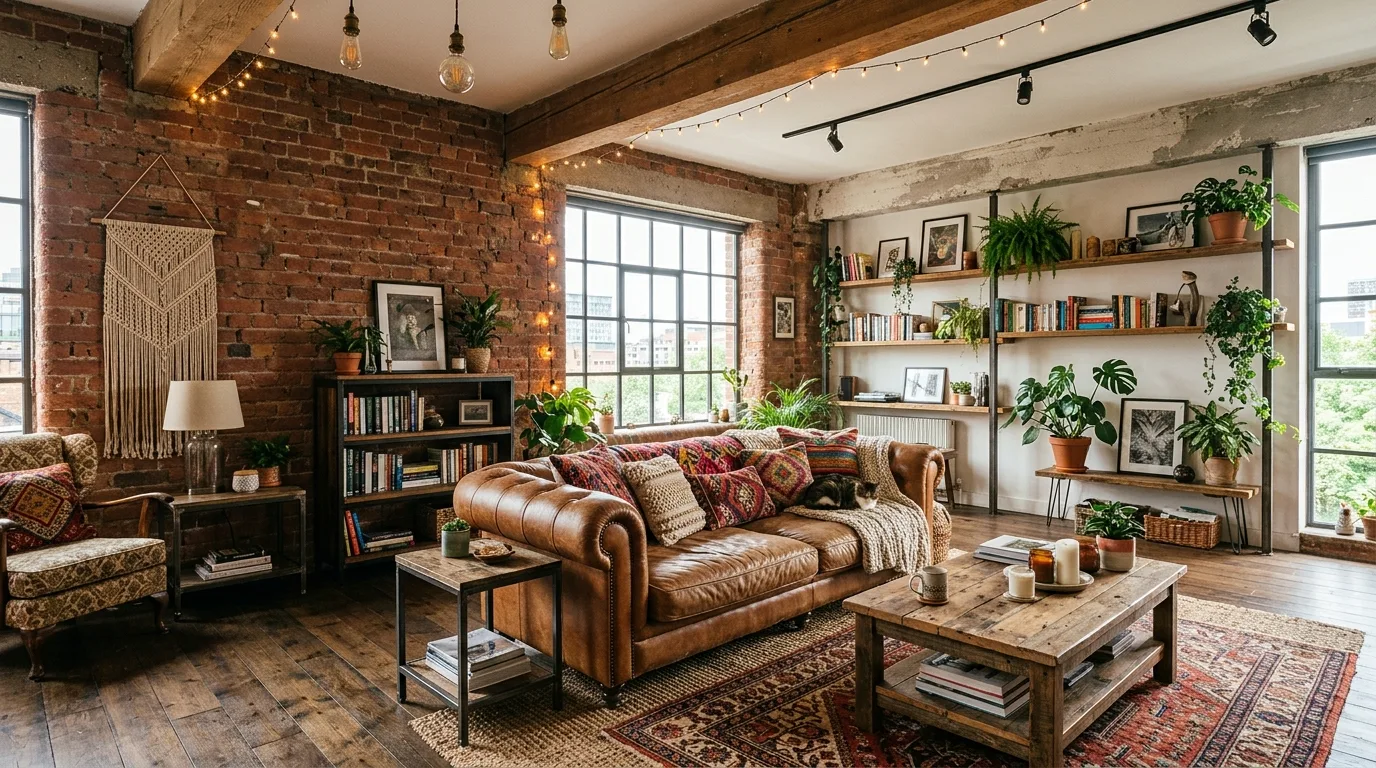
Start with one industrial anchor
Exposed brick, a leather sofa, a metal coffee table, or industrial shelving can establish the urban side of the room immediately. One strong anchor is often enough to guide everything else.
Styling tip: Keep the surface edited so the functional pieces still have room to look styled.
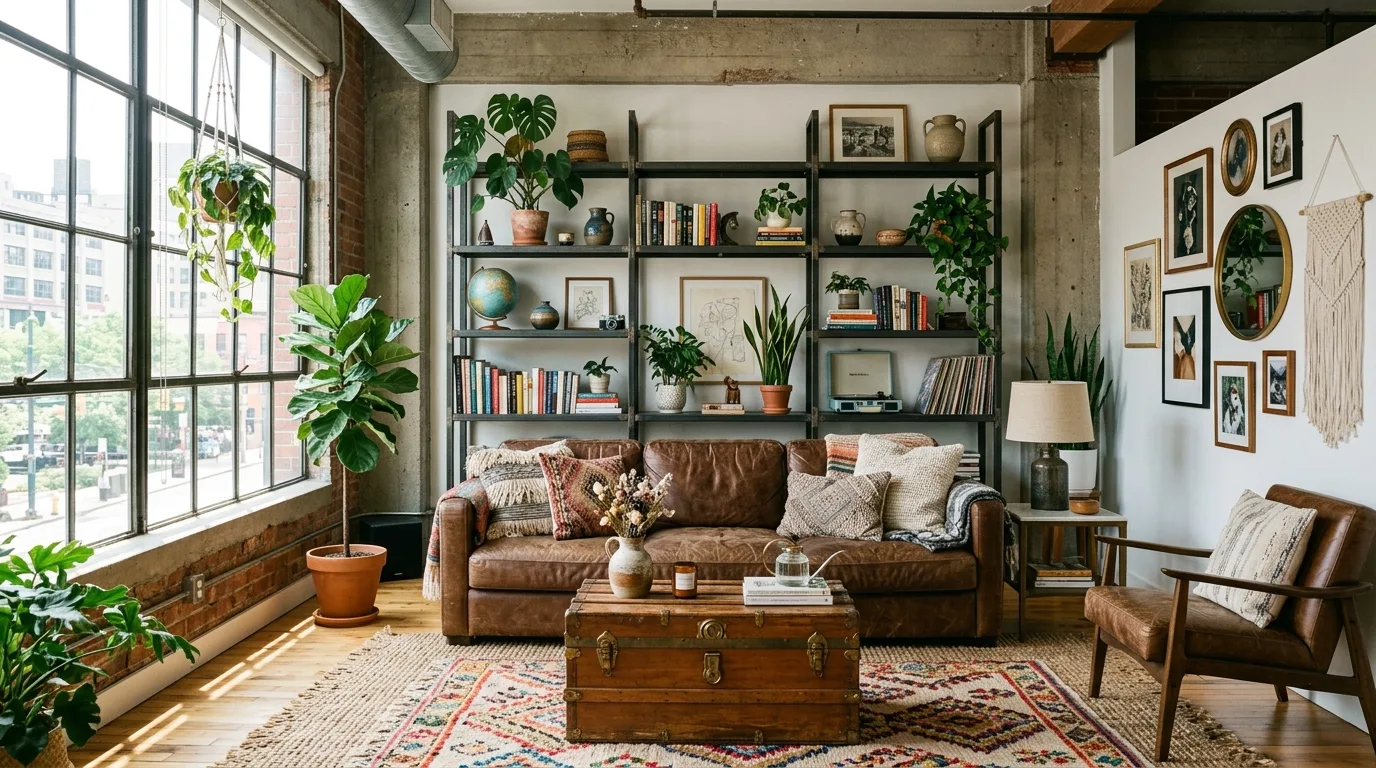
Layer in boho rugs and pillows
Patterned rugs and textured throw pillows bring warmth that stops the room from feeling too hard. These softer layers are what make industrial spaces feel livable.
Styling tip: Layer one or two soft textures instead of adding too many decorative extras.
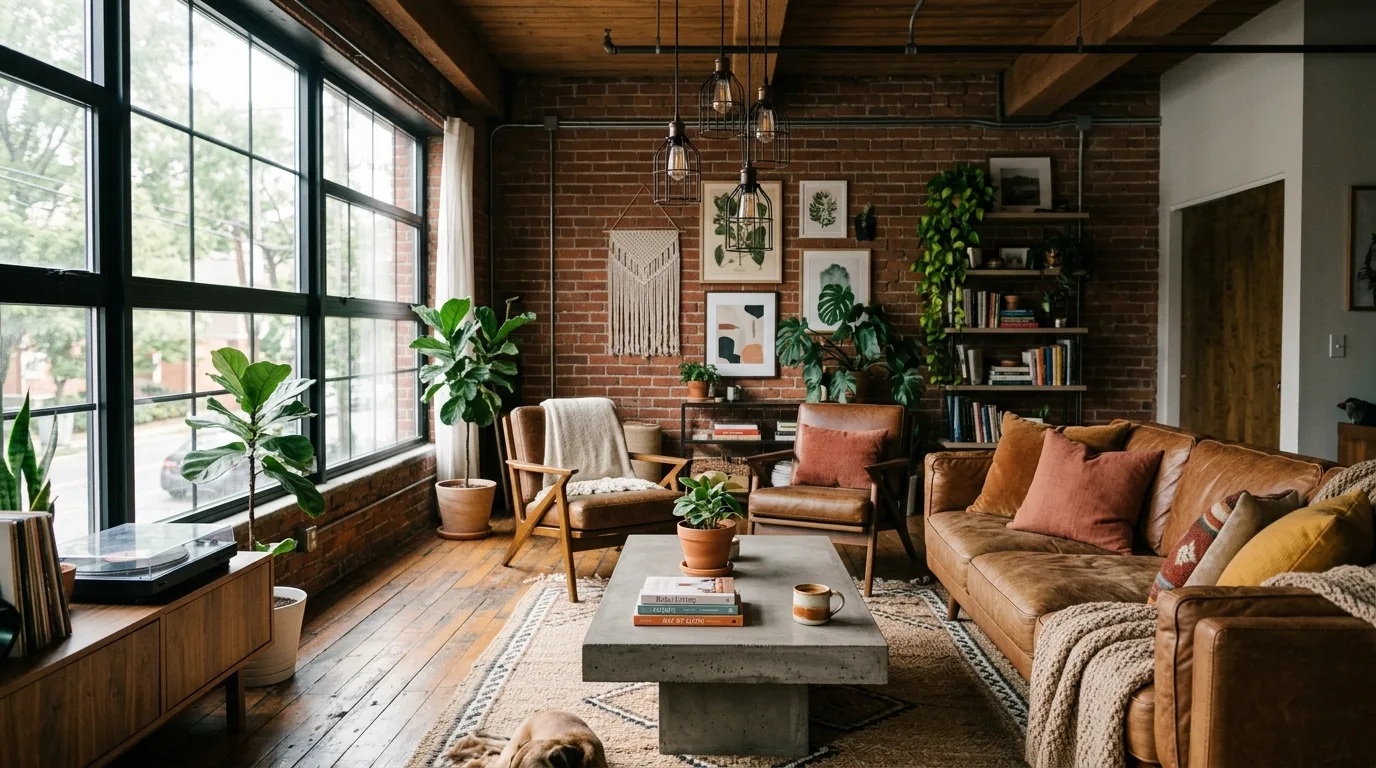
Use plants generously
Greenery is one of the easiest ways to bridge boho and industrial design. Plants soften metal, concrete, and darker furniture while making the room feel more relaxed.
Styling tip: Layer one or two soft textures instead of adding too many decorative extras.
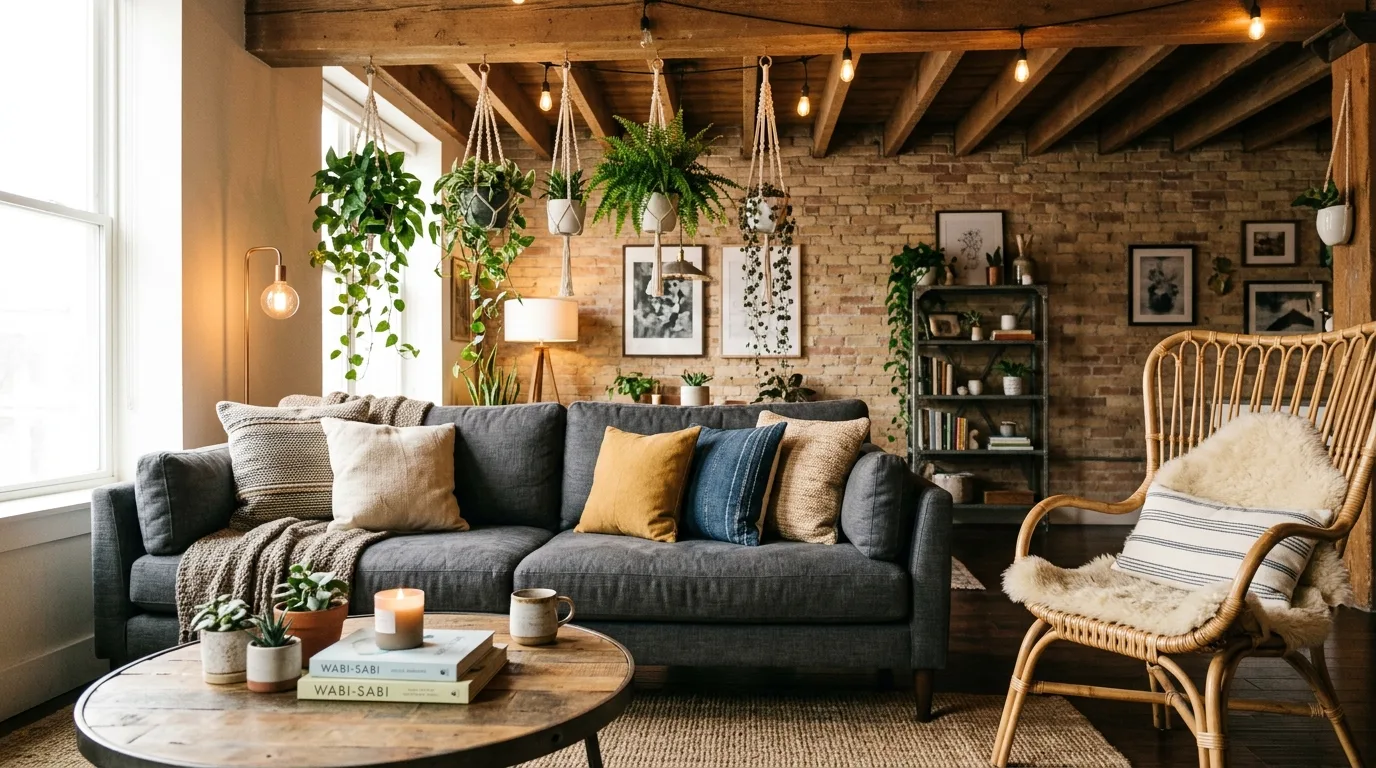
Mix wood and metal throughout
Boho industrial rooms usually feel strongest when both materials repeat across shelves, side tables, and lighting. That repetition gives the style a cohesive backbone.
Styling tip: Keep the lighting warm and soft so the setup feels inviting instead of harsh.
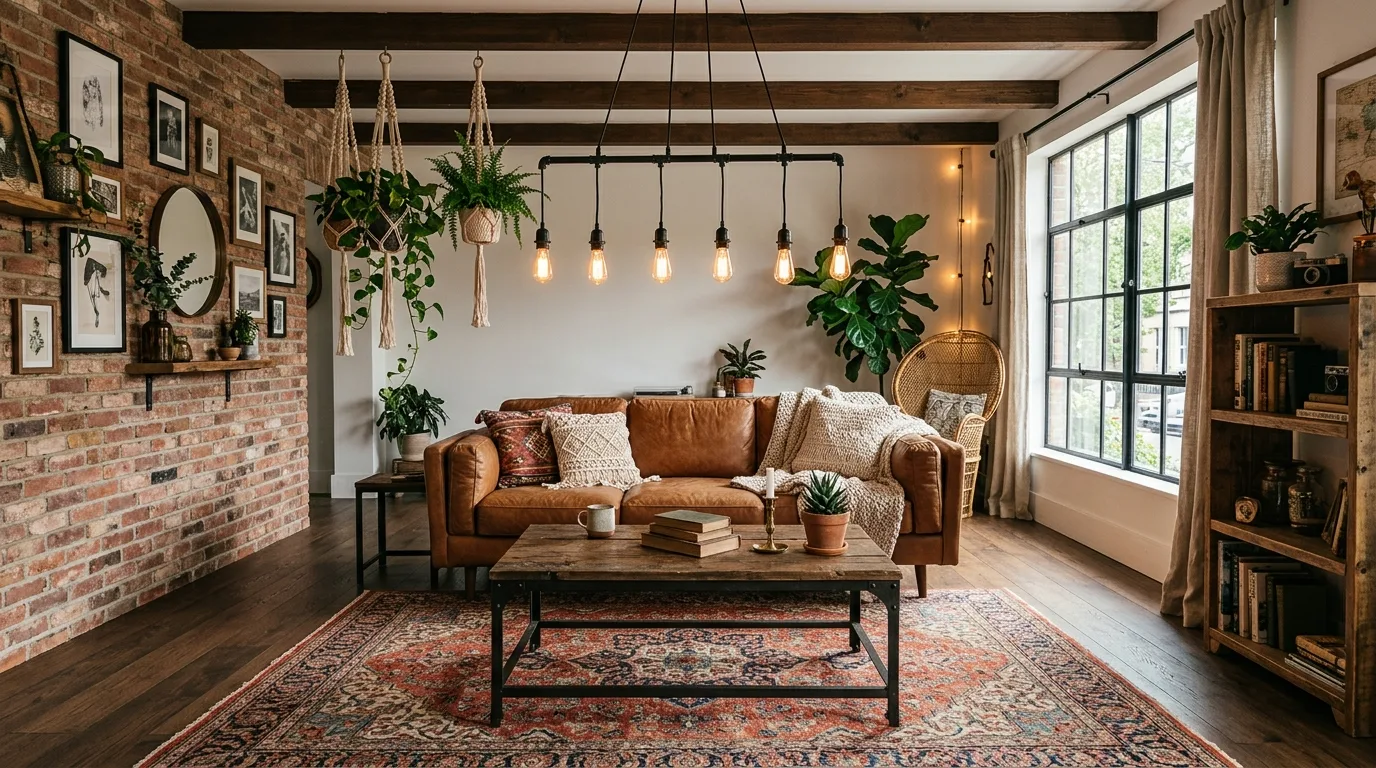
Try concrete with plush texture
A concrete coffee table or industrial light fixture looks especially good when surrounded by soft cushions, woven accents, and warm throws. Contrast is what makes this style interesting.
Styling tip: Keep the lighting warm and soft so the setup feels inviting instead of harsh.
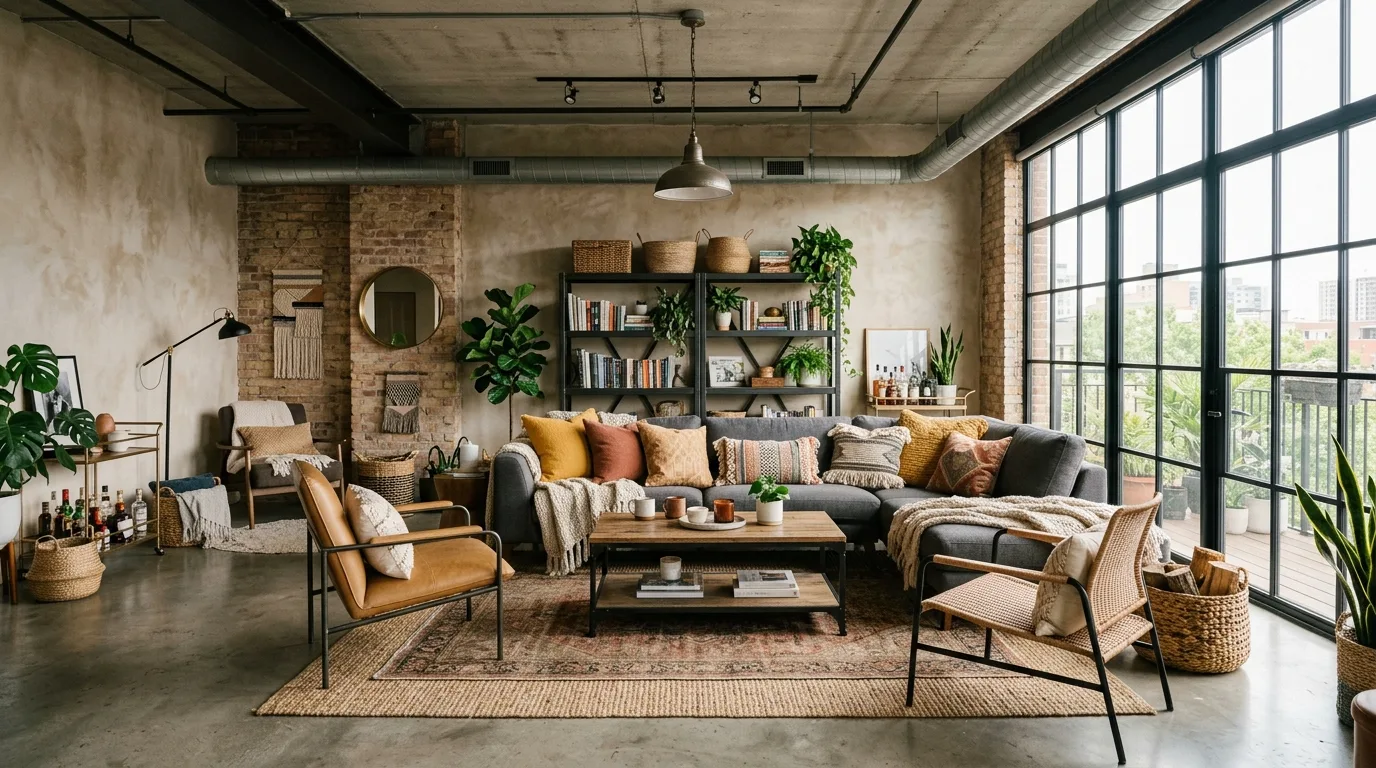
Choose seating that feels collected
Leather sofas, rattan chairs, or mismatched seating can all work if the palette stays coordinated. The room should feel layered, not overly matched.
Styling tip: Repeat the same natural material in a few spots to make the room feel more intentional.
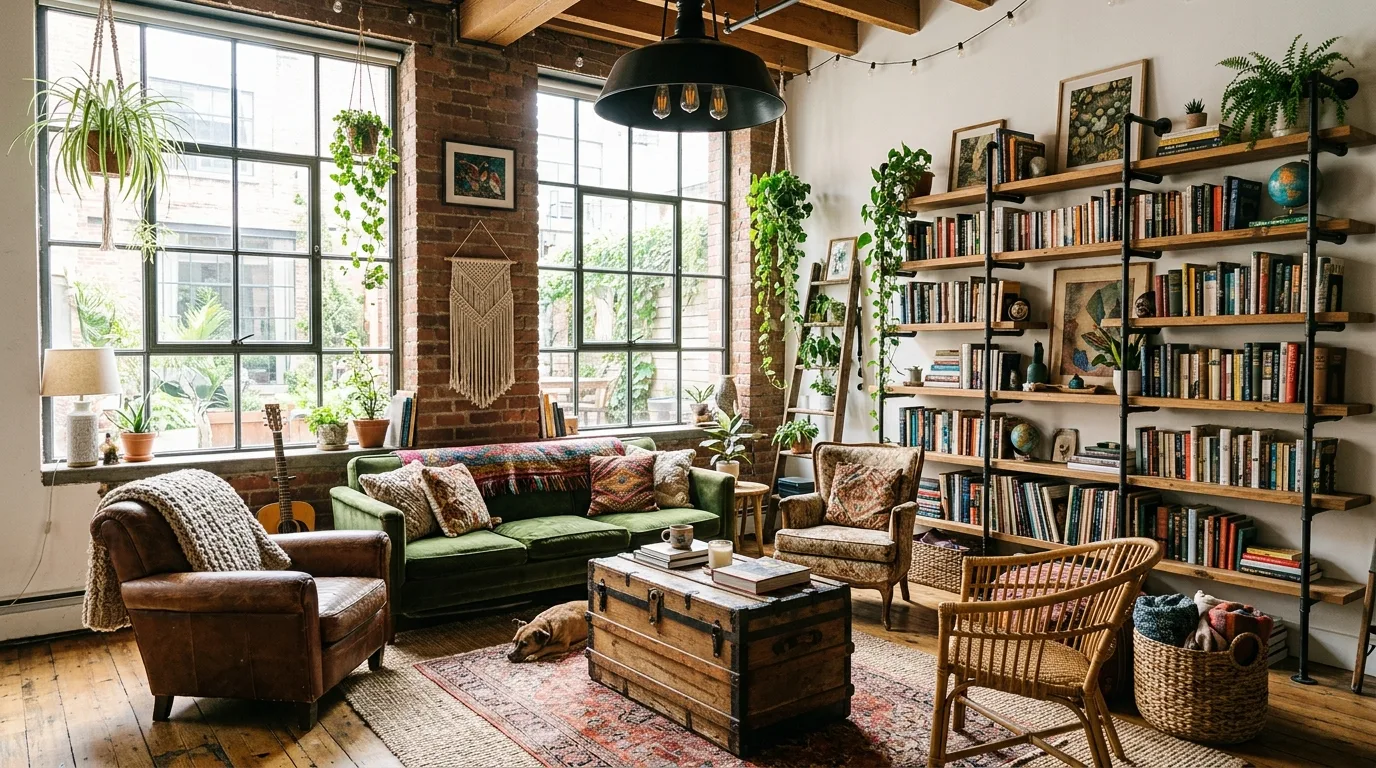
Use lighting to shape the mood
Industrial pendants, black sconces, or oversized metal fixtures bring drama and help the room feel more urban. Warm bulbs keep the result inviting.
Styling tip: Keep the lighting warm and soft so the setup feels inviting instead of harsh.
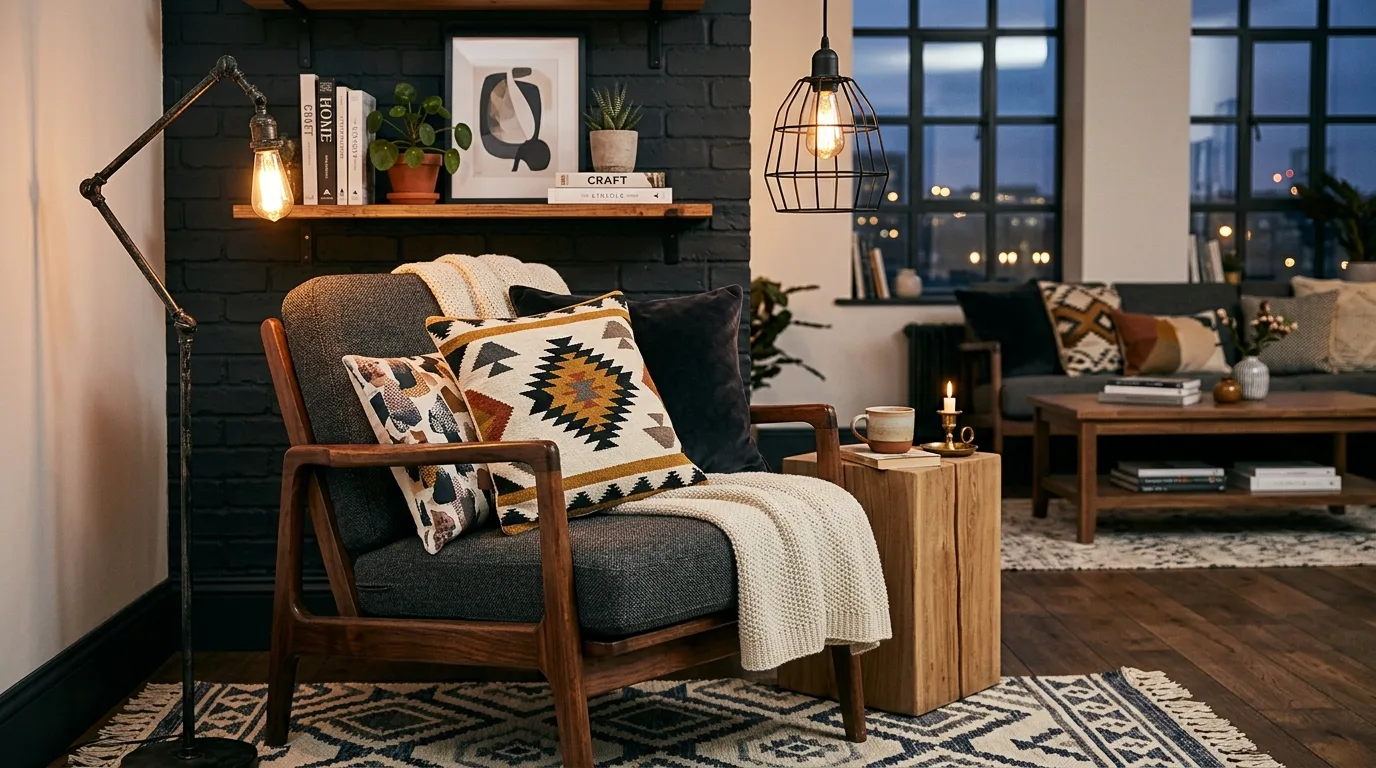
Let baskets and woven decor soften the space
Baskets, macrame planters, and textured accessories bring the boho side of the style forward without needing bright color. These pieces also add welcome visual softness.
Styling tip: Use one contained storage zone so the room stays easier to maintain day to day.
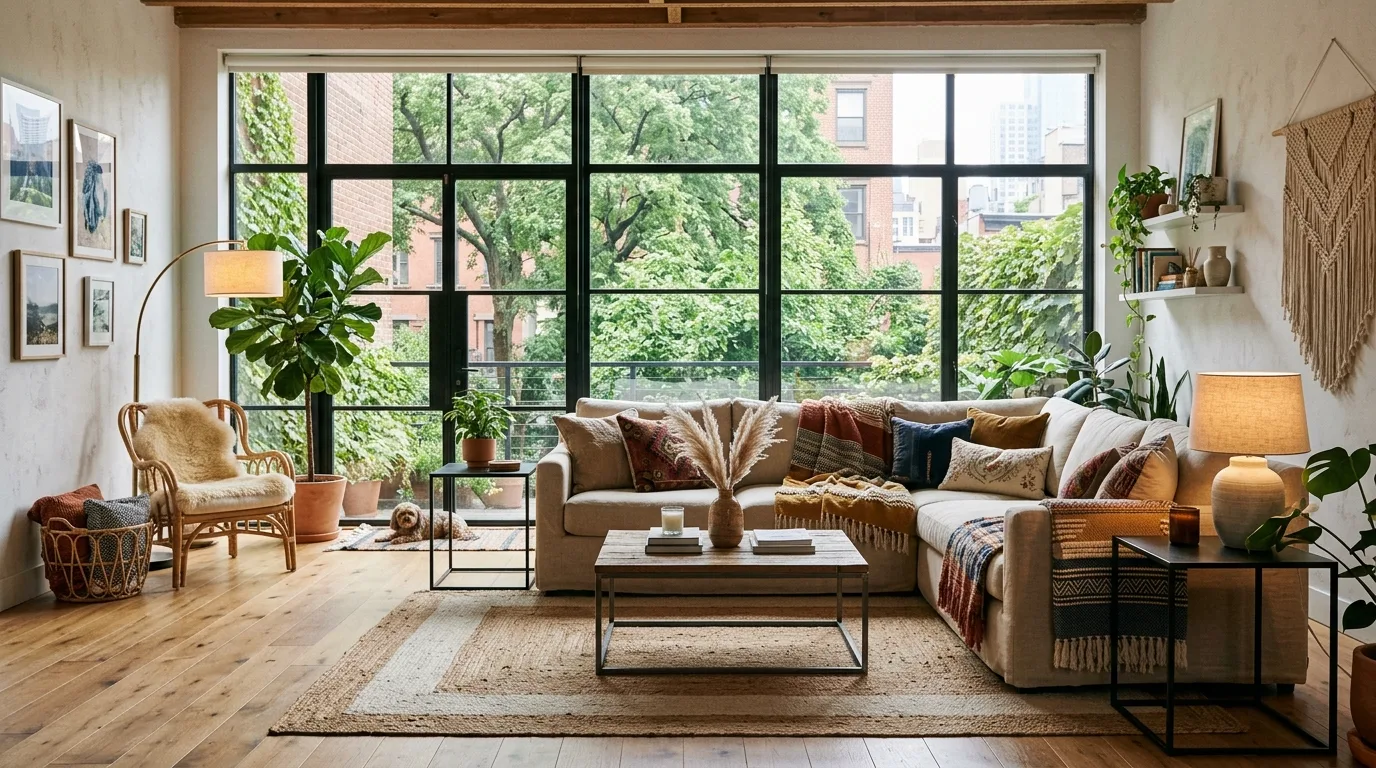
Balance dark tones with natural light
Deeper gray, black, and leather finishes look better when the room still feels open and bright. Large windows or lighter walls help preserve that balance.
Styling tip: Keep the lighting warm and soft so the setup feels inviting instead of harsh.
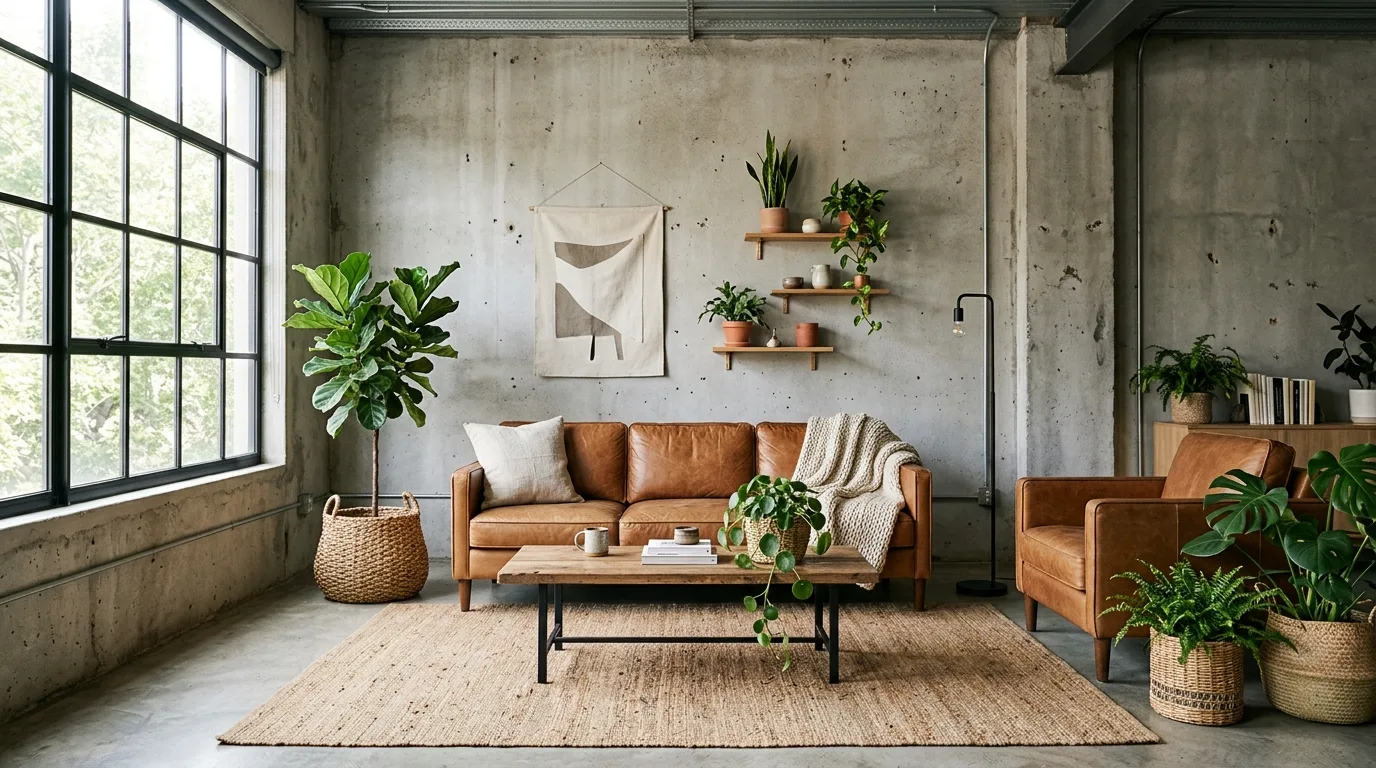
Use one vintage-style rug as a connector
A rug can tie together metal, wood, and mixed seating better than almost any other element. It gives the room an easy sense of history and warmth.
Styling tip: Repeat the same natural material in a few spots to make the room feel more intentional.
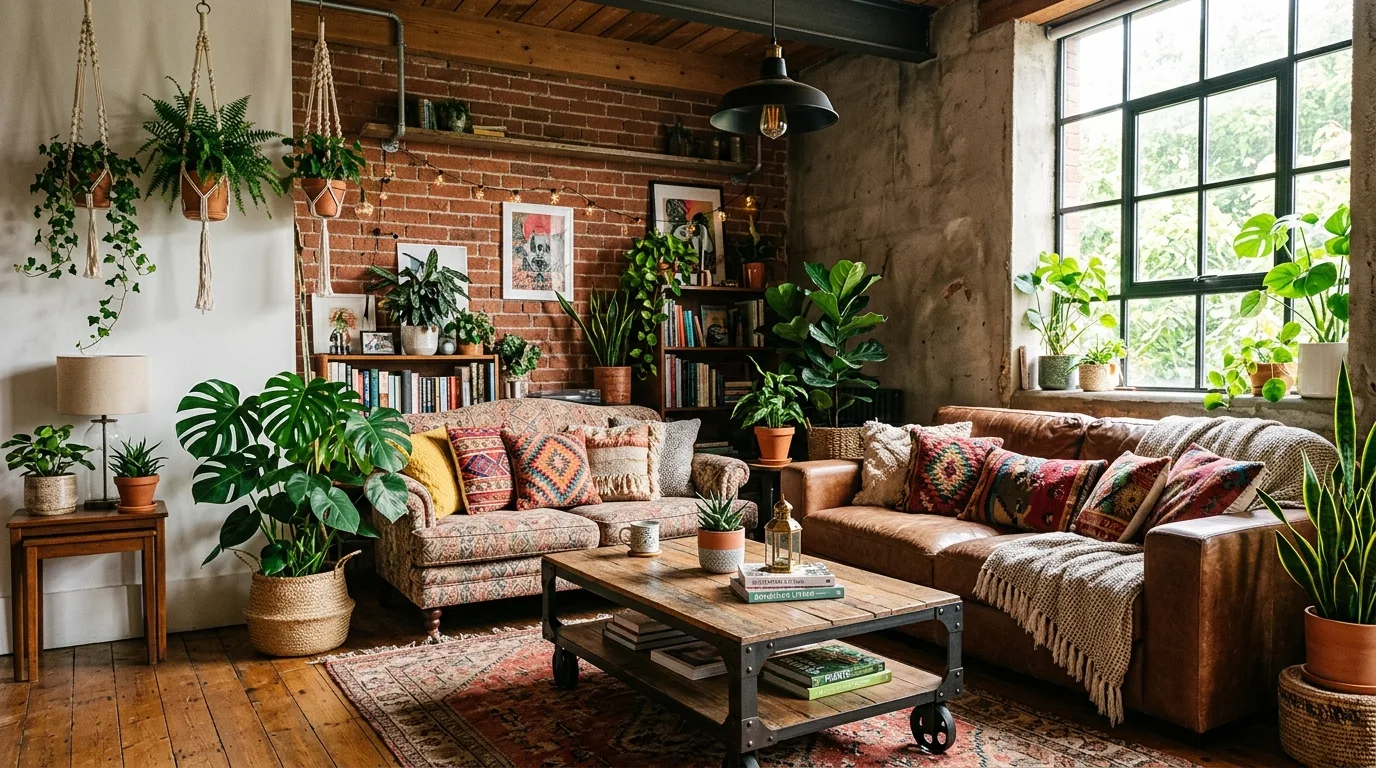
Keep decor a little eclectic
Boho industrial style should not feel too perfect. A few unusual accessories, collected books, or mixed materials help the room feel more authentic.
Styling tip: Focus on add boho warmth through rugs, plants, baskets, and layered textiles.
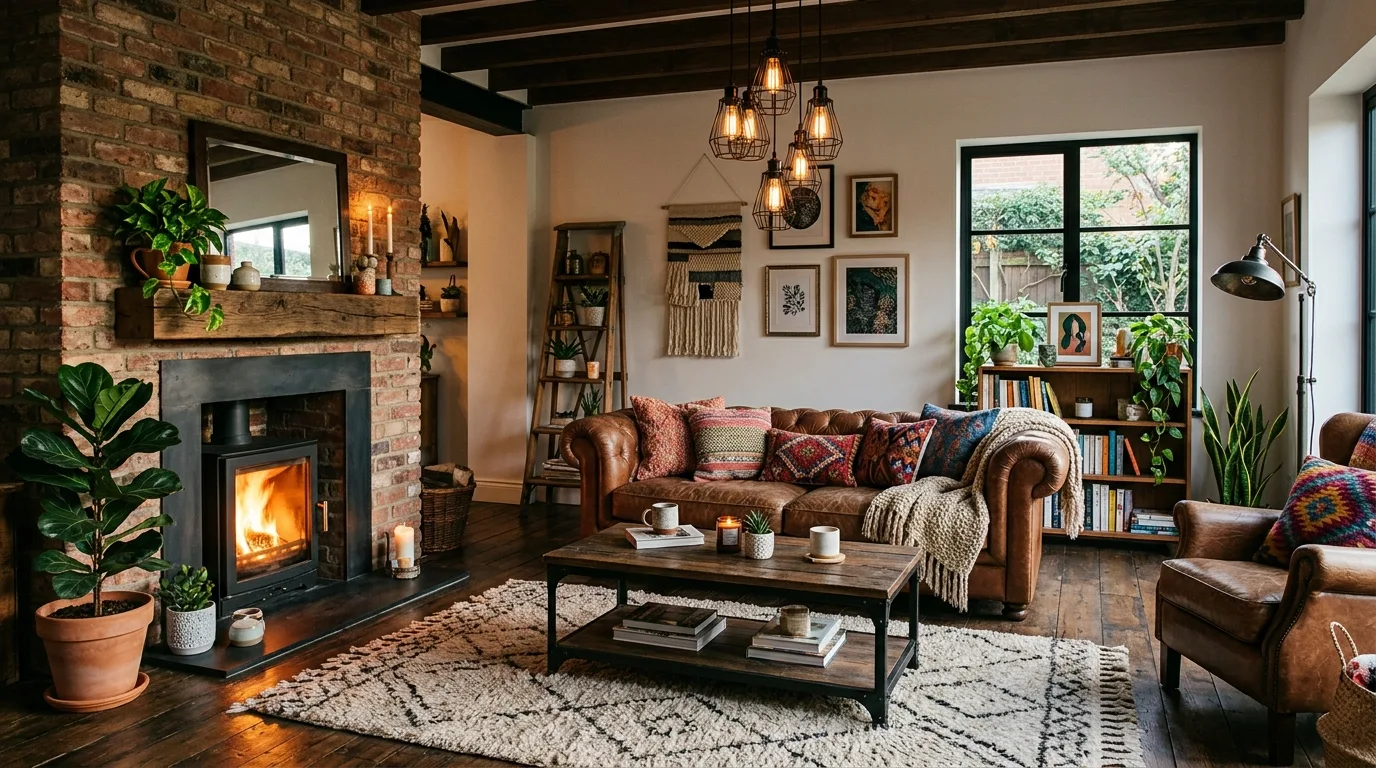
Repeat dark accents with intention
Black frames, dark shelving, or matte metal details can connect the room visually when they appear in a few strategic places. This gives the space more polish.
Styling tip: Repeat the main color in a few places so the look feels connected instead of random.
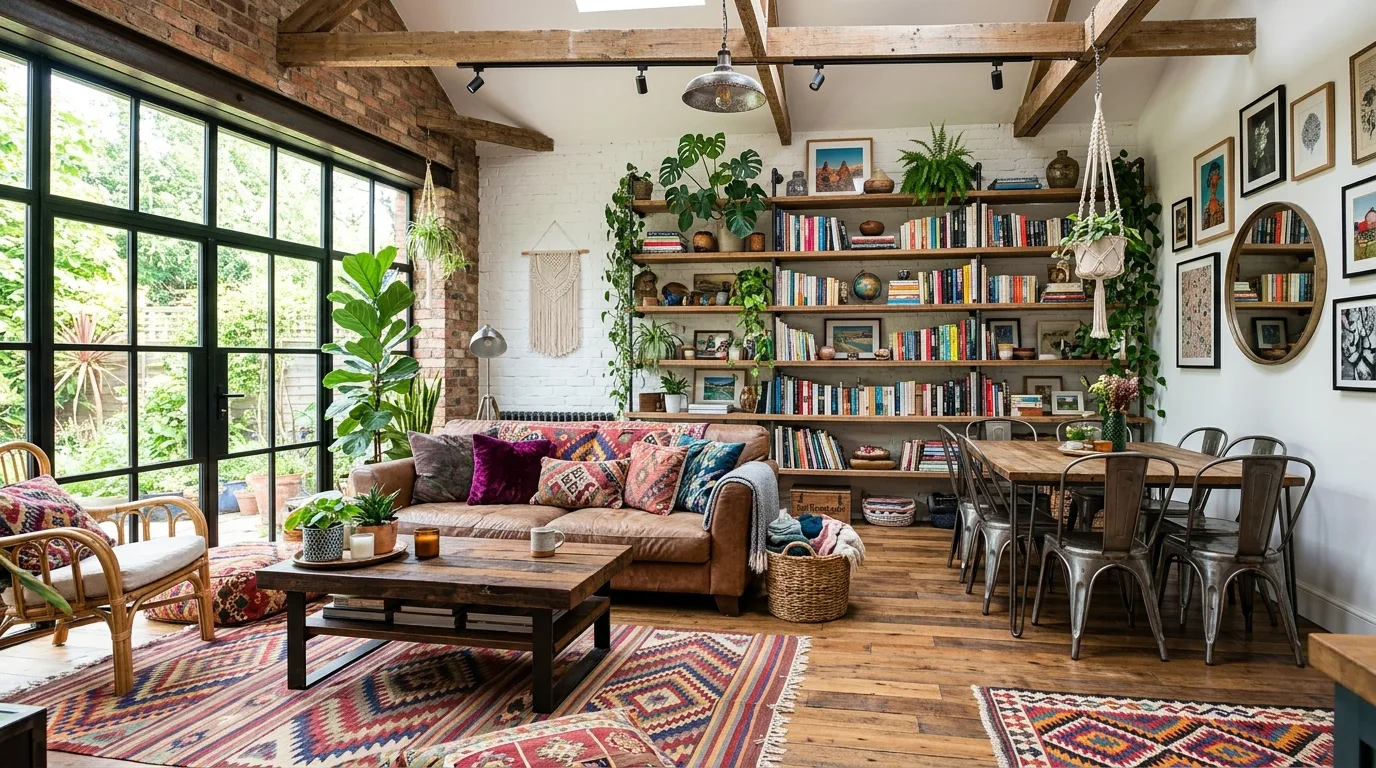
Use greenery and textiles to soften bold architecture
If the room has exposed beams, concrete walls, or heavy industrial elements, rugs, throws, and plants are what keep it welcoming. They bring the human side back into the room.
Styling tip: Layer one or two soft textures instead of adding too many decorative extras.
Let the room feel relaxed, not staged
The best boho industrial spaces feel stylish but easy, as though they evolved over time. Comfort should always be part of the look, not an afterthought.
Styling tip: Give the wall feature enough blank space around it so it can read as a focal point.
Final Takeaway
Boho industrial style works because it balances opposites. Start with metal, leather, and reclaimed wood as the industrial backbone, then build around the pieces that make the space feel easier to use and nicer to look at every day.