A daybed can solve several small-space problems at once when it is styled and positioned thoughtfully. It can work as a sofa, guest bed, reading nook, or office companion, all while helping a compact room feel more flexible and less crowded.
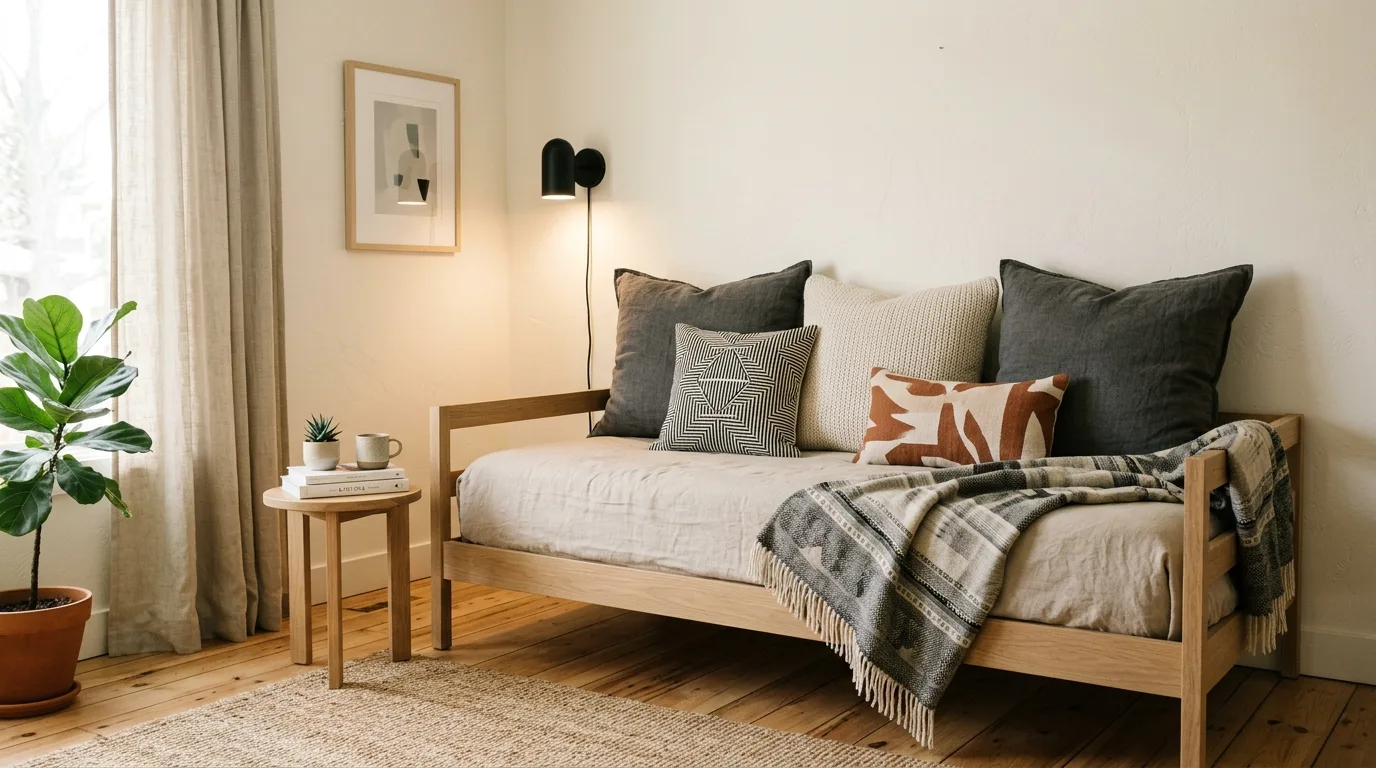
Use layered pillows for sofa energy
Large pillows, a patterned throw, and a clean wall placement can make a daybed feel like built-in lounge seating during the day. This helps the room read as flexible rather than purely sleep-focused.
Styling tip: Layer one or two soft textures instead of adding too many decorative extras.
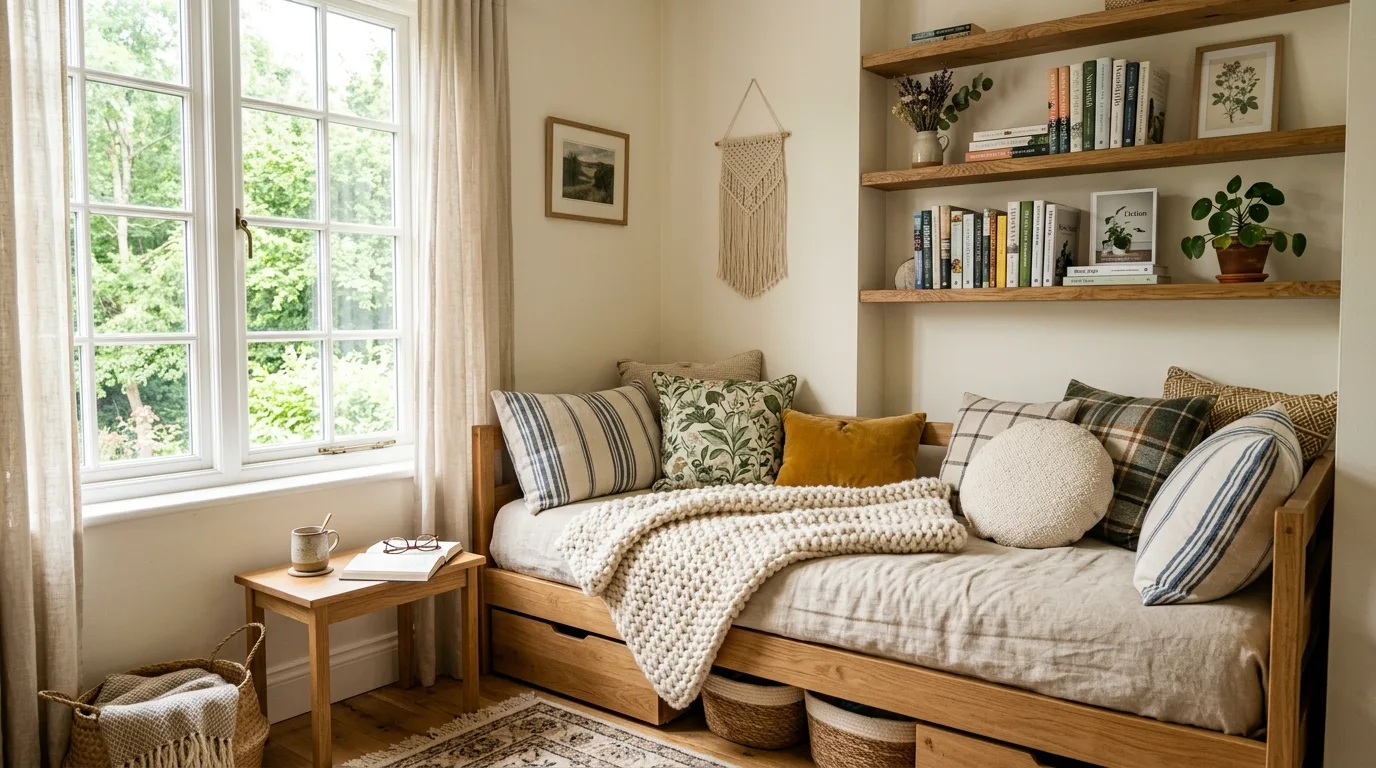
Turn a corner into a reading nook
A daybed tucked into a corner with shelves and a couple of soft cushions makes excellent use of awkward space. It is especially helpful in guest rooms that need another daily purpose.
Styling tip: Leave a little breathing room around the main pieces so the space does not feel crowded.
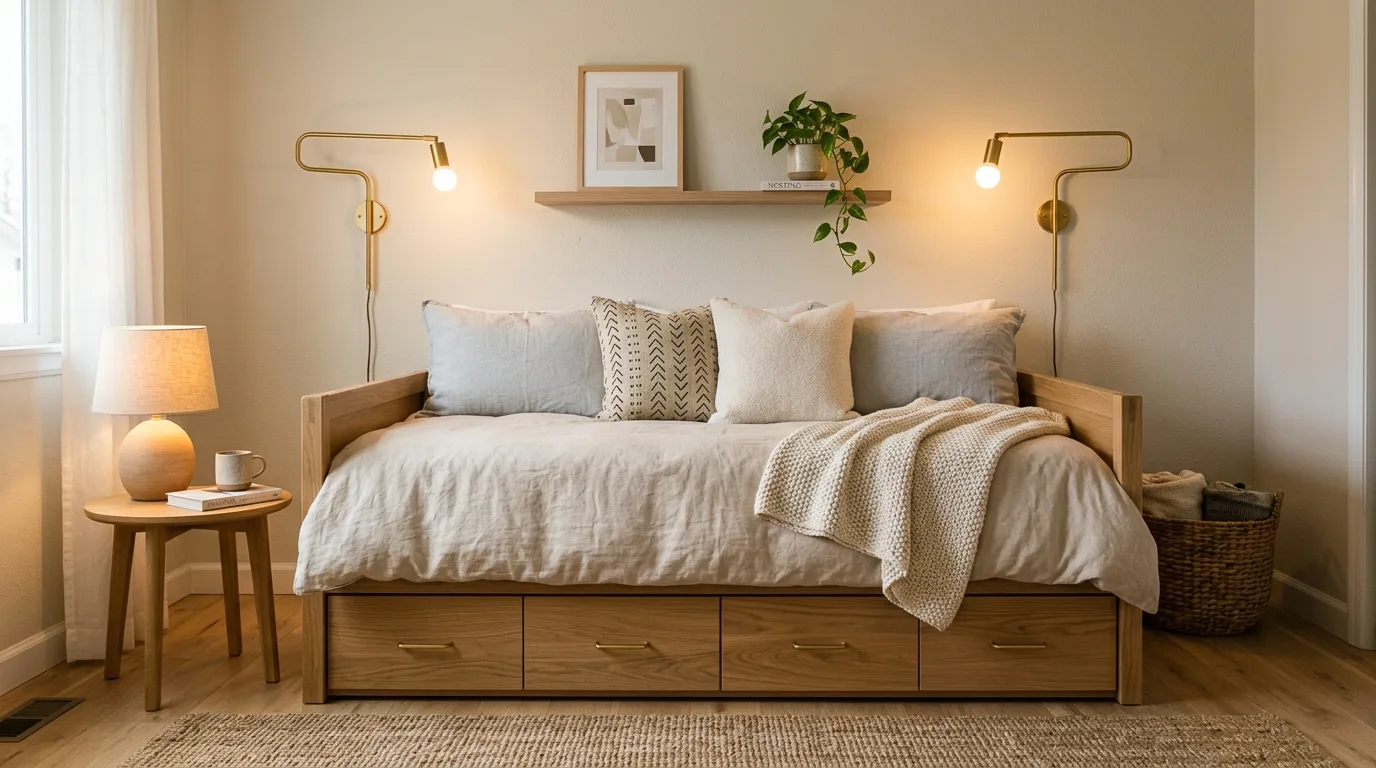
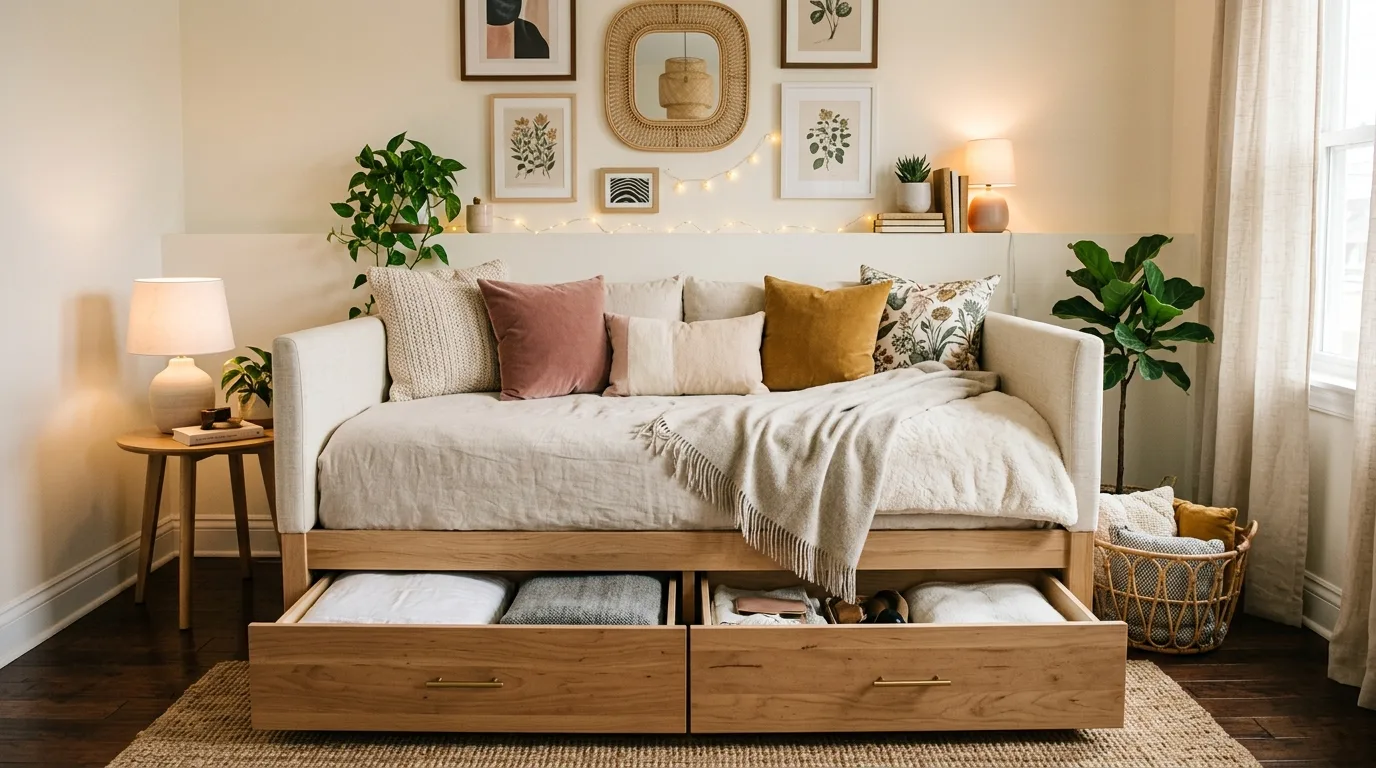
Choose drawers underneath for hidden storage
A daybed with built-in drawers can hold bedding, seasonal blankets, or extra pillows without needing more furniture. In small rooms, that double-duty storage is a major advantage.
Styling tip: Use one contained storage zone so the room stays easier to maintain day to day.
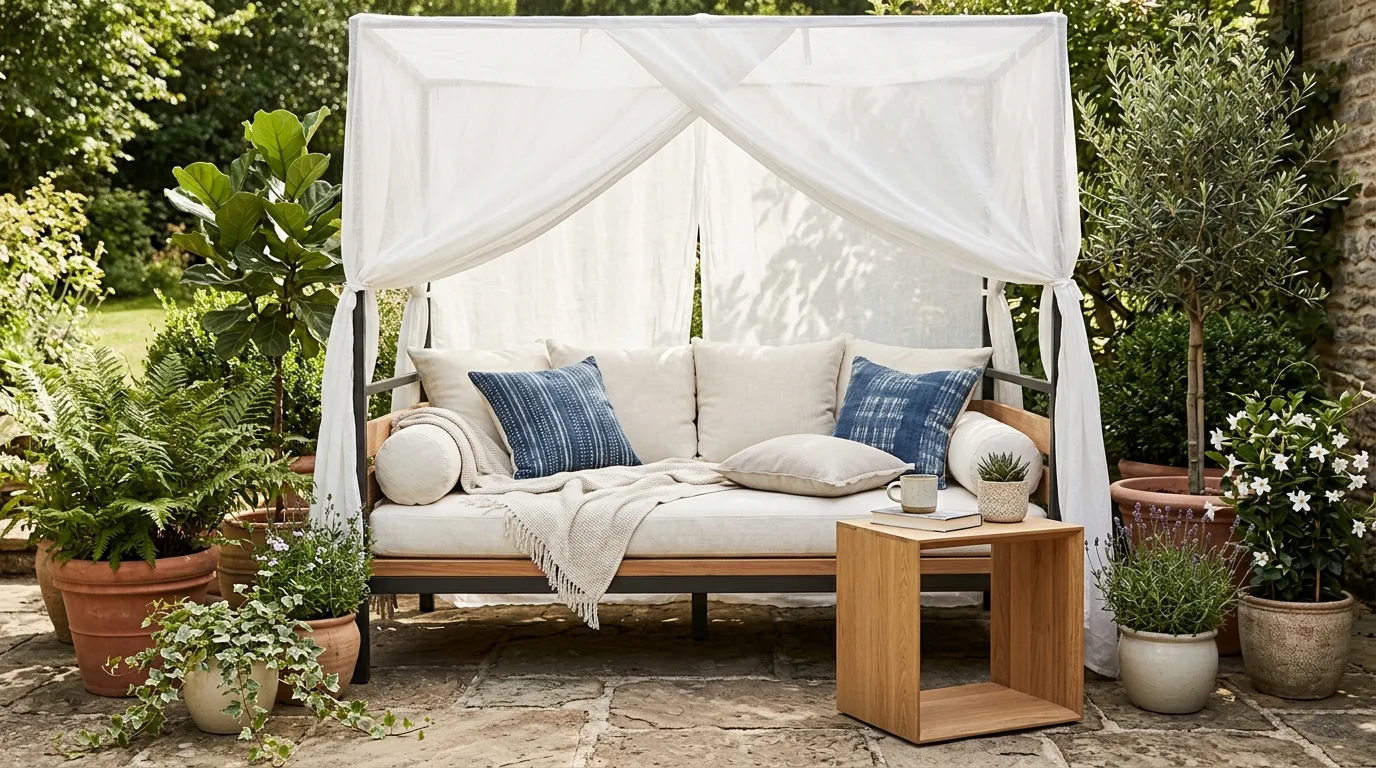
Add a canopy for a lounge feel
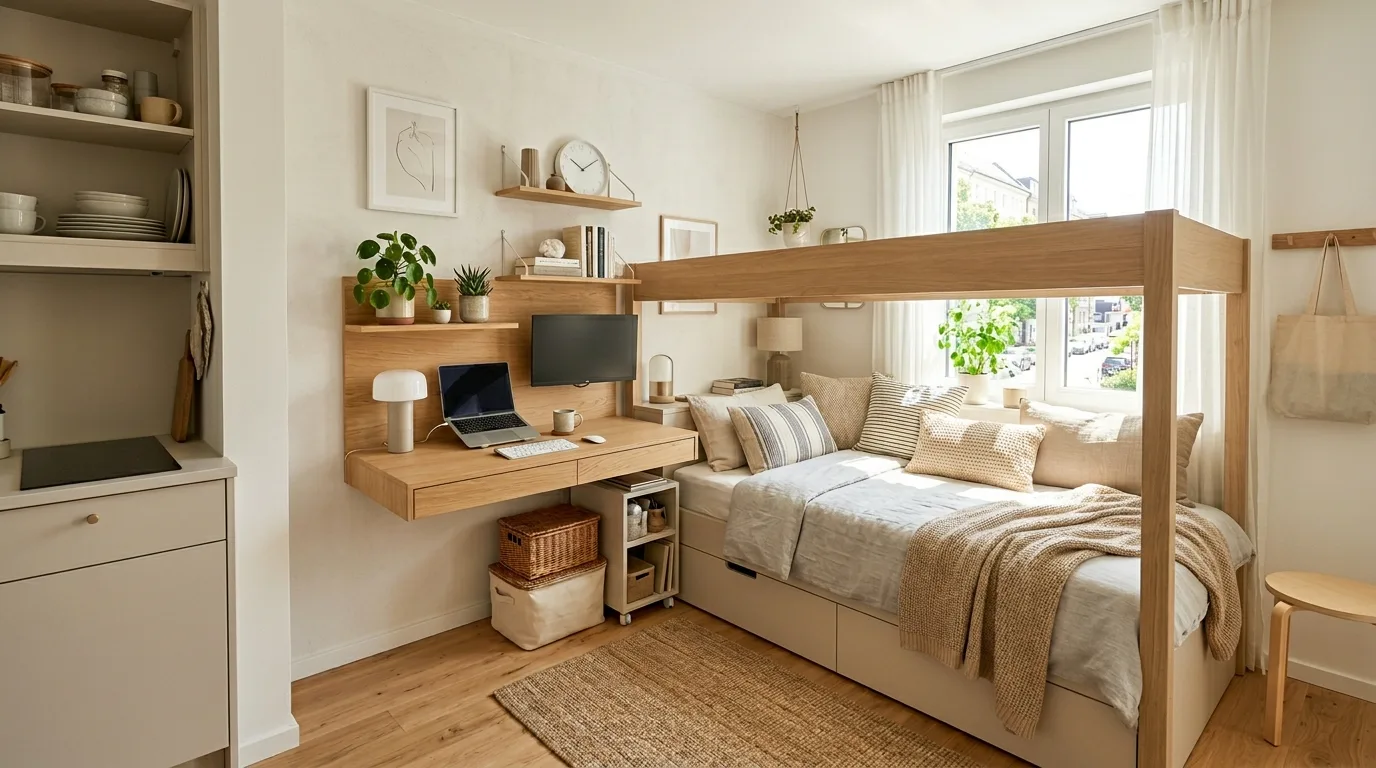
A canopy or overhead frame can make the daybed feel more private and styled, especially in studio apartments or shared rooms. It creates a clear zone without adding walls.
Styling tip: Leave a little breathing room around the main pieces so the space does not feel crowded.
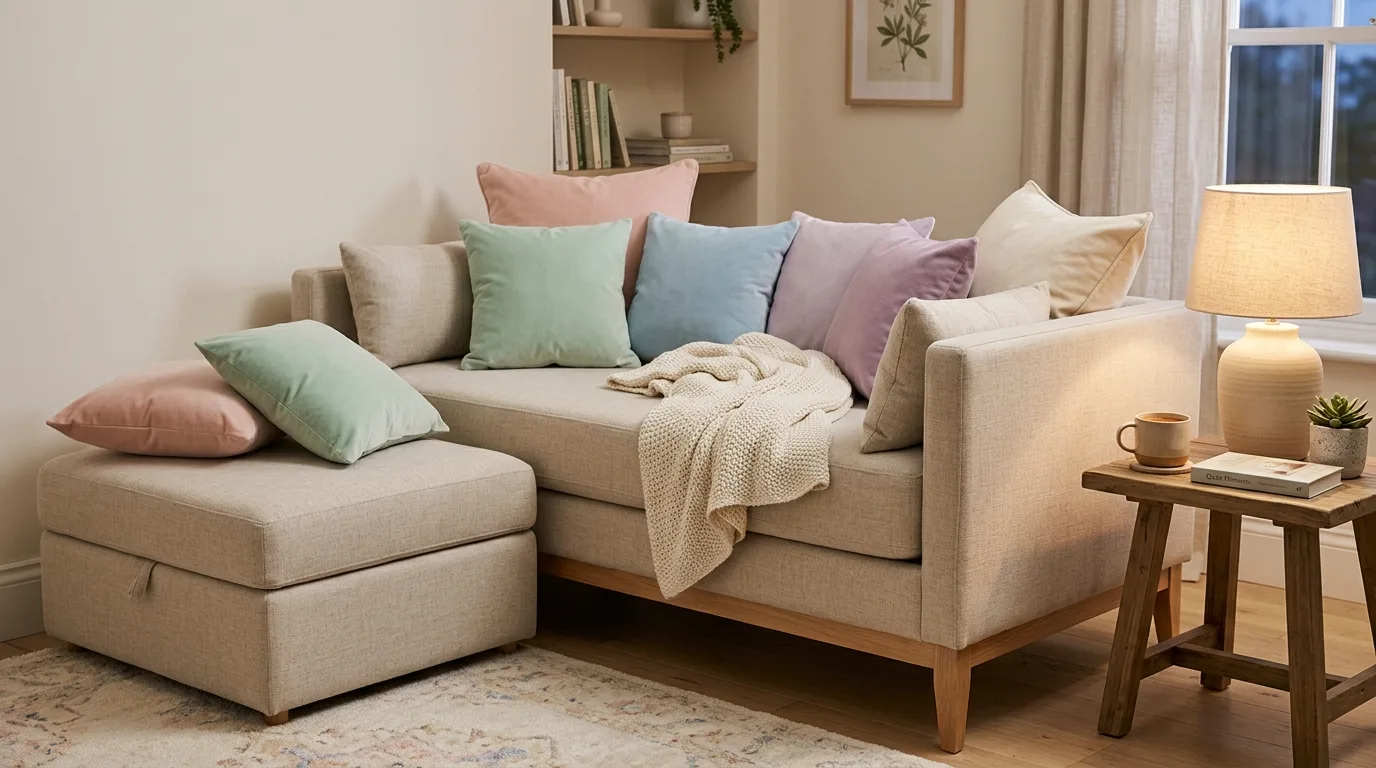
Use convertible pieces nearby
An ottoman, nesting table, or stool that can shift roles easily helps the space stay adaptable. This is useful when the daybed needs to support both everyday lounging and overnight guests.
Styling tip: Keep the surface edited so the functional pieces still have room to look styled.
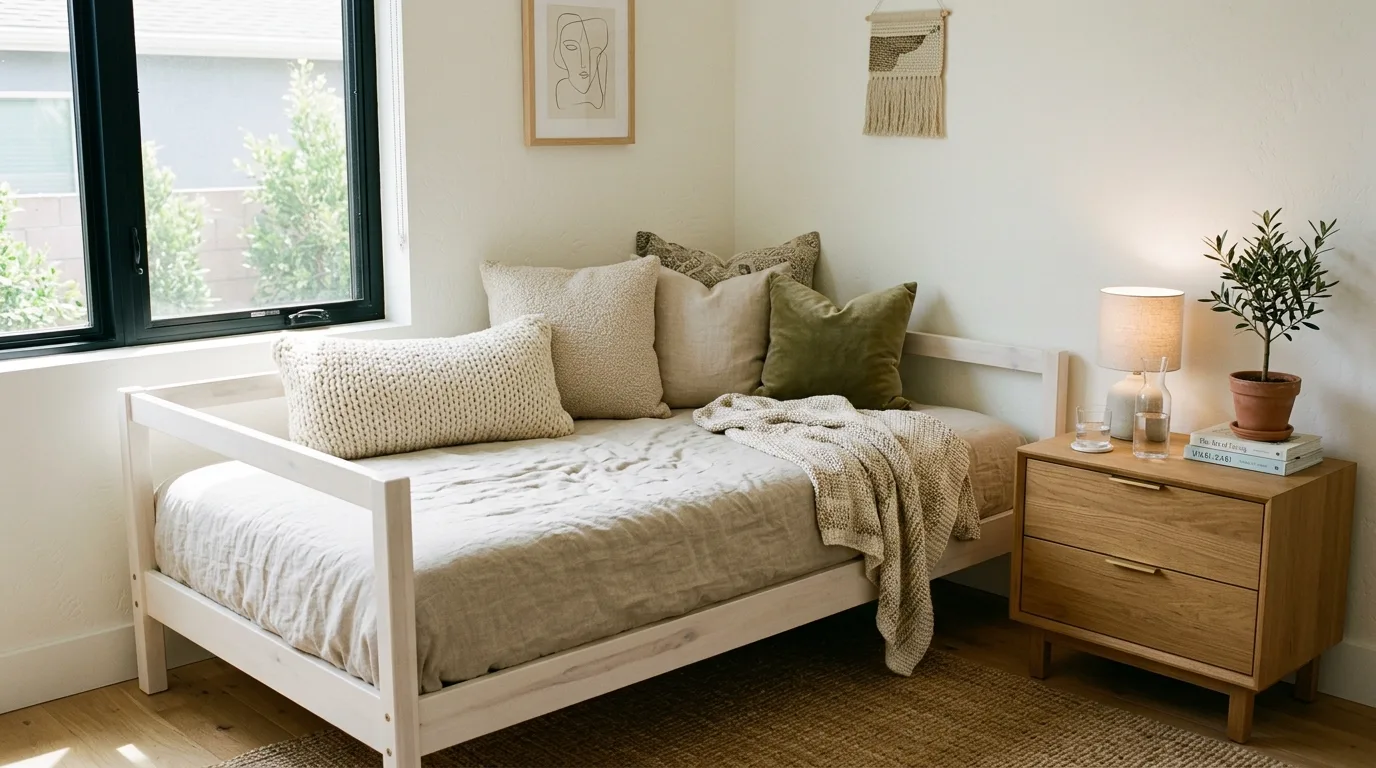
Keep the frame visually light
A simple white or open-frame daybed keeps a small room from feeling weighed down. Lighter silhouettes leave the space feeling brighter and less crowded.
Styling tip: Keep the lighting warm and soft so the setup feels inviting instead of harsh.
Pair the daybed with a work zone
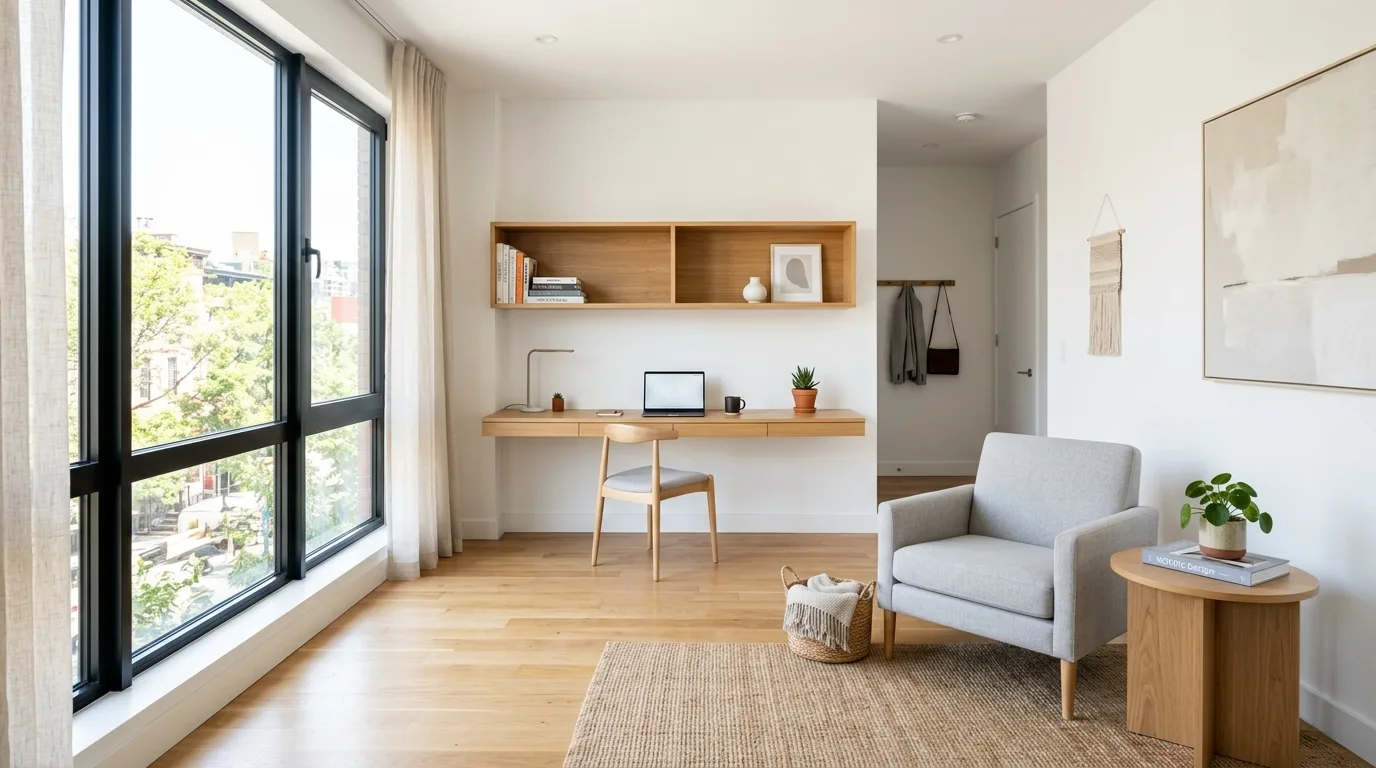
In studio apartments or multifunction rooms, a wall-mounted desk or compact workspace near the daybed can help one area do two jobs well. The key is to keep colors and materials consistent so it all feels connected.
Styling tip: Repeat the main color in a few places so the look feels connected instead of random.
Style a guest room around a feature wall
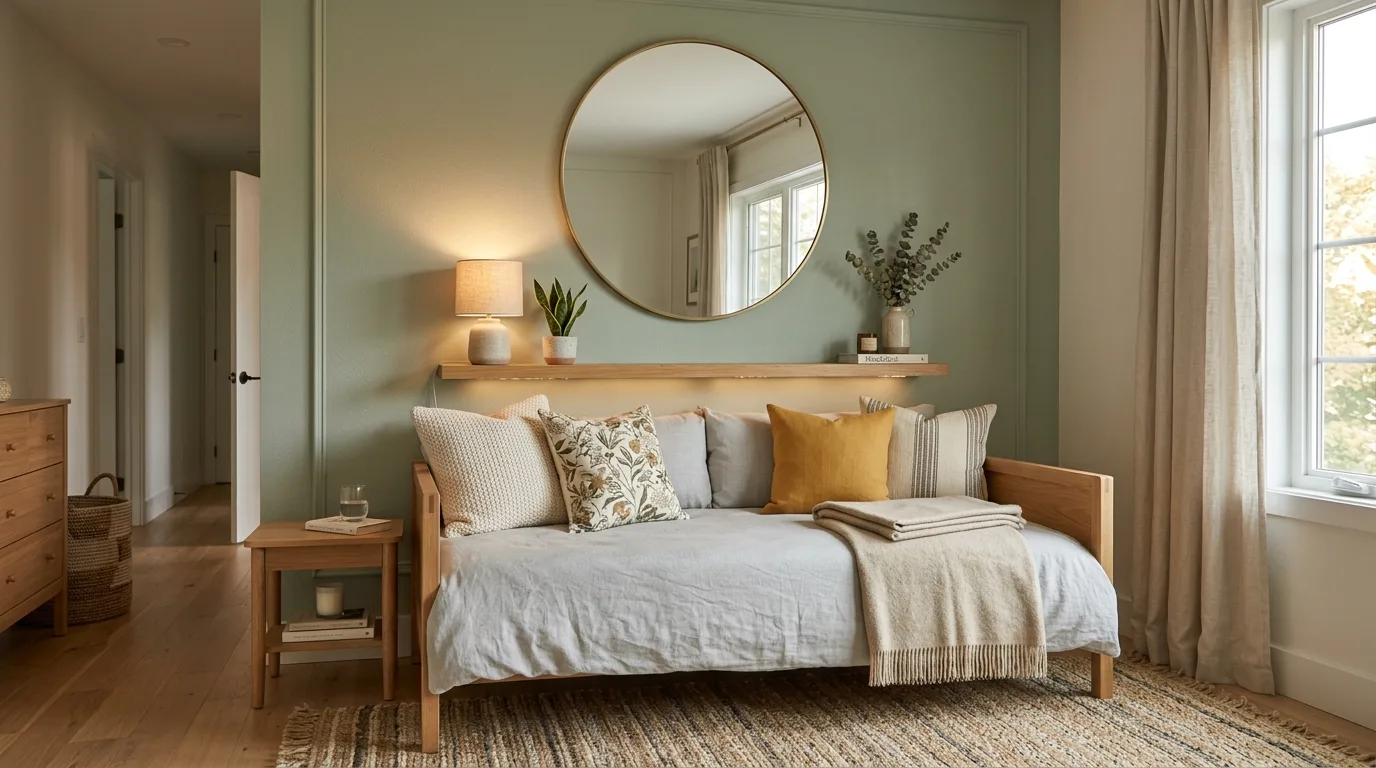
A daybed against a painted accent wall or beneath a large mirror can feel fully designed rather than improvised. This kind of backdrop gives the sleeping area presence without taking extra floor space.
Styling tip: Keep the lighting warm and soft so the setup feels inviting instead of harsh.
Use the window area for a softer mood
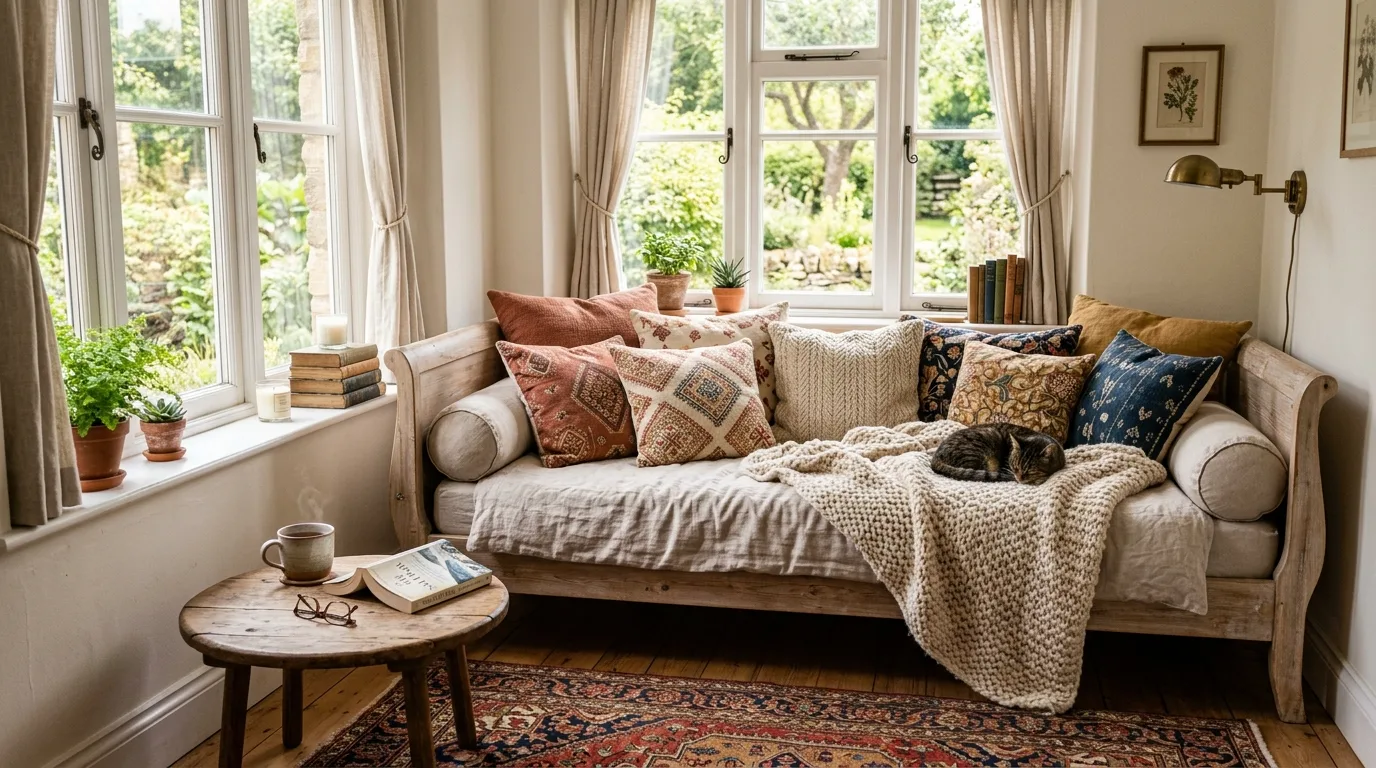
Placed by a window, a daybed can become the best spot for reading, relaxing, or hosting guests. Add a rug and a small table nearby to make the setup feel complete.
Styling tip: Leave a little breathing room around the main pieces so the space does not feel crowded.
Make a home office guest-ready
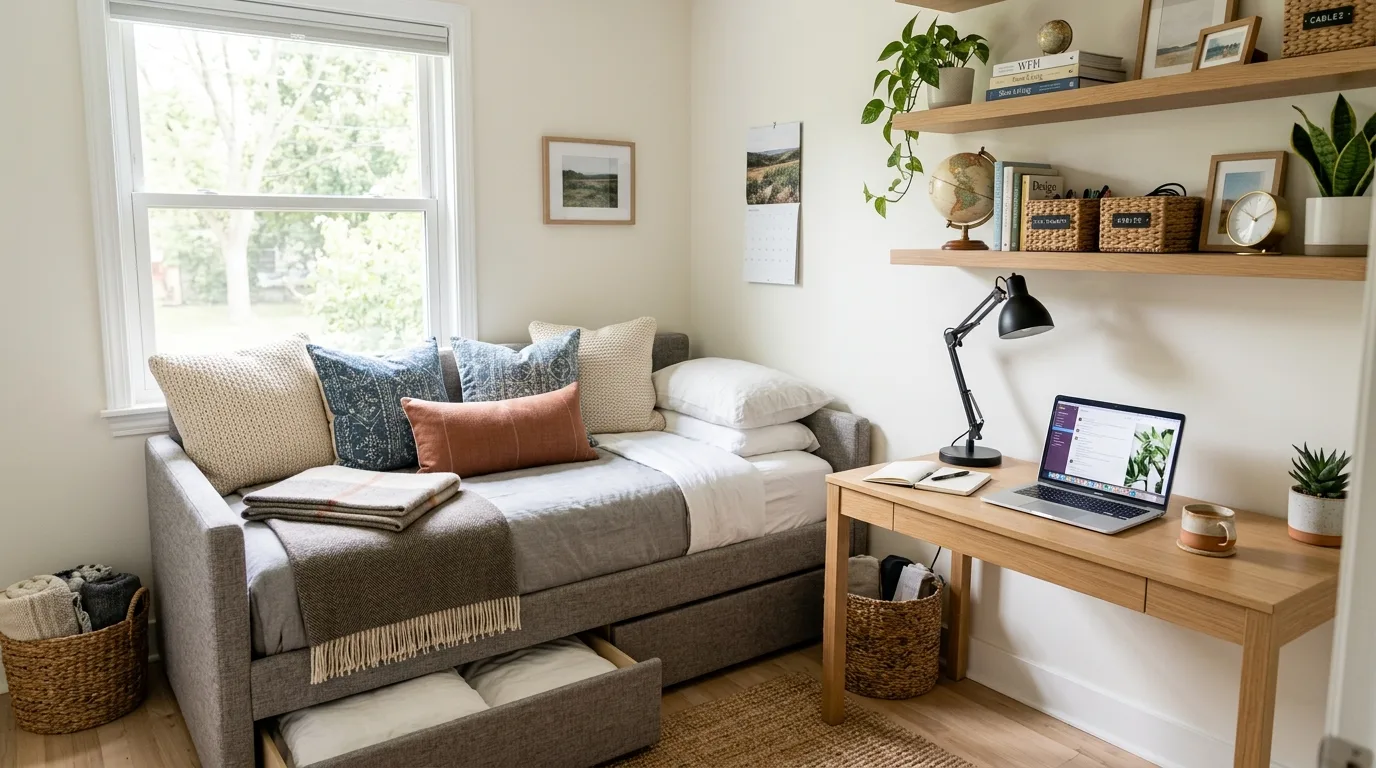
A daybed works particularly well in a small office because it offers seating every day and a bed when needed. Wall shelves and a tidy desk setup help the room stay practical without looking crowded.
Styling tip: Leave a little breathing room around the main pieces so the space does not feel crowded.
Repeat the storage idea in the styling
If the daybed has drawers, baskets, or shelves, keep the styling equally practical with folded throws and edited decor. That consistency makes the room feel more organized overall.
Styling tip: Use one contained storage zone so the room stays easier to maintain day to day.
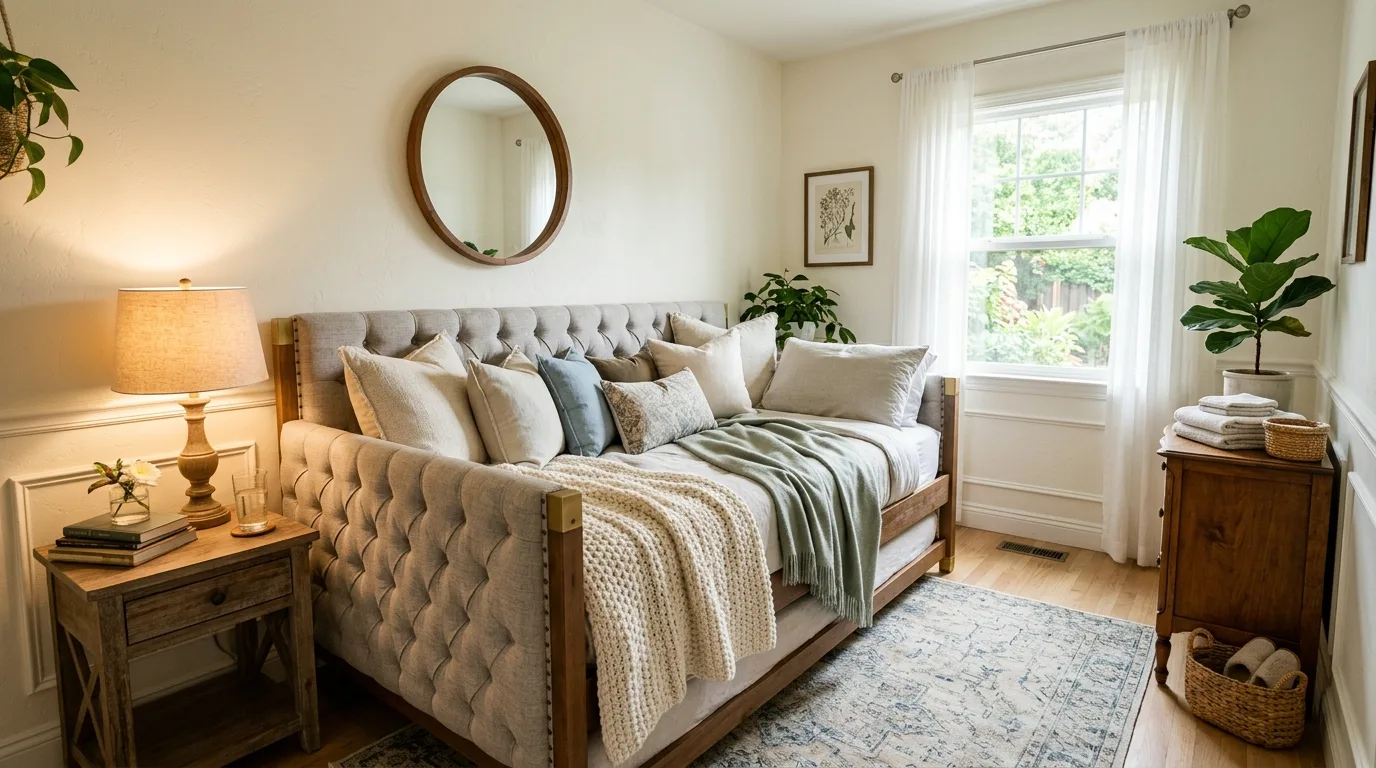
Choose upholstery when you want softness
A tufted or upholstered daybed frame feels especially welcoming in a guest room because it reads more like a piece of living room furniture. Add layered textiles and the whole room feels warmer and more finished.
Styling tip: Layer one or two soft textures instead of adding too many decorative extras.
Final Takeaway
A daybed can solve several small-space problems at once when it is styled and positioned thoughtfully. Start with style the bed like seating during the day so it blends into the room, then build around the pieces that make the space feel easier to use and nicer to look at every day.