Toddler bedrooms work best when they feel cheerful and easy to explore without creating unnecessary hazards. A good setup gives little children freedom to move, play, and settle themselves while making storage and routines simpler for the adults using the room too.
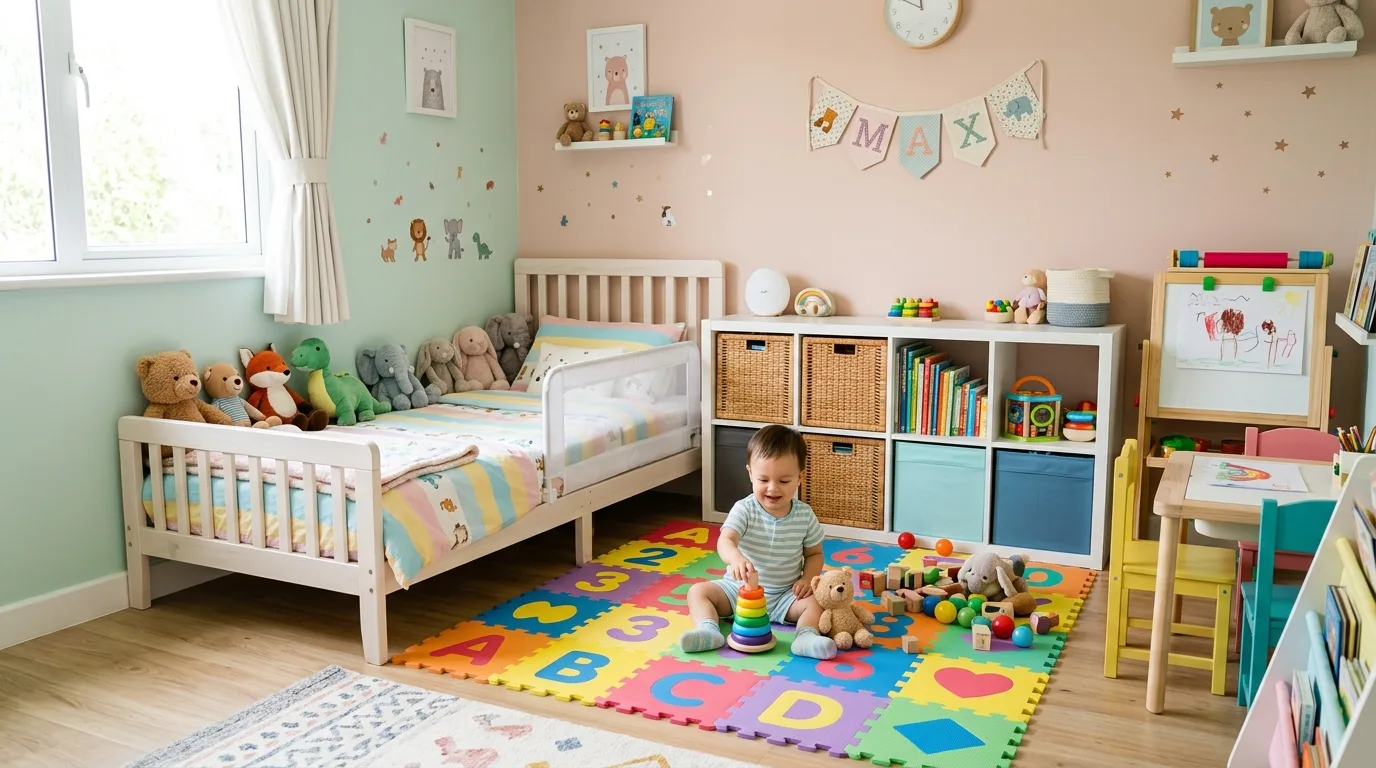
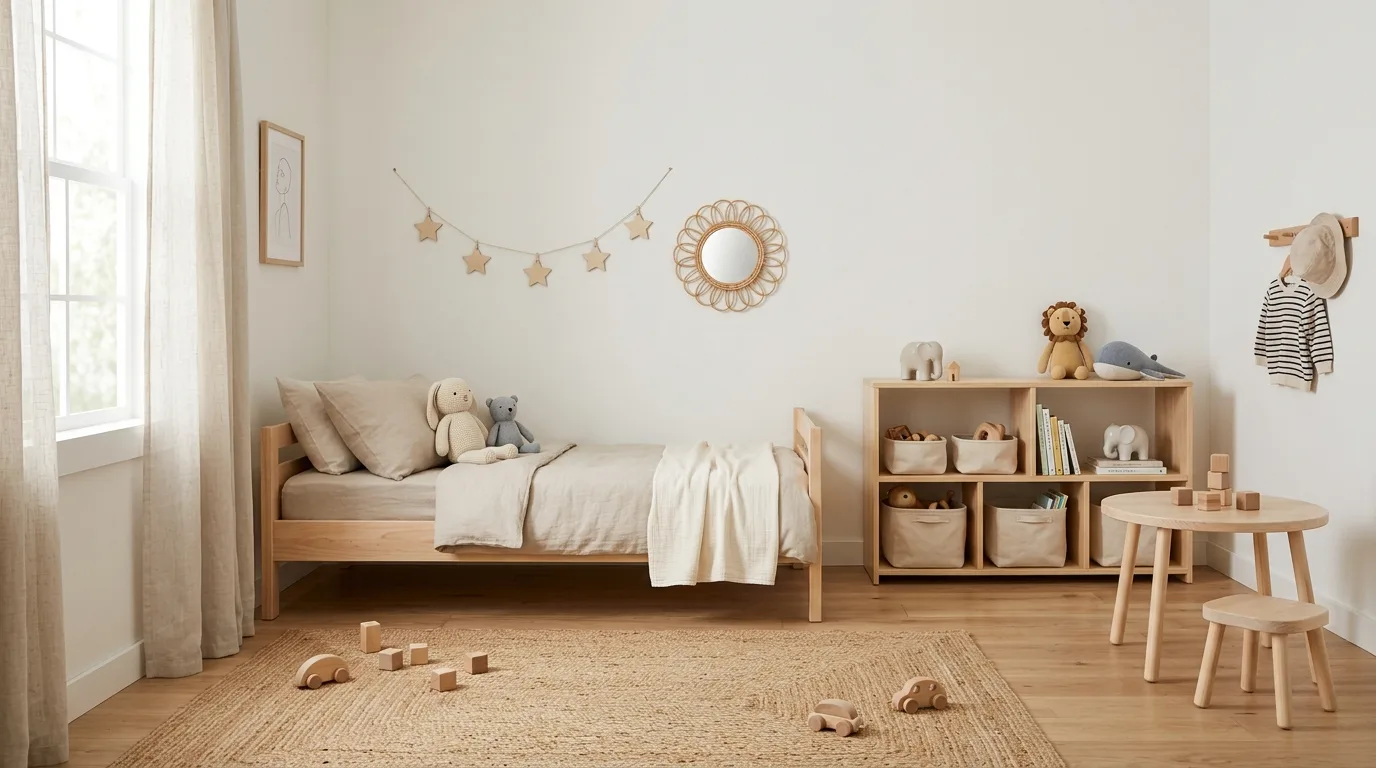
Use a low bed for easier independence
A toddler bed or floor bed makes climbing in and out safer and helps the room feel scaled to the child rather than built entirely for adults.
Styling tip: Focus on child-height furniture so the room feels accessible and calmer.
Create open play space on the floor
Leaving a clear area with a soft rug or foam mat gives toddlers room to move, stack, play, and sprawl without everything happening on the bed.
Styling tip: Layer one or two soft textures instead of adding too many decorative extras.
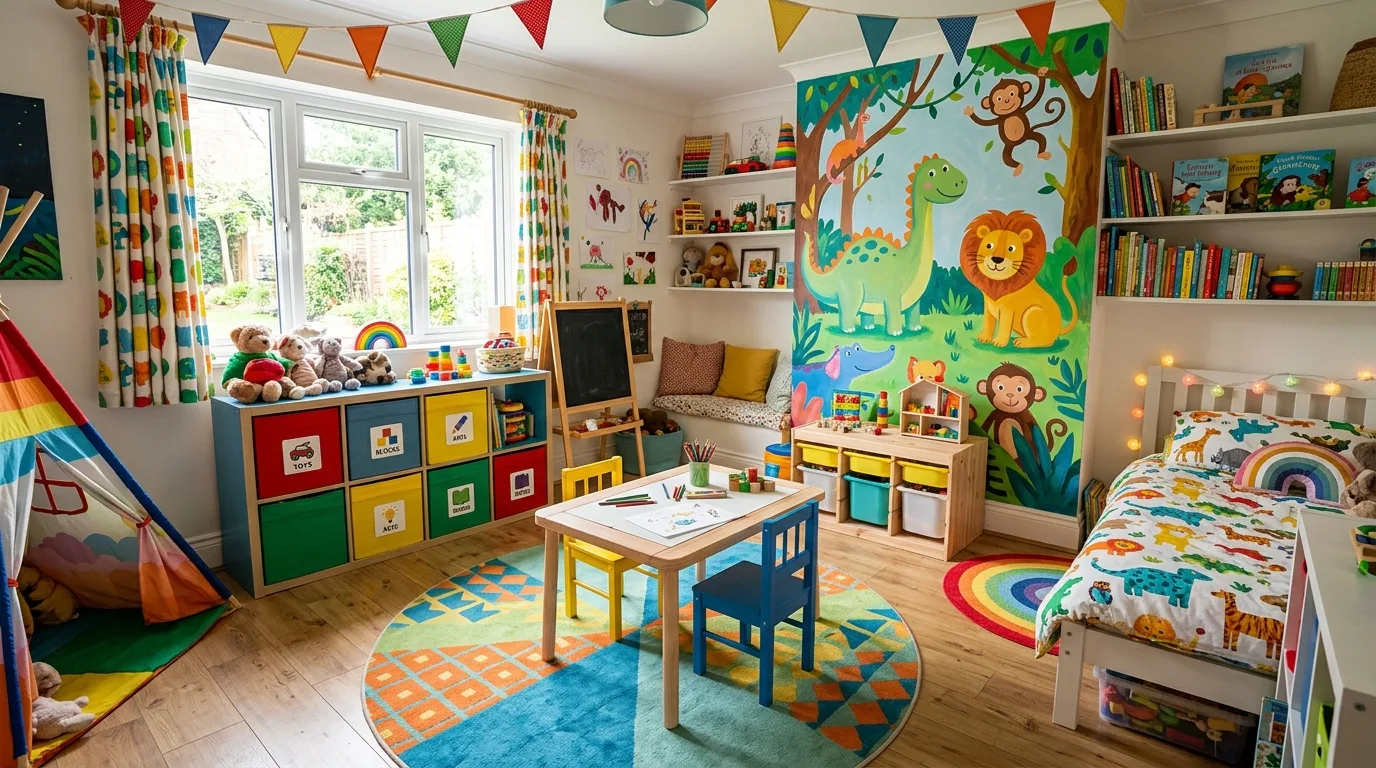
Choose soft rounded furniture
Furniture with simpler shapes and fewer sharp corners makes the room safer and visually gentler at the same time.
Styling tip: Leave a little breathing room around the main pieces so the space does not feel crowded.
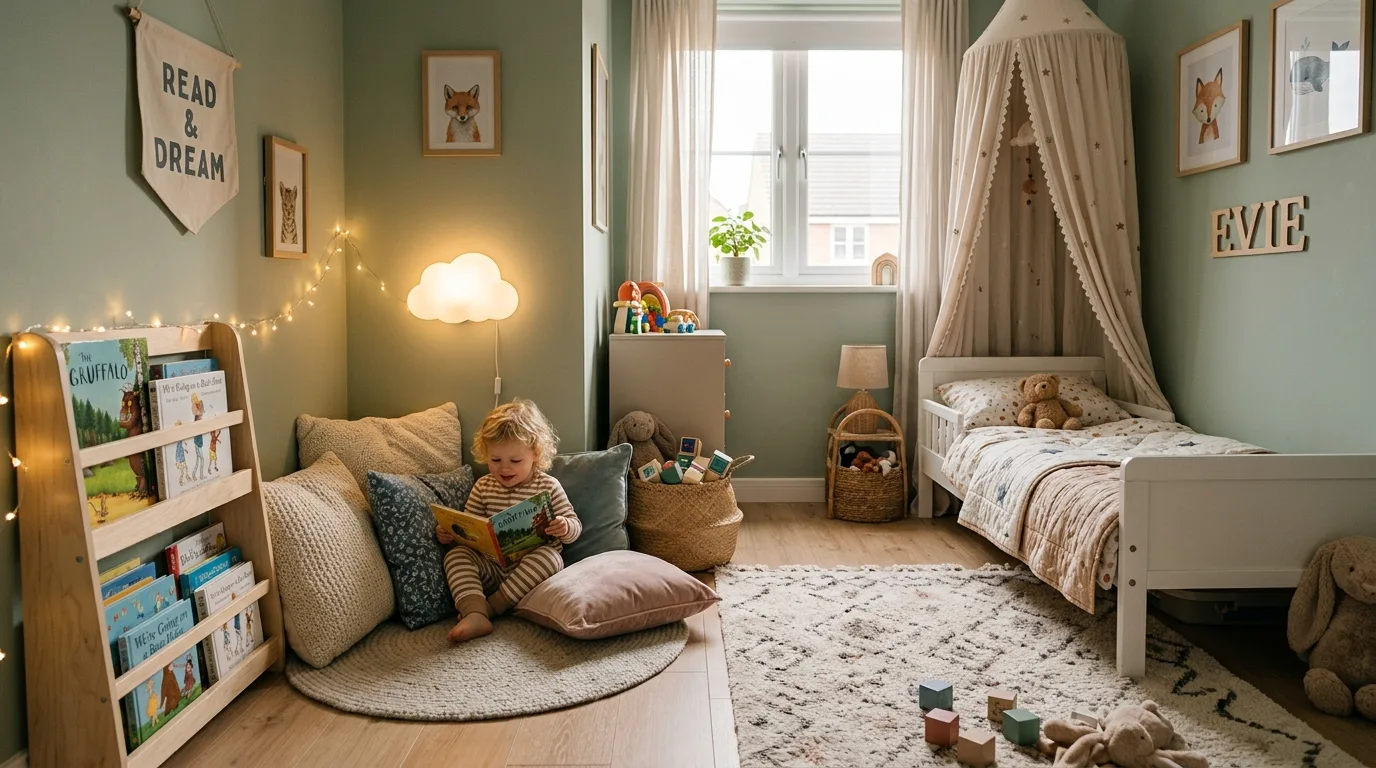
Add toy storage they can actually use
Low bins, baskets, and cubbies make cleanup more realistic and help toddlers start recognizing where their things belong.
Styling tip: Use one contained storage zone so the room stays easier to maintain day to day.
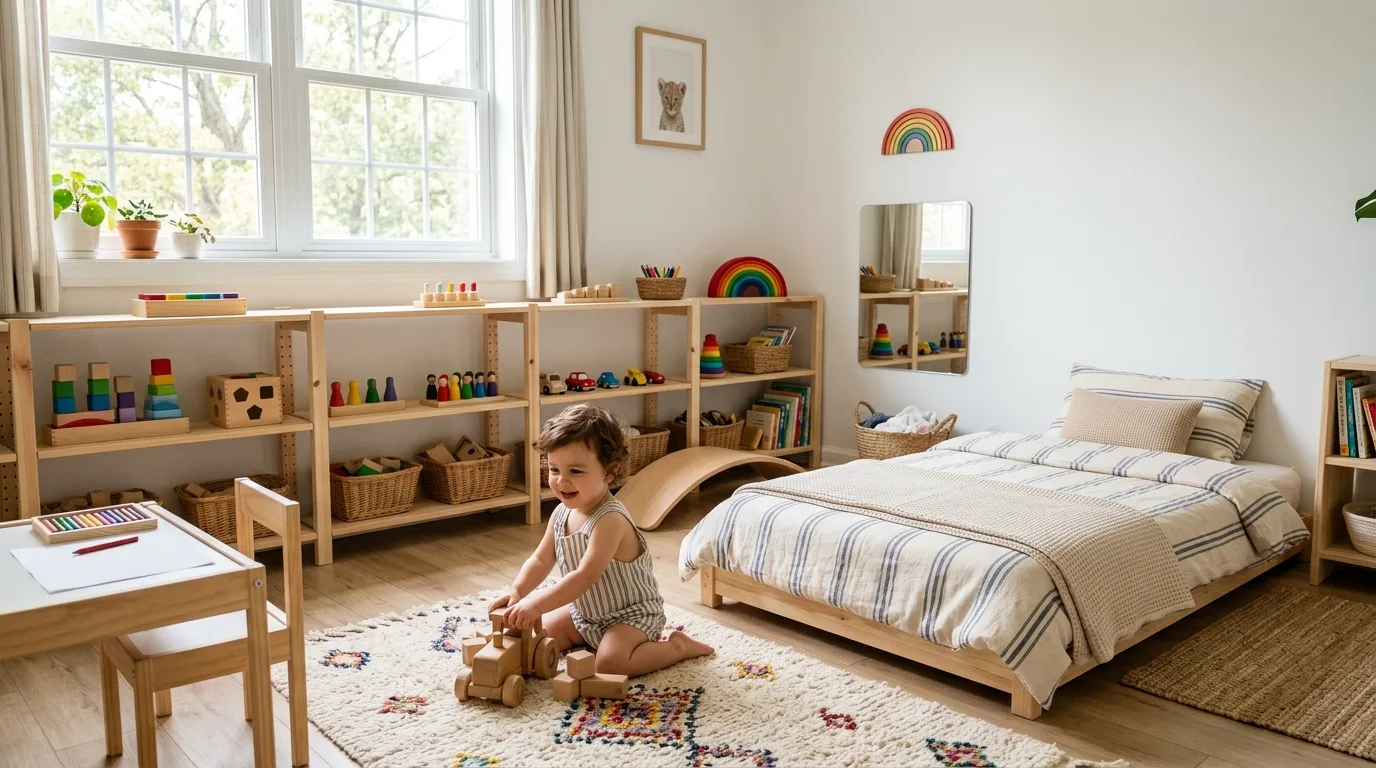
Make a reading nook feel inviting
A few forward-facing books, cushions, and a soft lamp can turn one corner of the room into a calm daily routine space.
Styling tip: Keep the lighting warm and soft so the setup feels inviting instead of harsh.
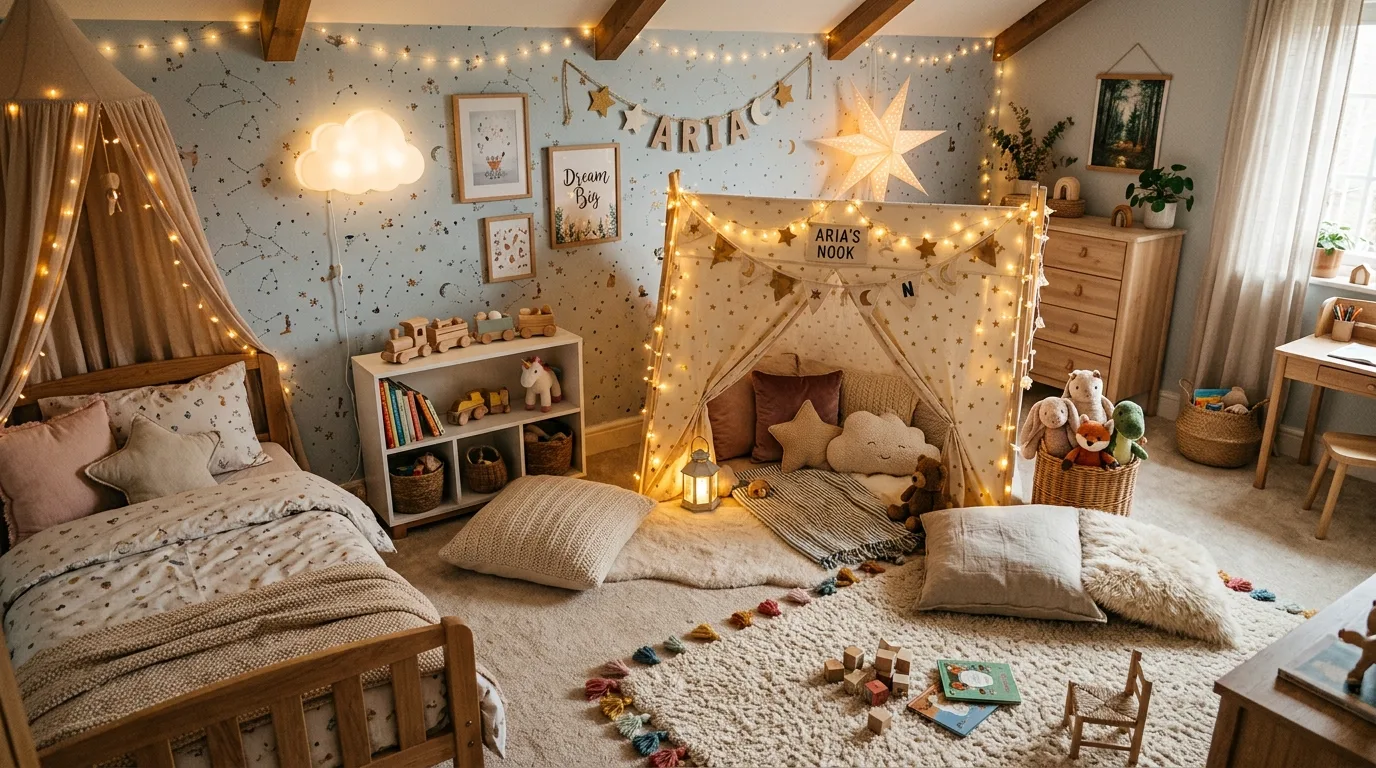
Use playful wall decor in moderation
Animals, shapes, or simple decals can add personality without overwhelming the room or making it feel too busy for sleep.
Styling tip: Give the wall feature enough blank space around it so it can read as a focal point.
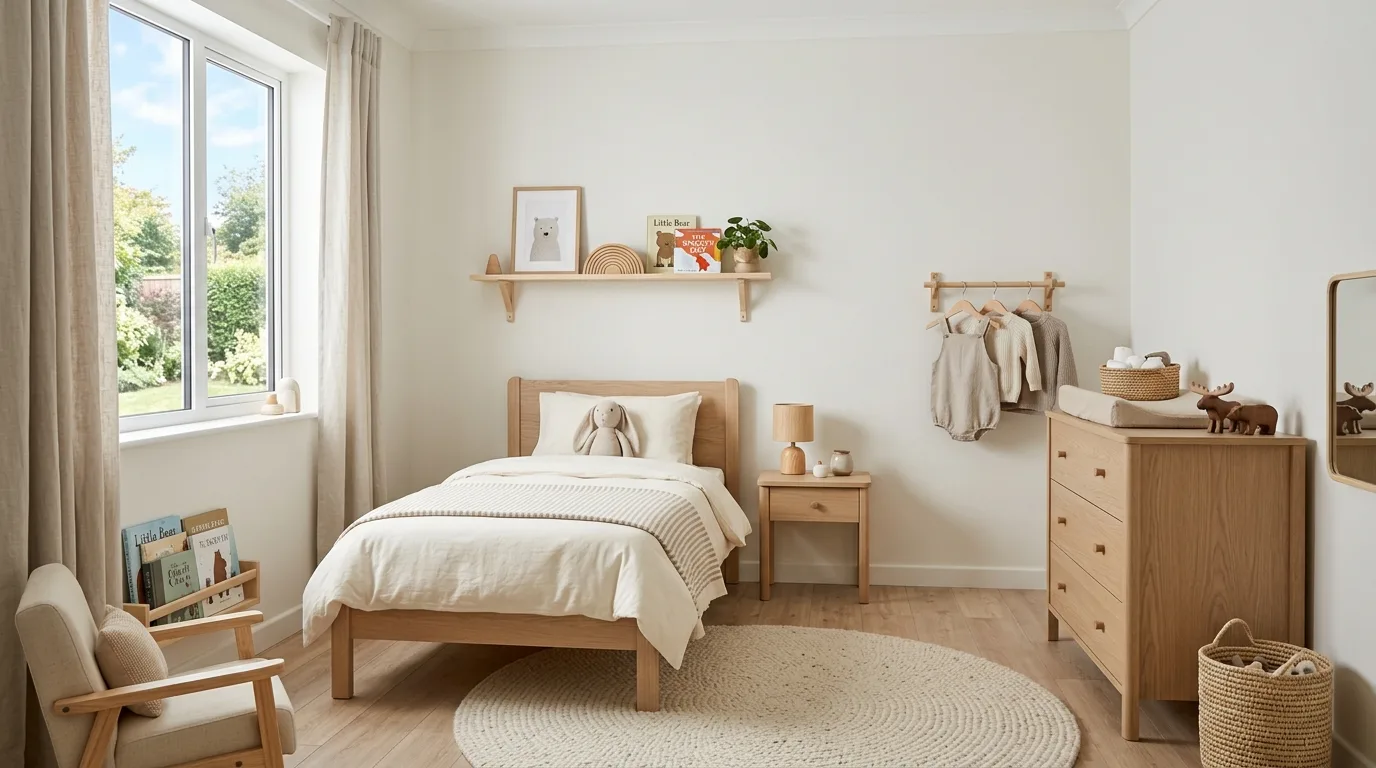
Choose calm colors with a few brighter accents
Soft greens, warm neutrals, dusty blues, or blush tones often age better than highly saturated palettes while still feeling fun.
Styling tip: Repeat the main color in a few places so the look feels connected instead of random.
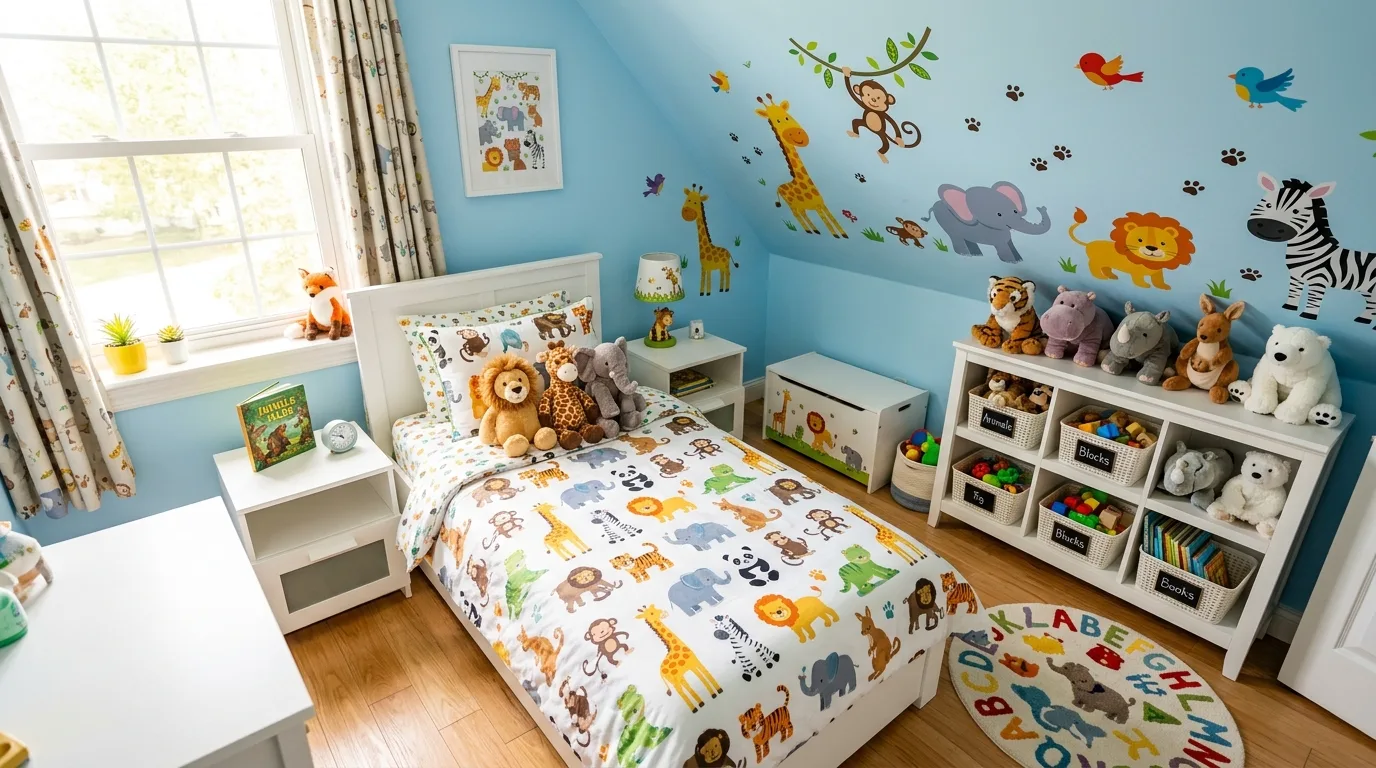
Keep everyday items within easy reach
Accessible pajamas, favorite books, and a nightlight can make bedtime smoother and help toddlers participate in routines.
Styling tip: Keep the lighting warm and soft so the setup feels inviting instead of harsh.
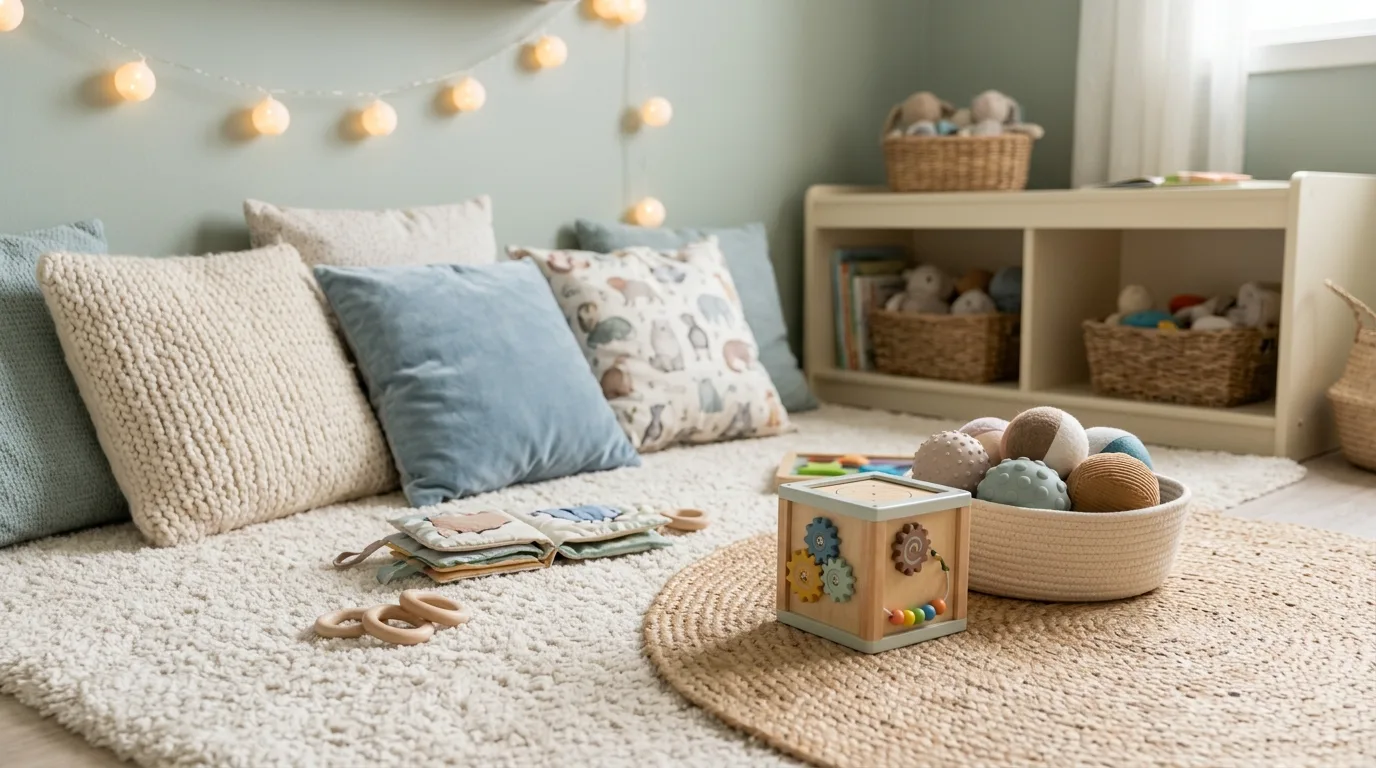
Use layered lighting for day and night
Overhead light is useful, but softer lamps or a nightlight matter just as much when creating a calm bedtime atmosphere.
Styling tip: Keep the lighting warm and soft so the setup feels inviting instead of harsh.
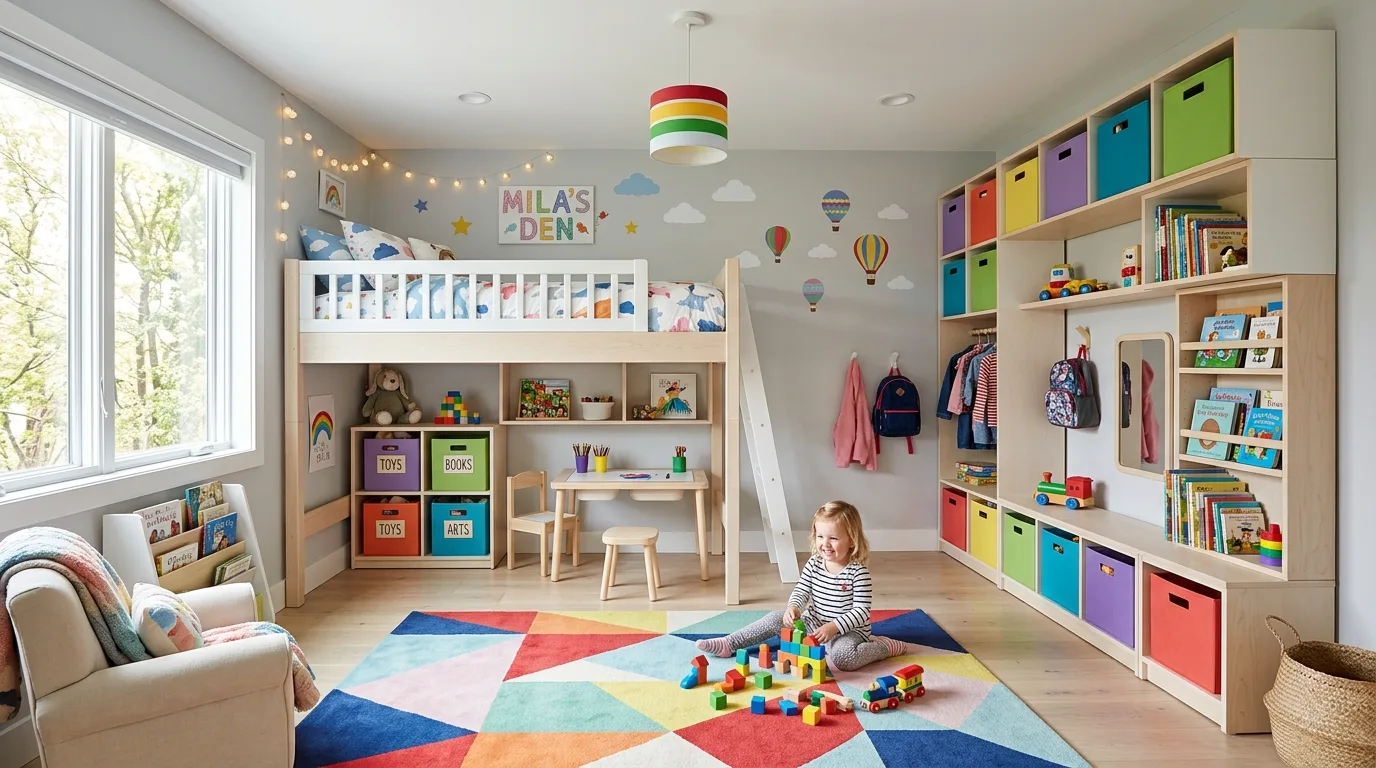
Include one imagination-friendly feature
A little tent, canopy, wall art, or themed shelf can make the room feel magical without taking over the whole design.
Styling tip: Use one contained storage zone so the room stays easier to maintain day to day.
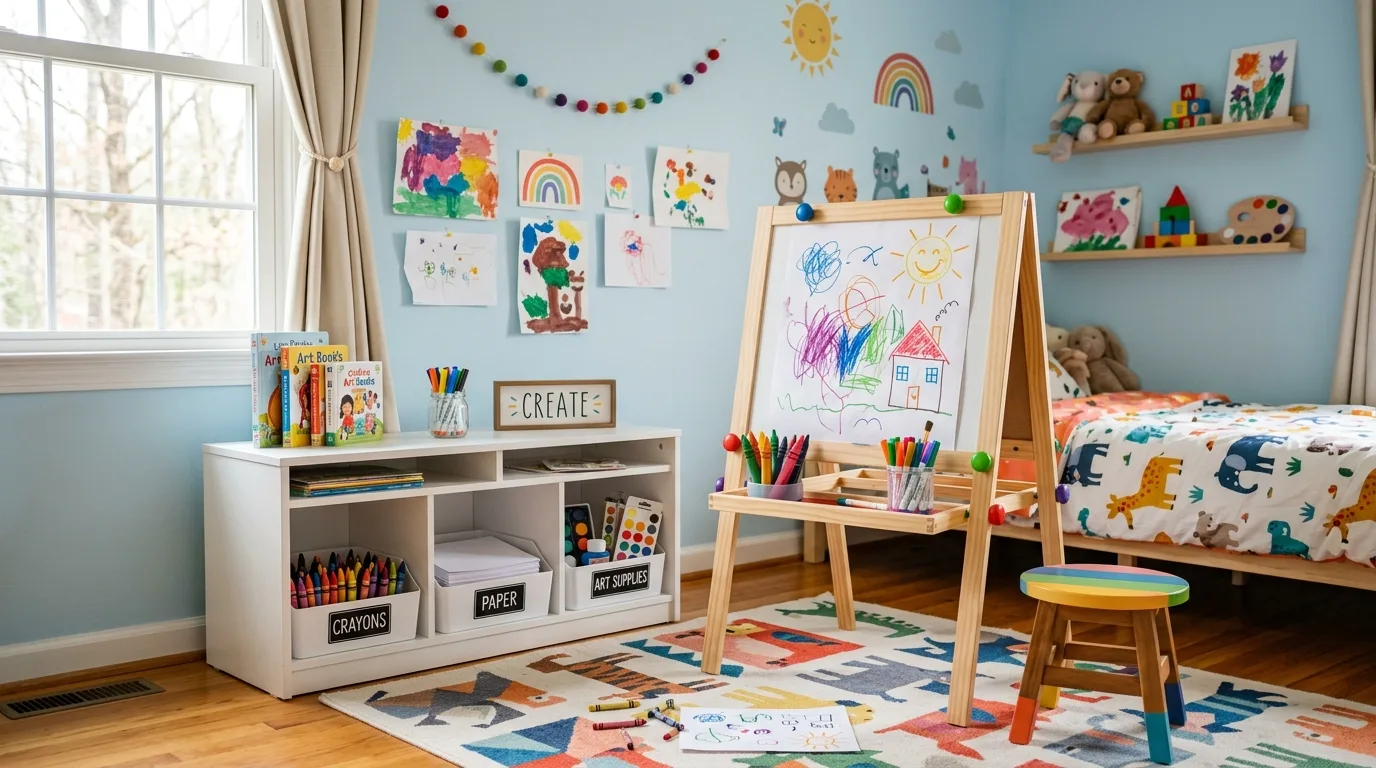
Let safety guide every cute detail
The prettiest toddler rooms still work best when anchors, cords, materials, and layouts are chosen with real daily use in mind.
Styling tip: Focus on the floor soft and open for play.
Final Takeaway
Toddler bedrooms work best when they feel cheerful and easy to explore without creating unnecessary hazards. Start with child-height furniture so the room feels accessible and calmer, then build around the pieces that make the space feel easier to use and nicer to look at every day.