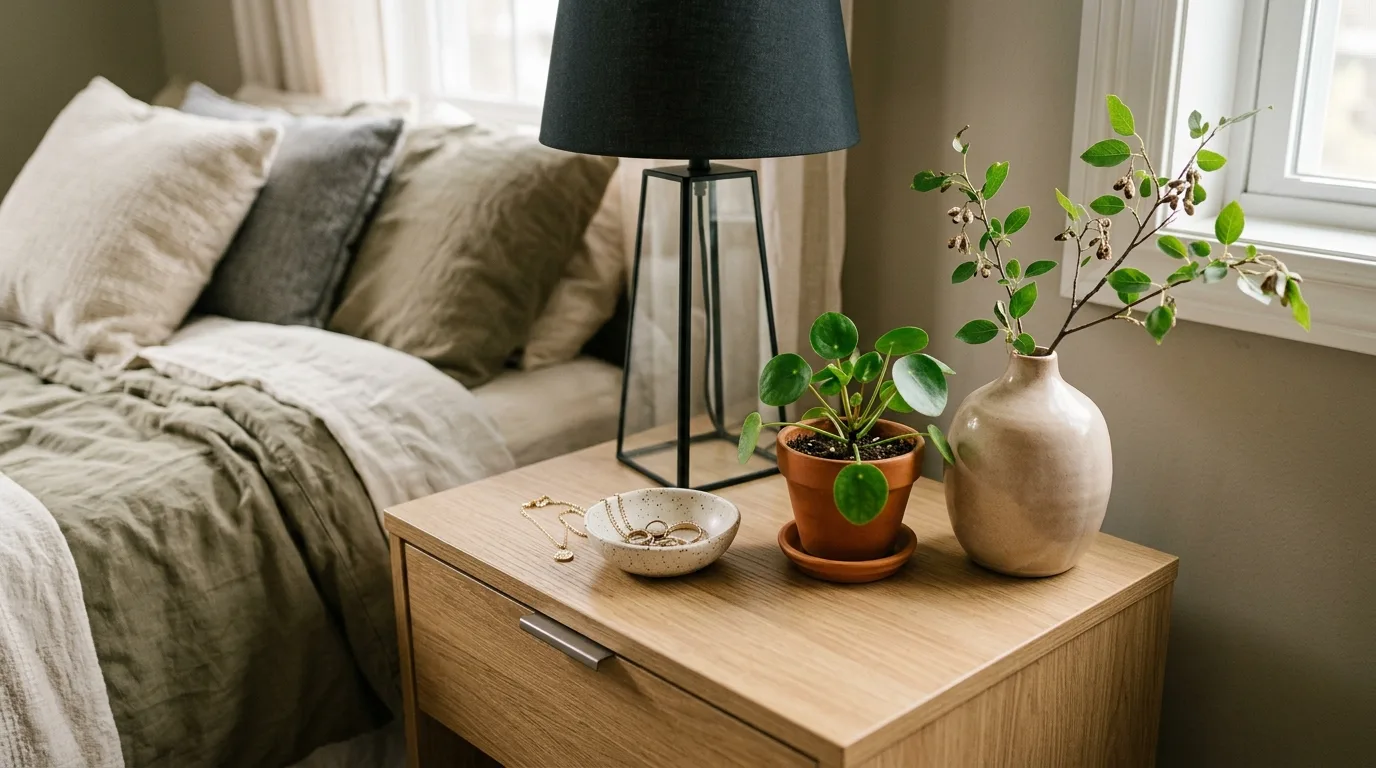
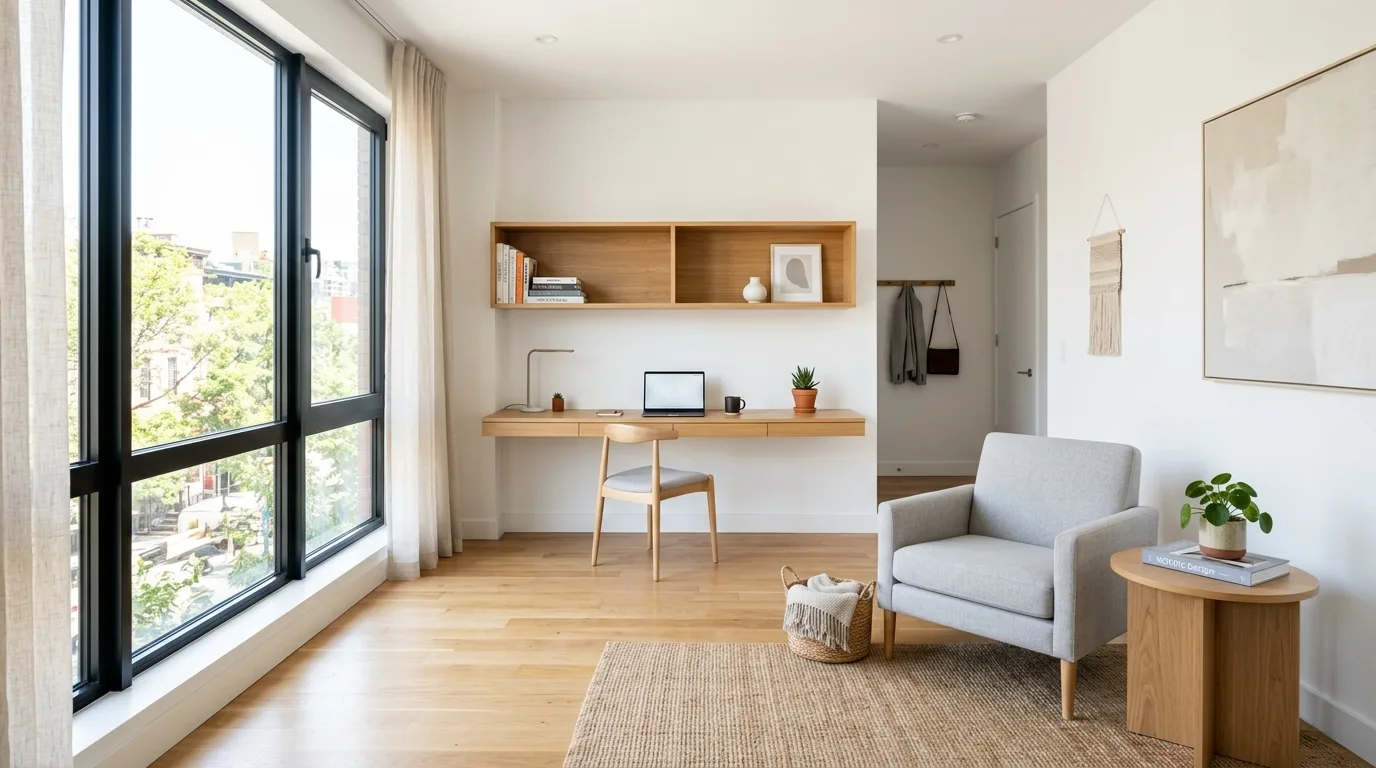
A small bedroom works best when every choice supports both function and visual breathing room. The goal is not to squeeze in more than the space can handle, but to make the room feel useful, calm, and surprisingly stylish despite its size.
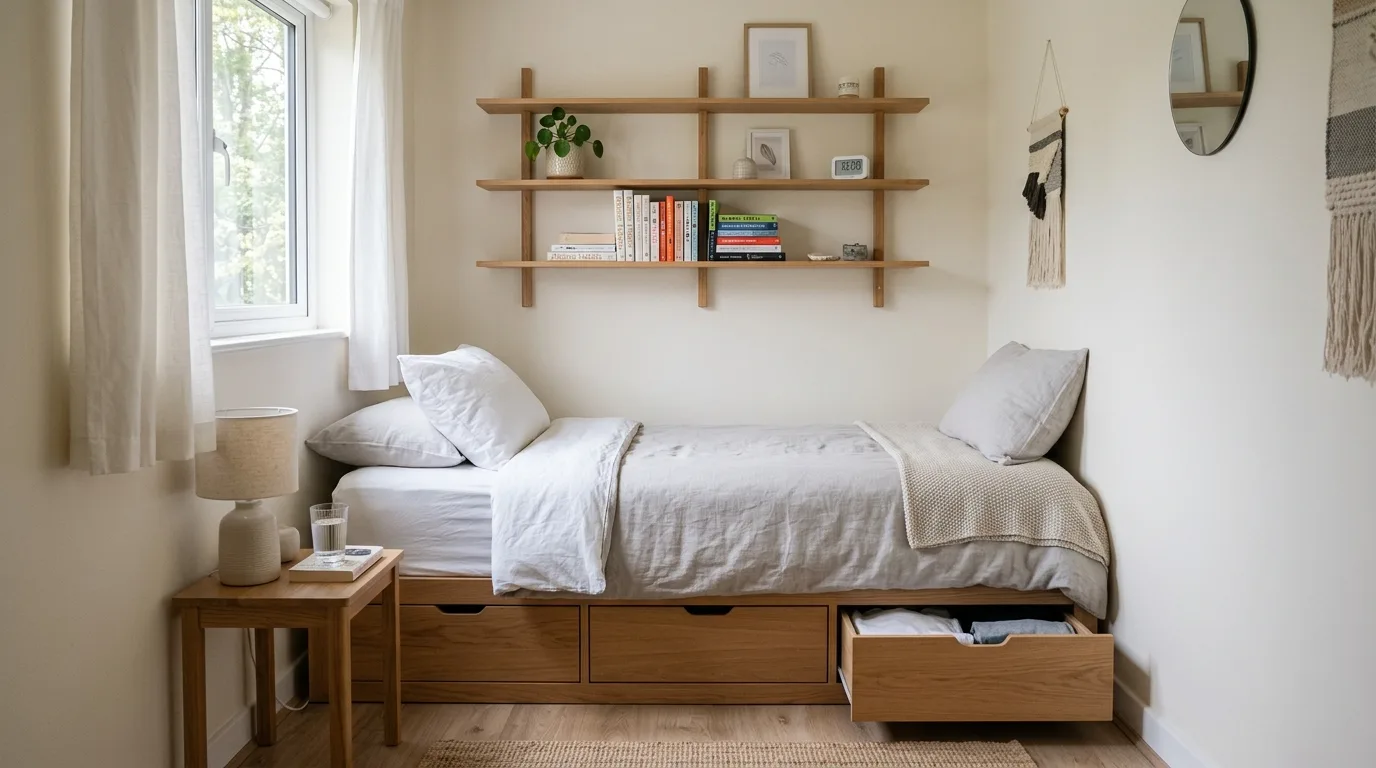
Keep the furniture scaled to the room
Oversized furniture can quickly make a small bedroom feel boxed in. Choosing slimmer, lower-profile pieces helps the room stay lighter and easier to move through.
Styling tip: Keep the lighting warm and soft so the setup feels inviting instead of harsh.
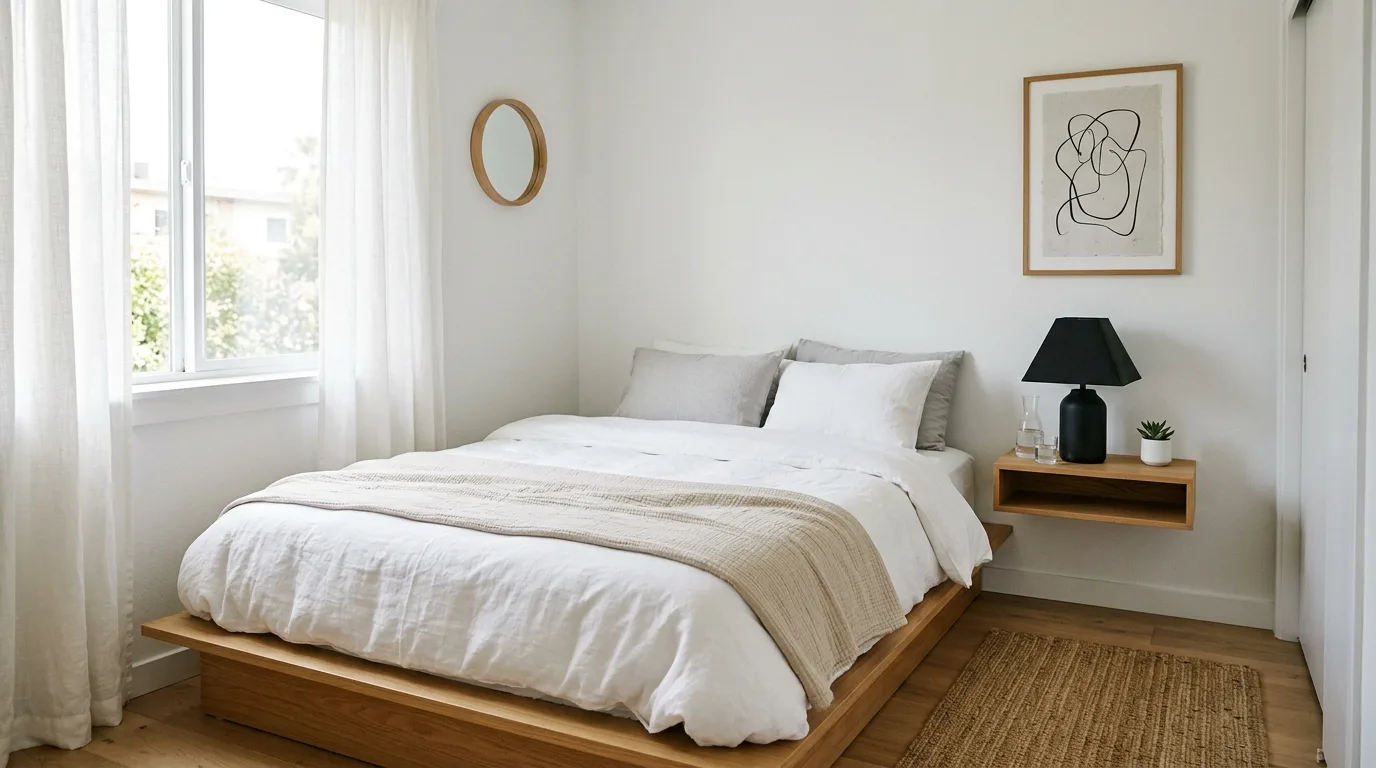
Use under-bed storage well
The space under the bed can hold seasonal clothes, extra bedding, or shoes without taking up any additional floor area. It is one of the smartest hidden storage zones.
Styling tip: Use one contained storage zone so the room stays easier to maintain day to day.
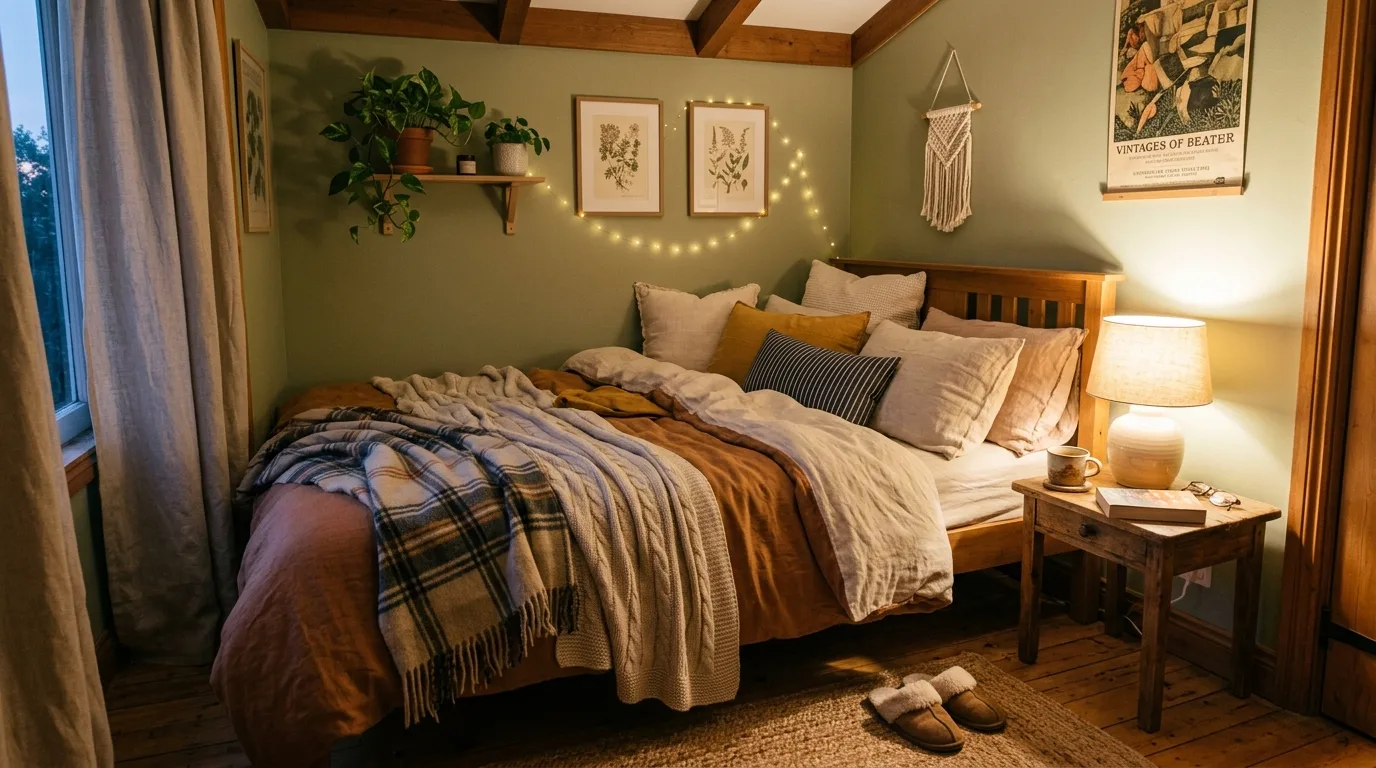
Try wall-mounted nightstands or shelves
Floating storage keeps the floor more open and helps the room feel less crowded. It is especially useful beside smaller beds.
Styling tip: Use one contained storage zone so the room stays easier to maintain day to day.
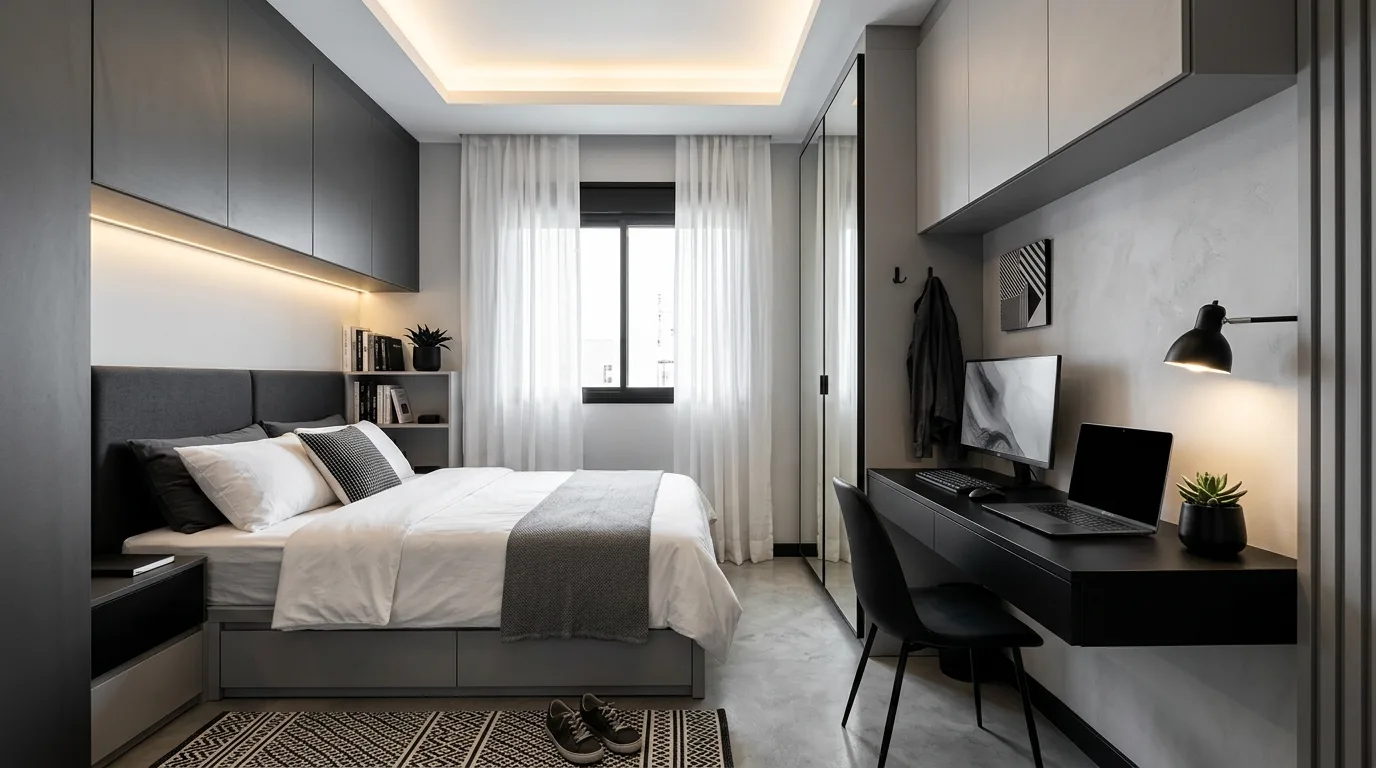
Add mirrors to bounce light
Mirrors make a room feel brighter and often a little bigger because they extend sightlines and reflect natural light back into the space.
Styling tip: Keep the lighting warm and soft so the setup feels inviting instead of harsh.
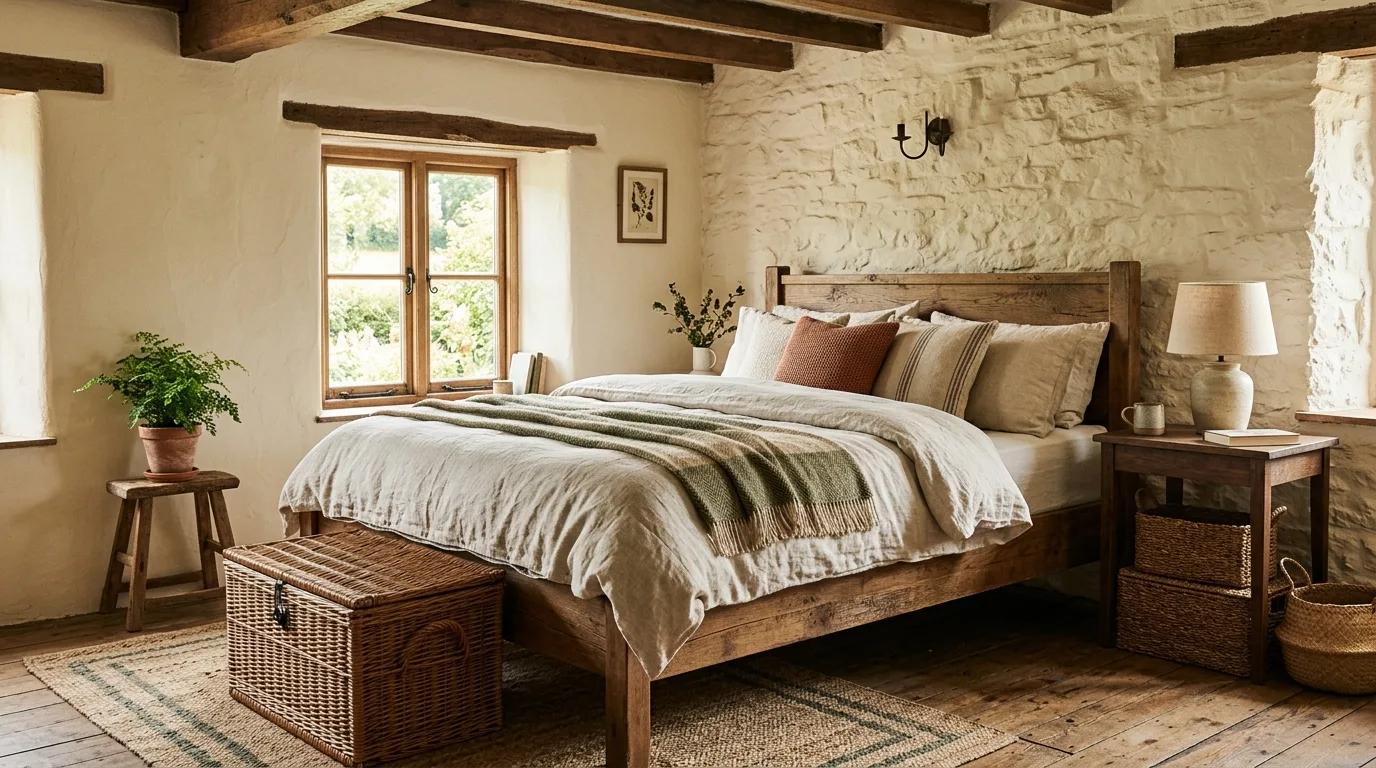
Choose one clear color palette
A connected palette makes the room feel smoother and less visually broken up. This helps small bedrooms read as calmer and more spacious.
Styling tip: Repeat the main color in a few places so the look feels connected instead of random.
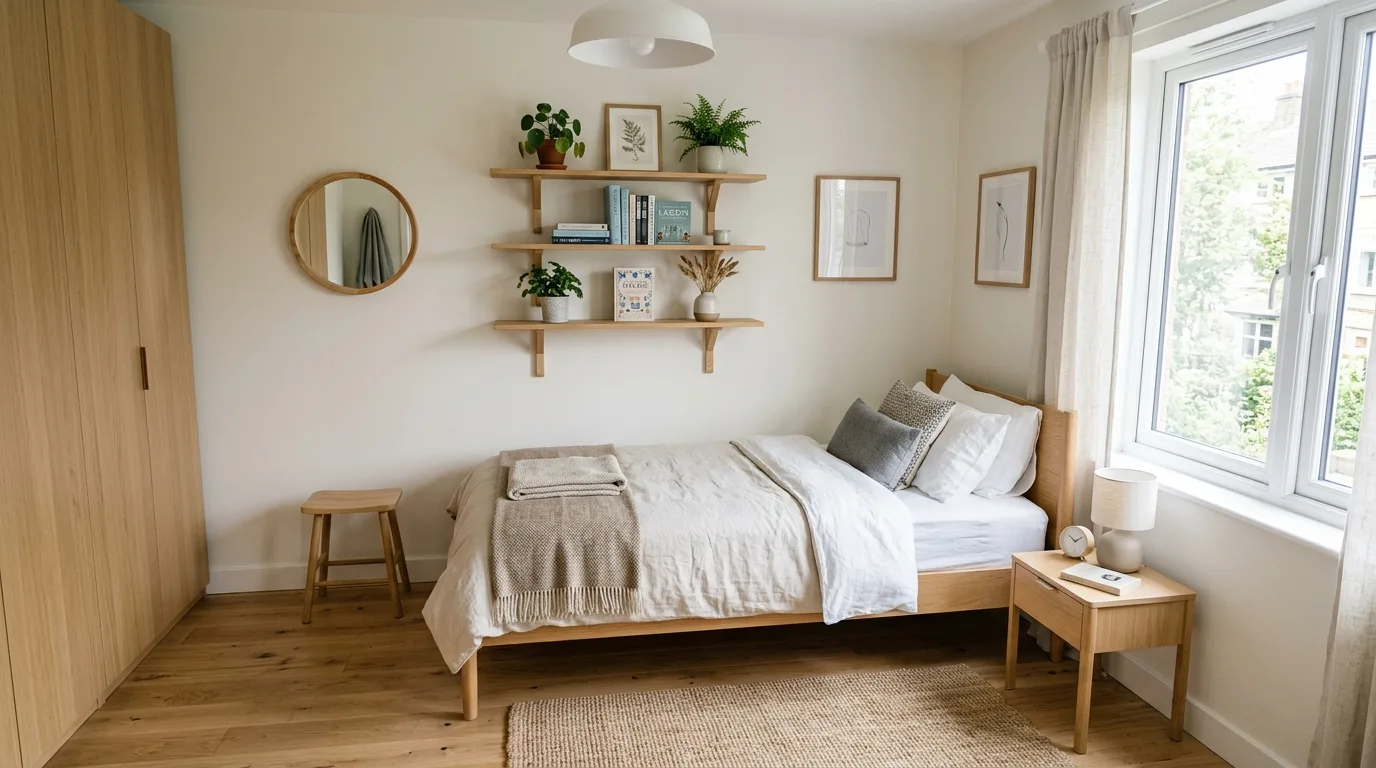
Use vertical storage whenever possible
Shelves, tall dressers, and wall hooks make better use of height while leaving more precious floor space visible.
Styling tip: Use one contained storage zone so the room stays easier to maintain day to day.
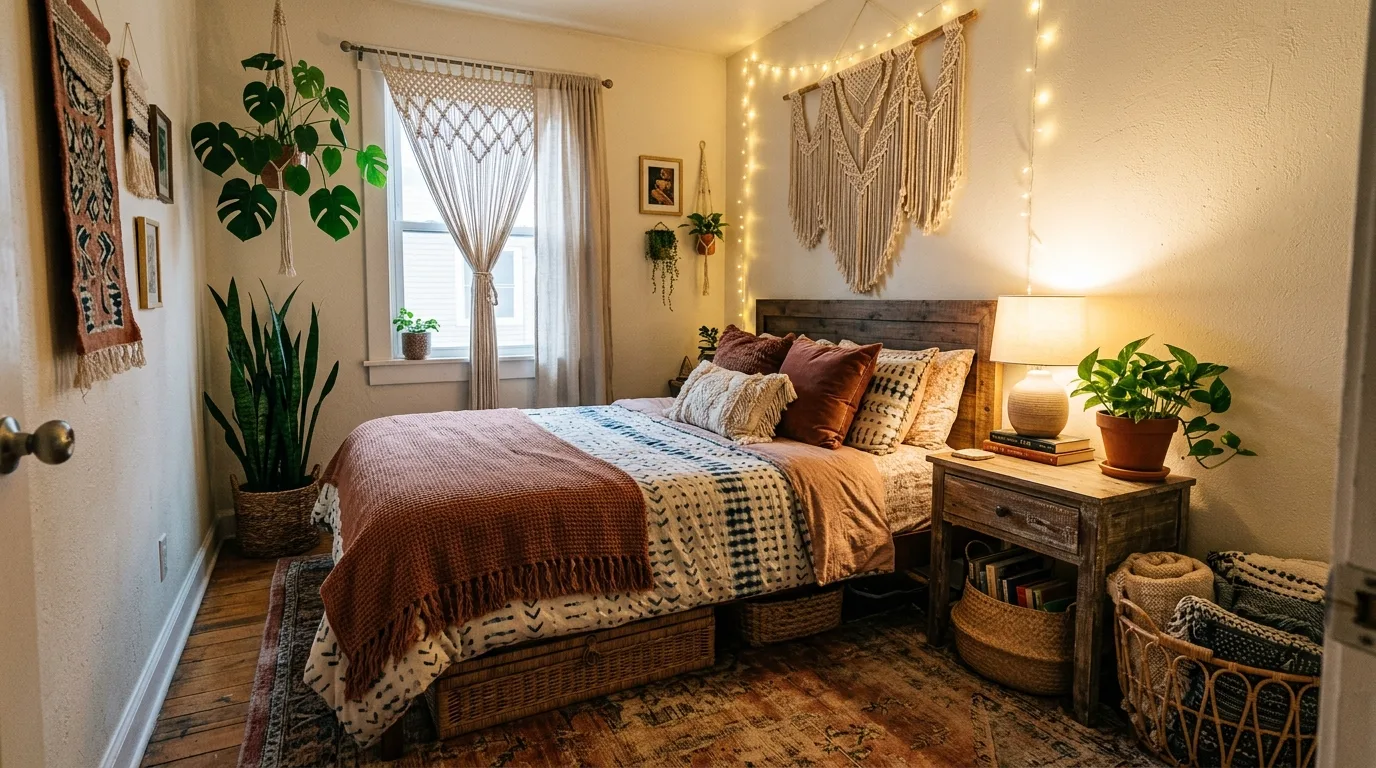
Keep bedding simple but layered
A small room still benefits from a bed that looks inviting. A few soft layers feel polished without overwhelming the space.
Styling tip: Leave a little breathing room around the main pieces so the space does not feel crowded.
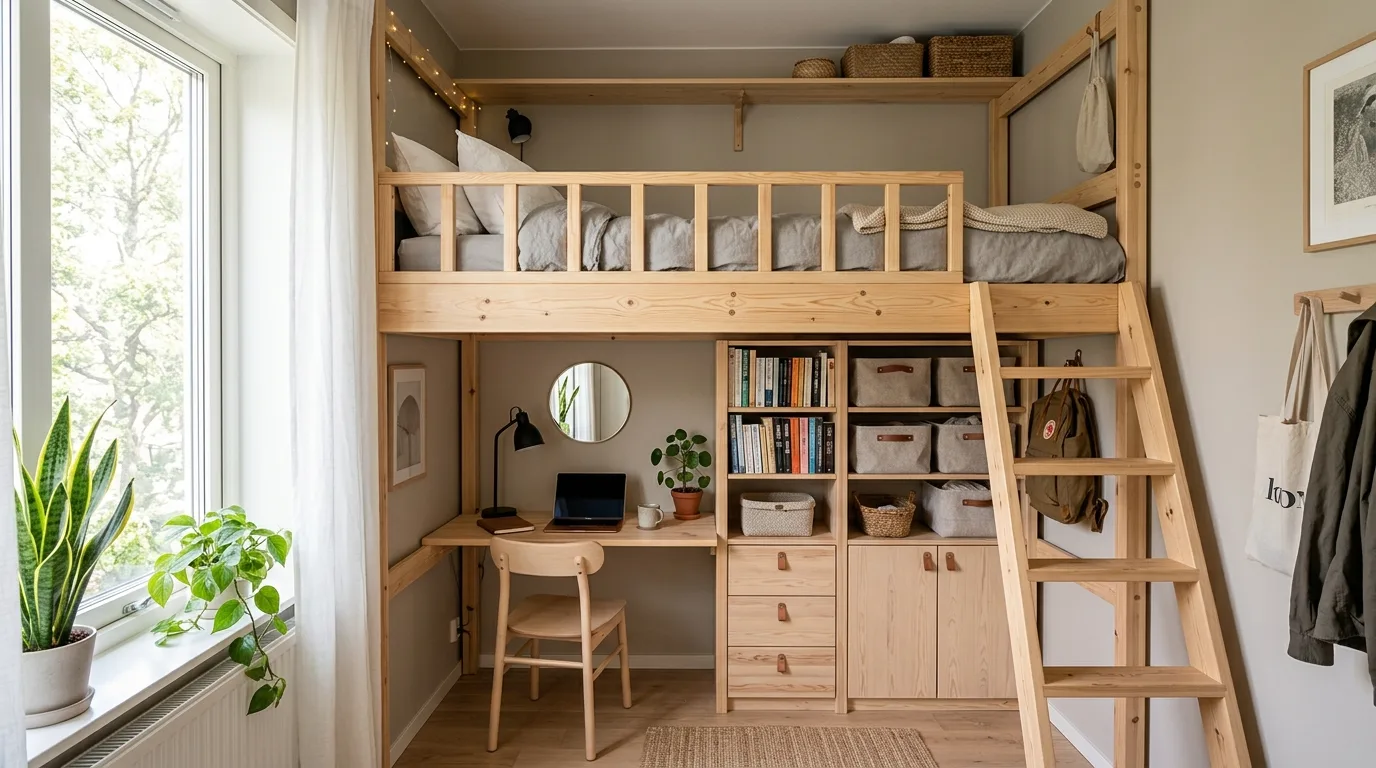
Try furniture that multitasks
Beds with drawers, desks that double as vanities, or benches with storage help the room work harder without needing extra pieces.
Styling tip: Use one contained storage zone so the room stays easier to maintain day to day.
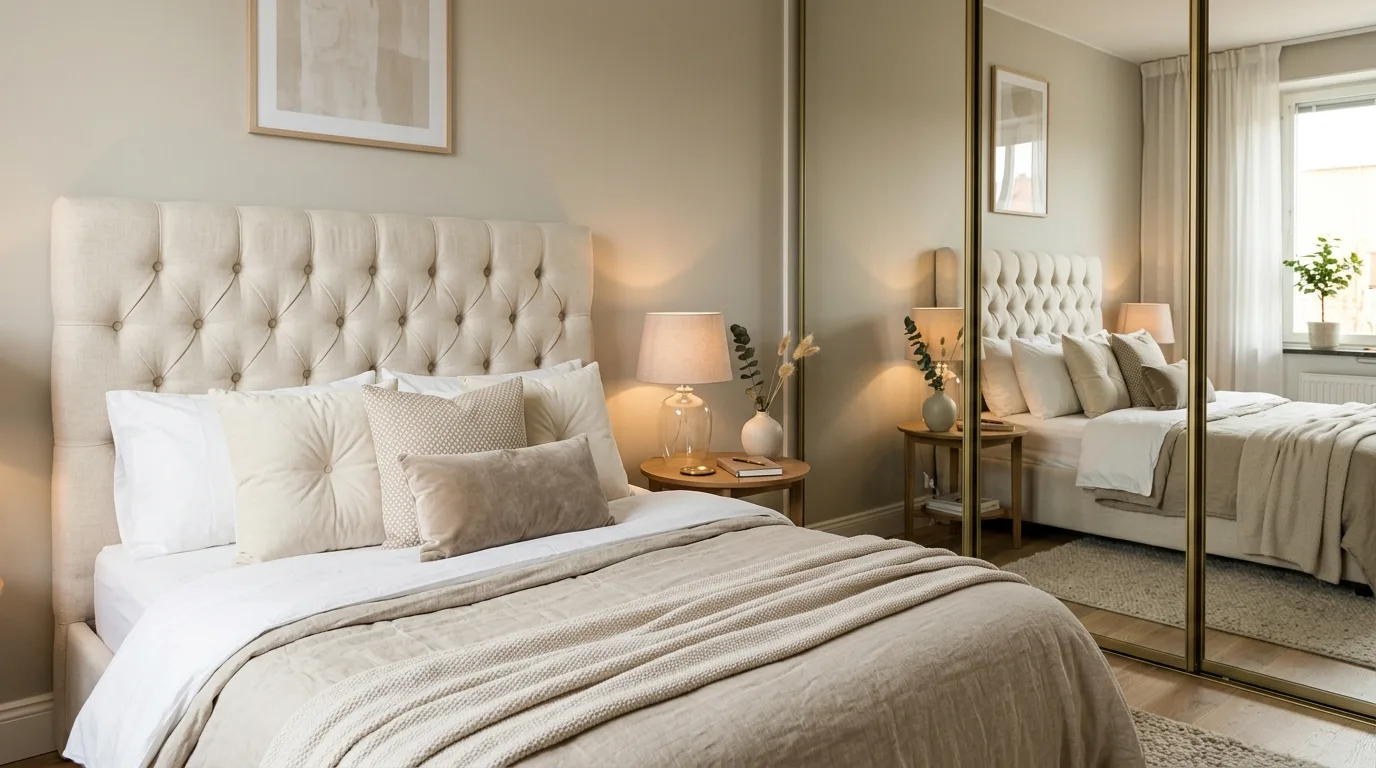
Let some floor space stay open
Visible floor area is part of what helps a bedroom feel bigger. Packing every corner usually makes the room feel tighter, not more useful.
Styling tip: Leave a little breathing room around the main pieces so the space does not feel crowded.
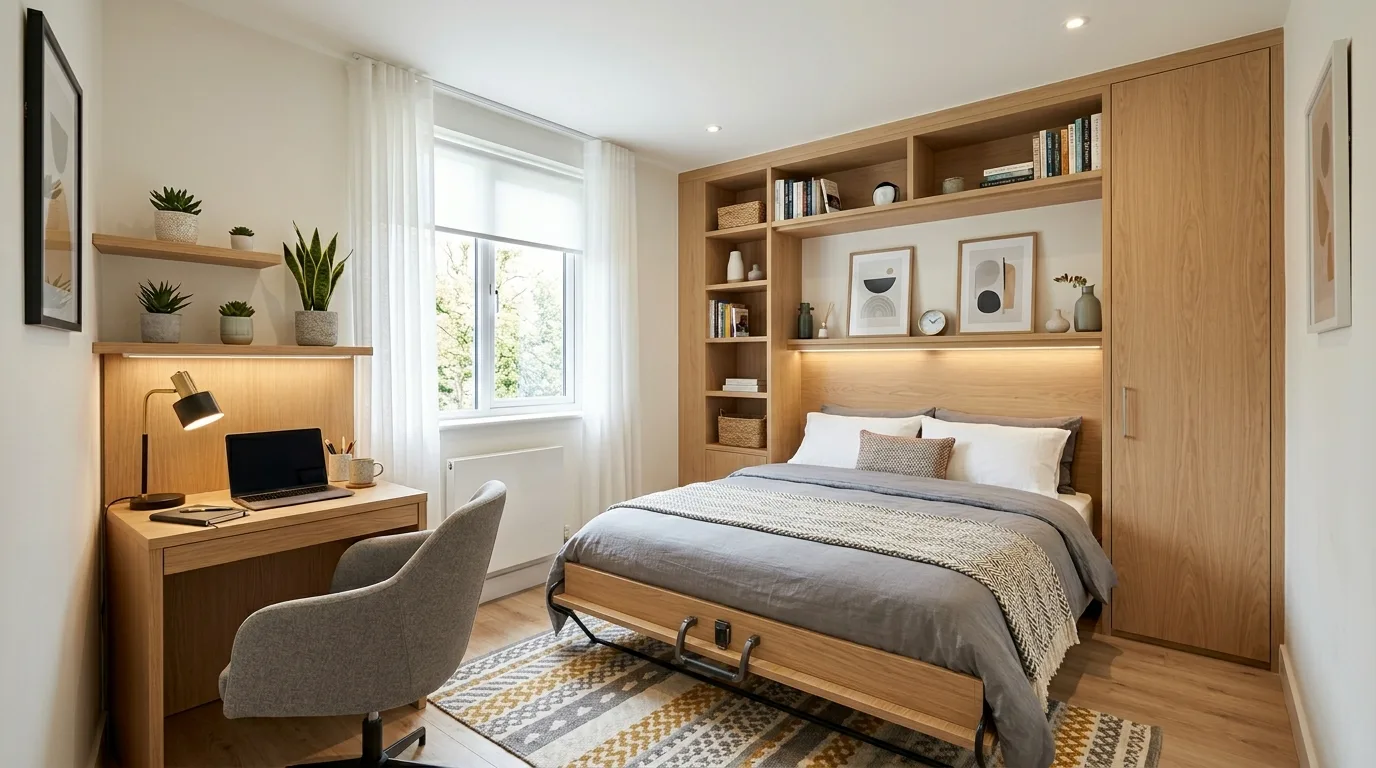
Use curtains to lift the eye
Hanging curtains a little higher can make the room feel taller and more elegant, which helps offset a smaller footprint.
Styling tip: Leave a little breathing room around the main pieces so the space does not feel crowded.
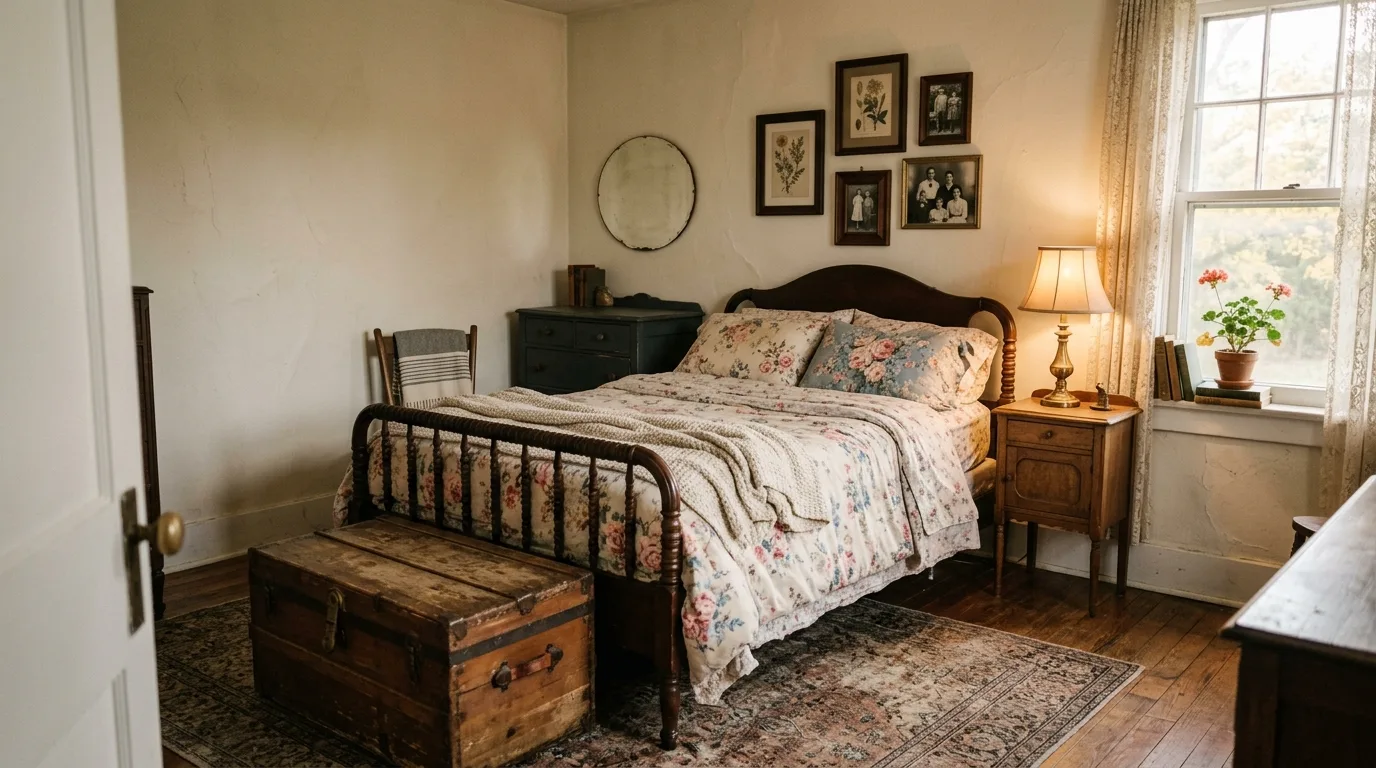
Edit the decor down to what matters
In a small bedroom, clutter shows quickly. Keeping the styling intentional helps the room feel restful instead of cramped.
Styling tip: Leave a little breathing room around the main pieces so the space does not feel crowded.
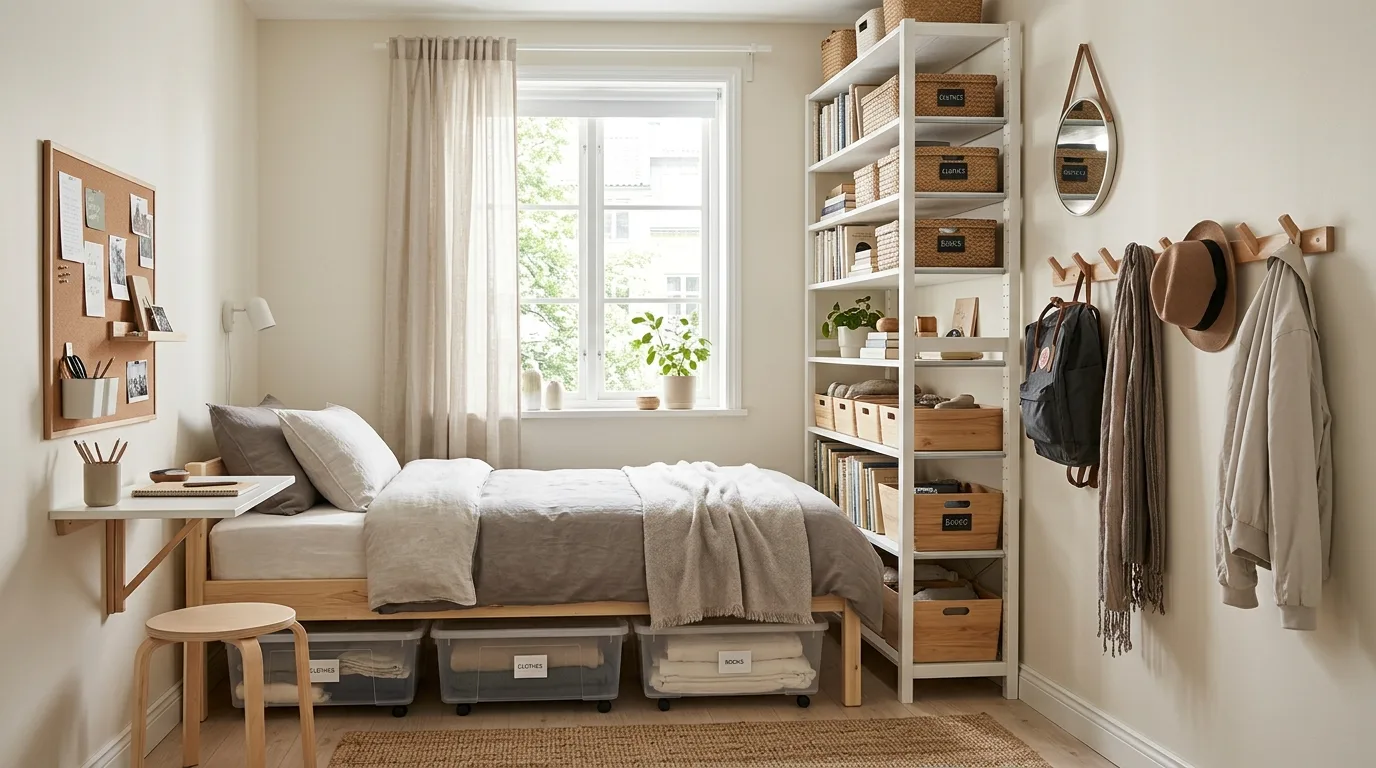
Make the room feel personal, not crowded
A small bedroom can still have warmth and character. The key is choosing a few meaningful details instead of too many competing ones.
Styling tip: Leave a little breathing room around the main pieces so the space does not feel crowded.
Final Takeaway
A small bedroom works best when every choice supports both function and visual breathing room. Start with small bedrooms feel better when layout and storage work together, then build around the pieces that make the space feel easier to use and nicer to look at every day.