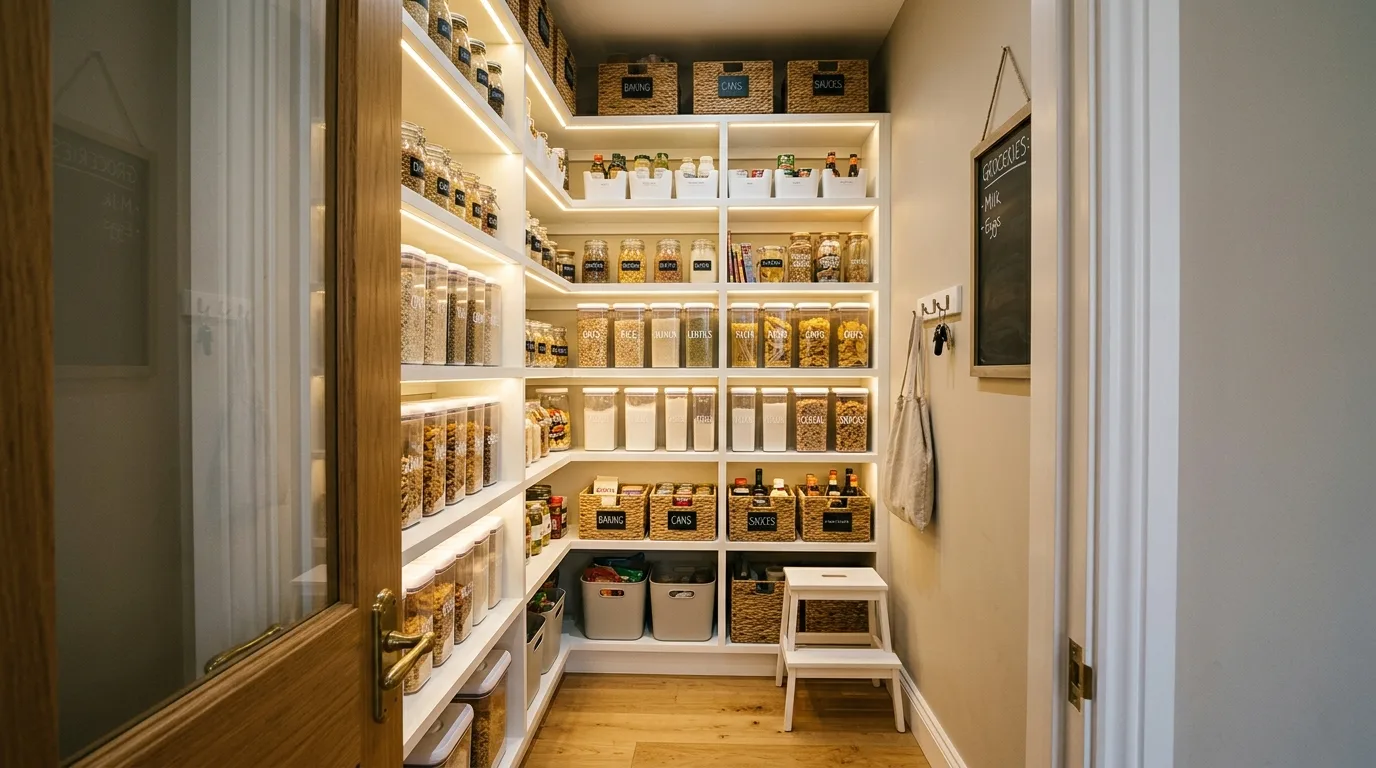
A small walk-in pantry can hold a surprising amount when the shelves are used intentionally. The goal is not to cram everything in, but to create zones that make food, appliances, and backups easier to store and easier to maintain.
Use clear shelf categories
Assigning shelves to snacks, baking, canned goods, breakfast, or dinner staples makes the pantry easier to navigate and easier to restock without confusion.
Styling tip: Use one contained storage zone so the room stays easier to maintain day to day.
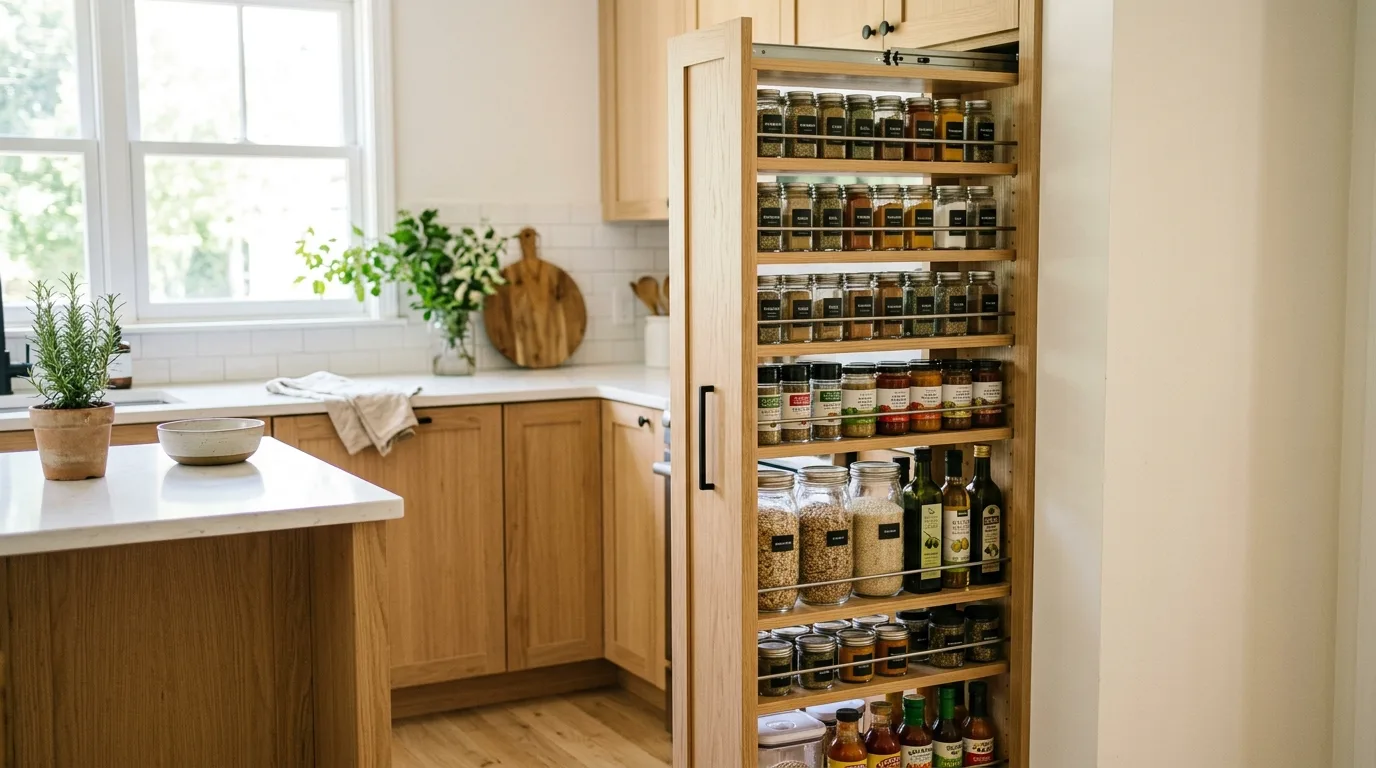
Add door storage for smaller items
The inside of the pantry door can hold spices, packets, wraps, or cleaning supplies, which frees the main shelves for bulkier goods.
Styling tip: Use one contained storage zone so the room stays easier to maintain day to day.
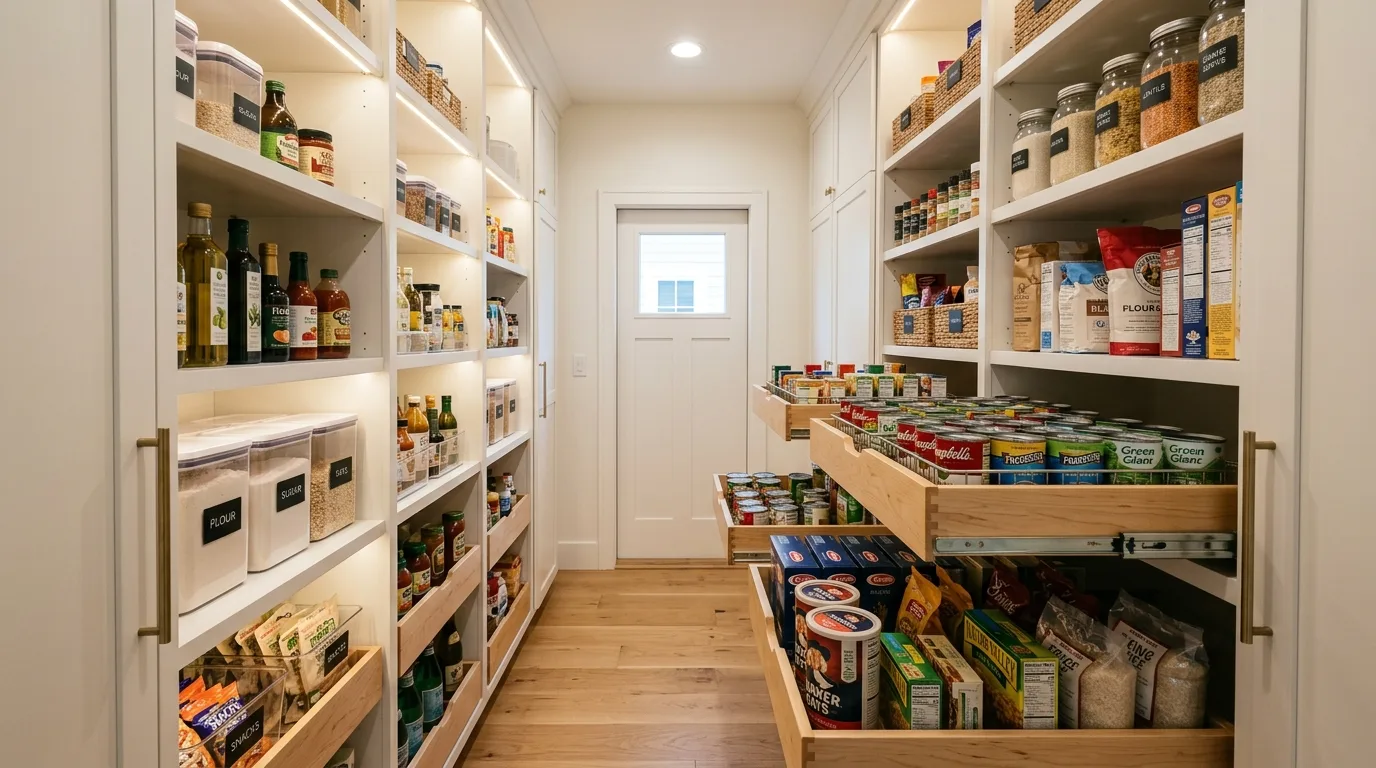
Use turntables in awkward corners
Lazy susans help hard-to-reach corners stay useful instead of becoming dead space. They are especially handy for sauces, oils, and condiments.
Styling tip: Leave a little breathing room around the main pieces so the space does not feel crowded.
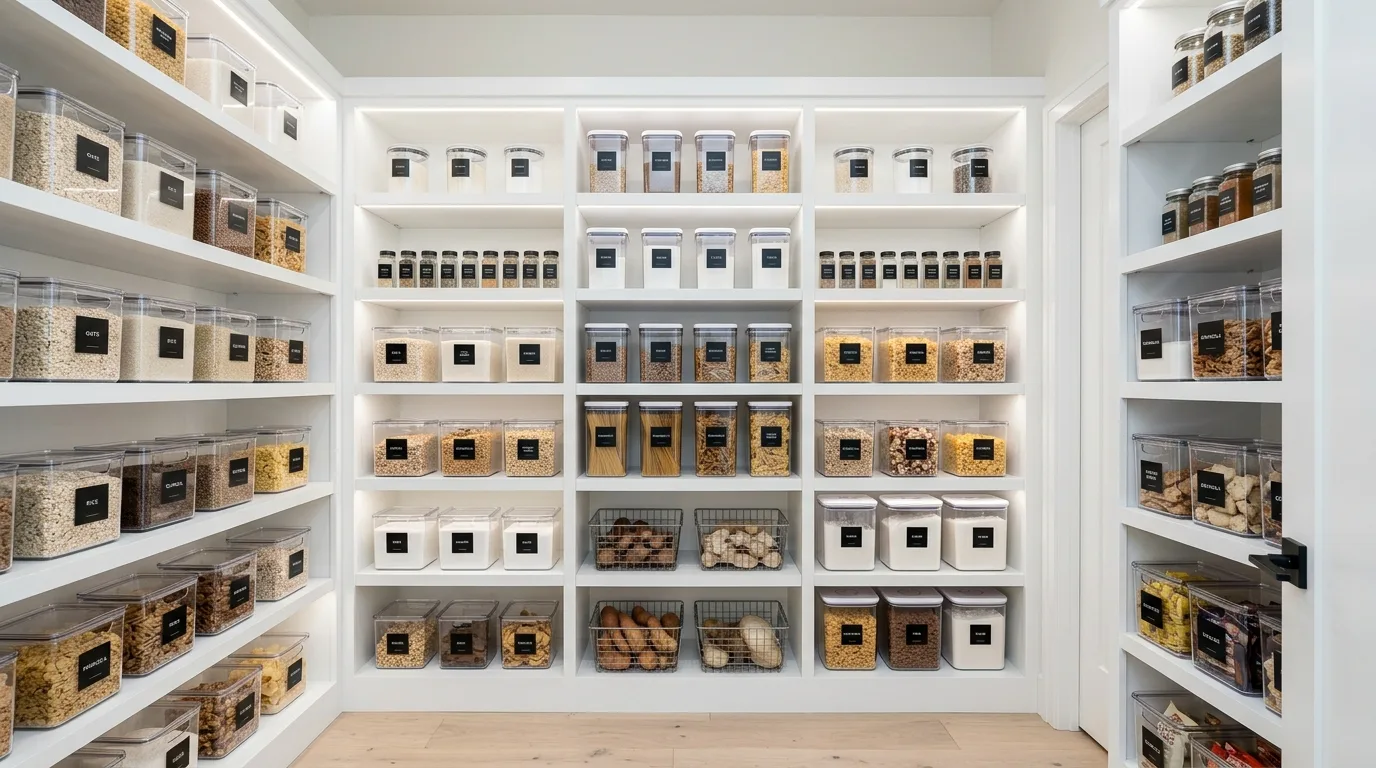
Stack bins for grab-and-go groups
Bins are useful for grouping similar items like bars, chips, or lunch supplies so they can be pulled out as one category instead of scattering across a shelf.
Styling tip: Use one contained storage zone so the room stays easier to maintain day to day.
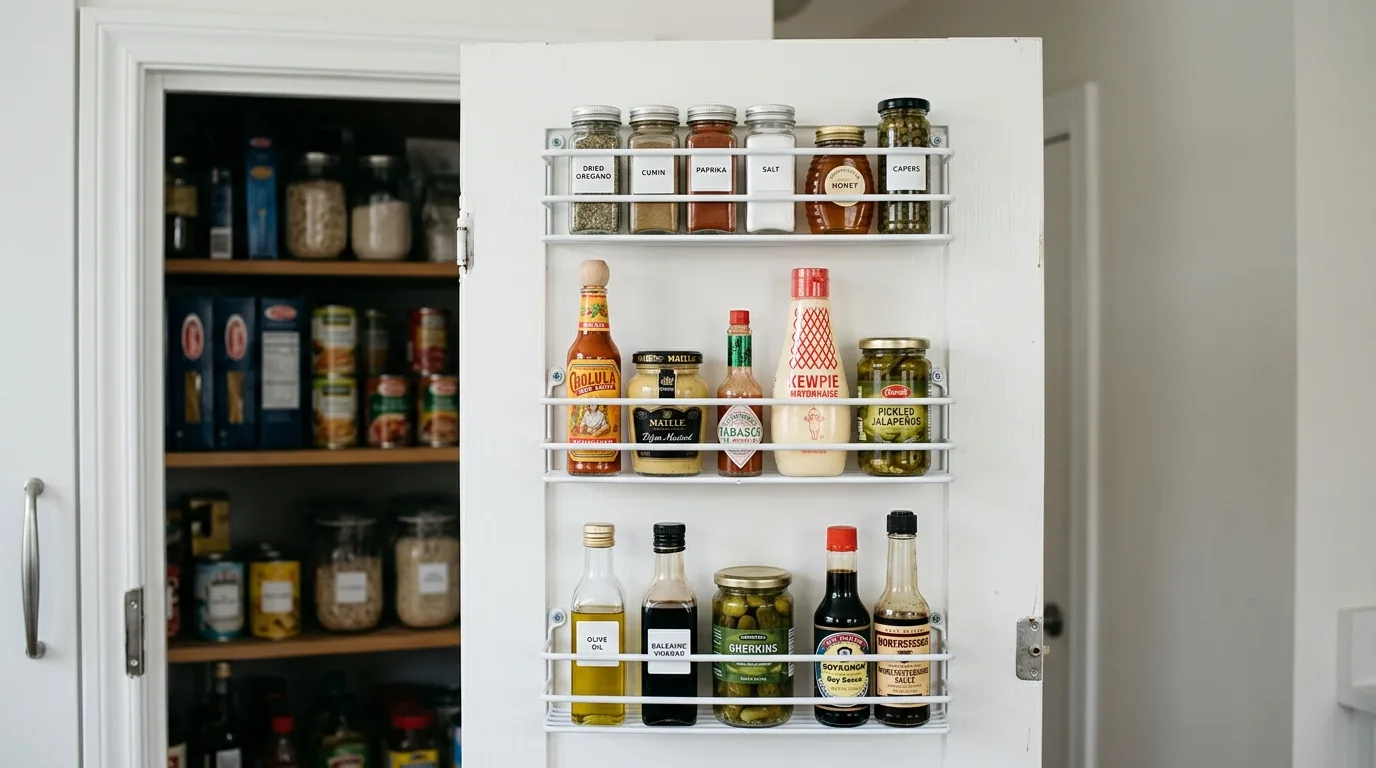
Add risers for cans and jars
Shelf risers let you see items in back rows instead of losing them behind the front row. Better visibility makes a pantry feel instantly more efficient.
Styling tip: Use one contained storage zone so the room stays easier to maintain day to day.
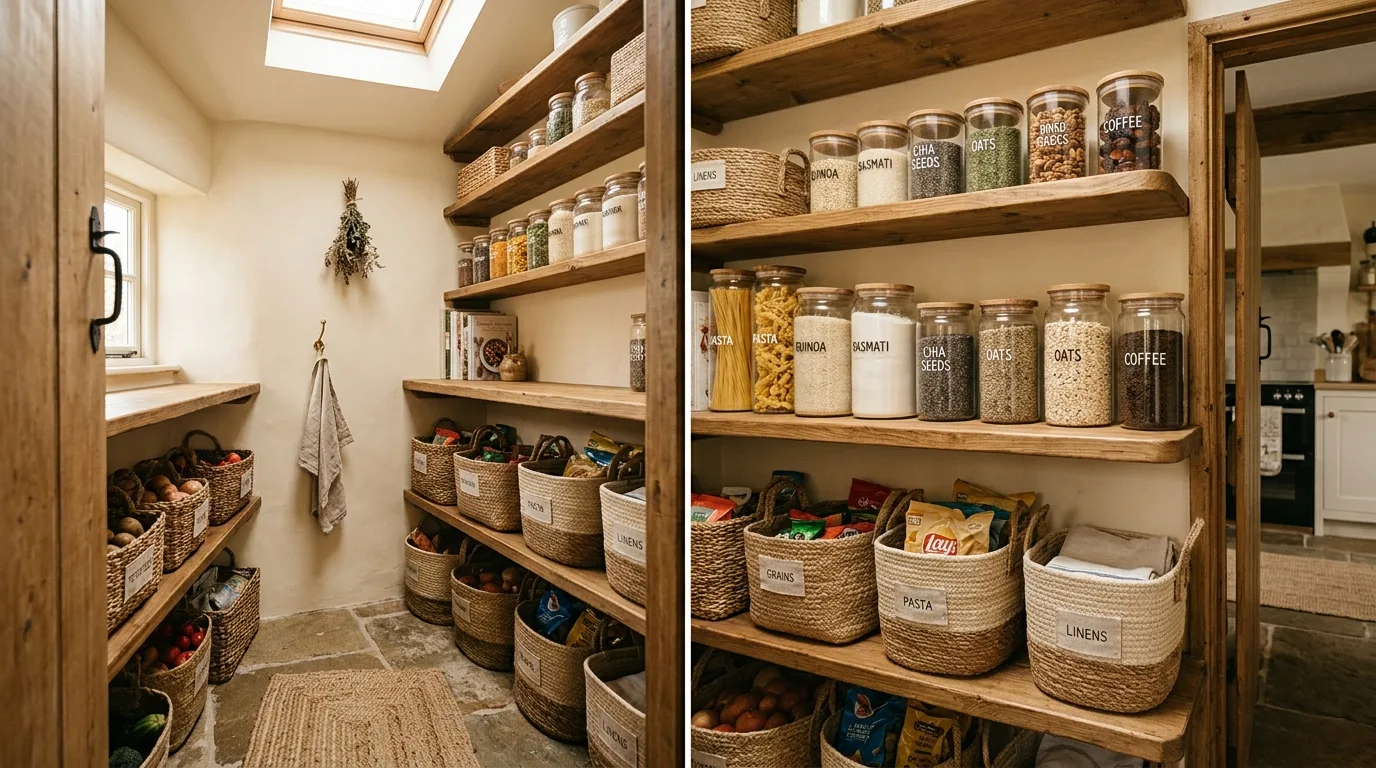
Store heavier items lower
Large containers, drinks, and appliances are easiest to manage on lower shelves where they feel stable and accessible. This also keeps upper shelves lighter and safer.
Styling tip: Keep the lighting warm and soft so the setup feels inviting instead of harsh.
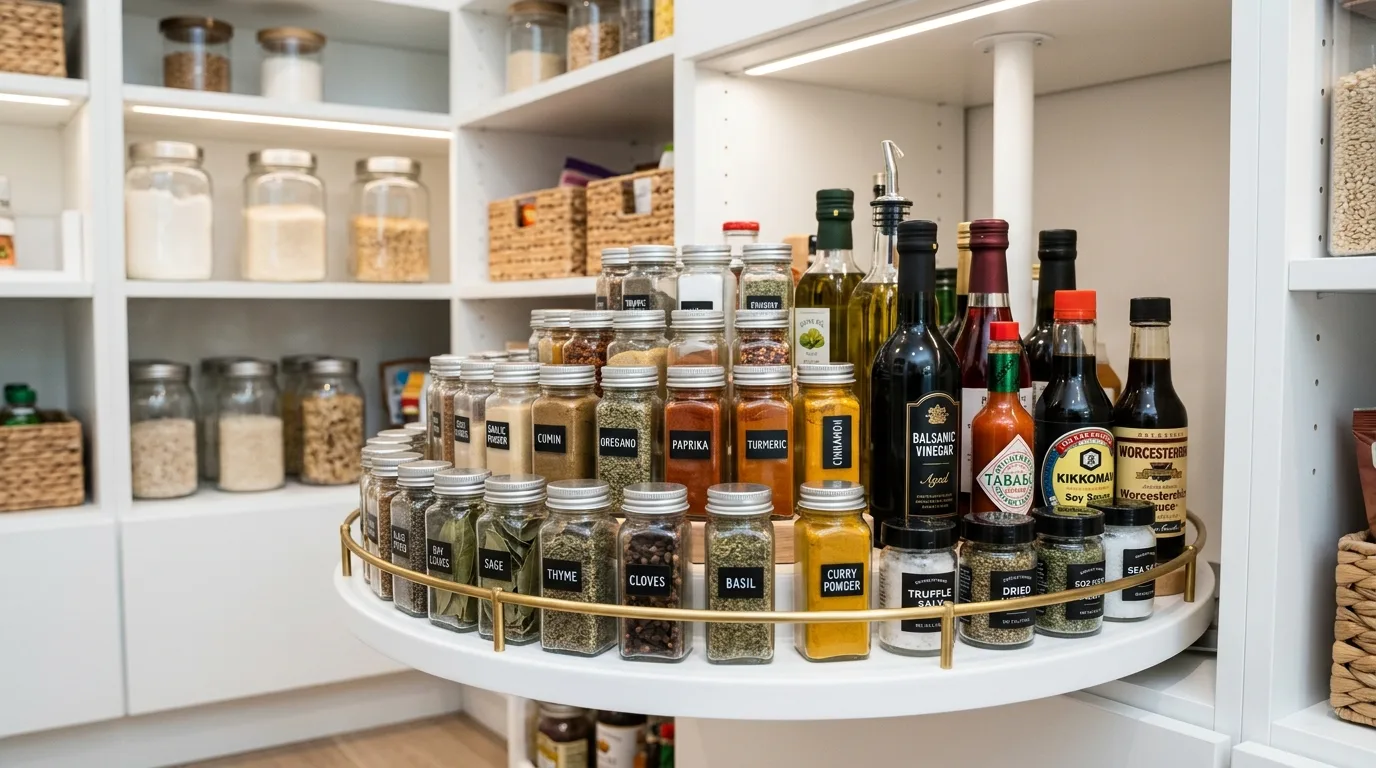
Use baskets for potatoes and onions
Breathable baskets keep produce organized while adding warmth and texture to the pantry. They also stop loose produce from rolling around.
Styling tip: Use one contained storage zone so the room stays easier to maintain day to day.
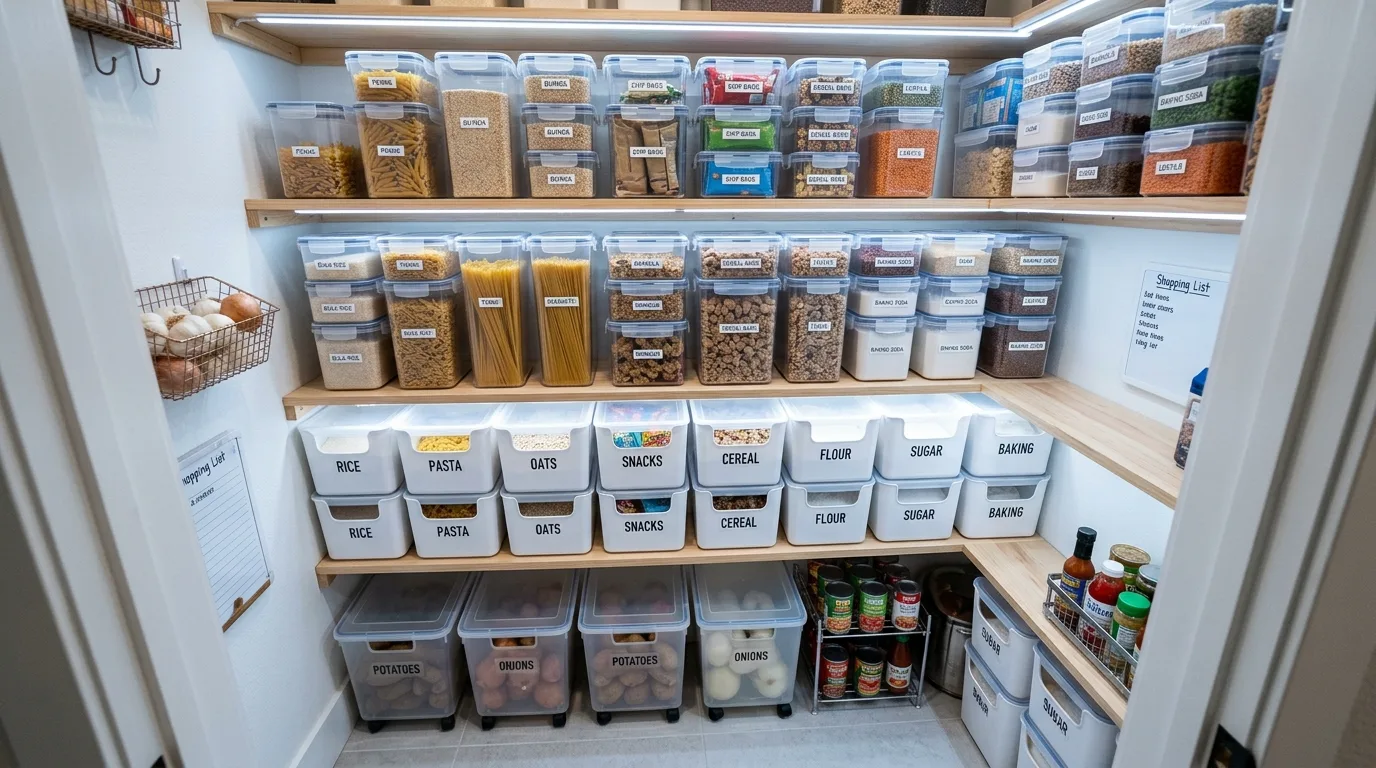
Keep backstock separate from daily use
A dedicated area for extra supplies prevents prime shelf space from getting overcrowded. It also makes grocery planning easier.
Styling tip: Use one contained storage zone so the room stays easier to maintain day to day.
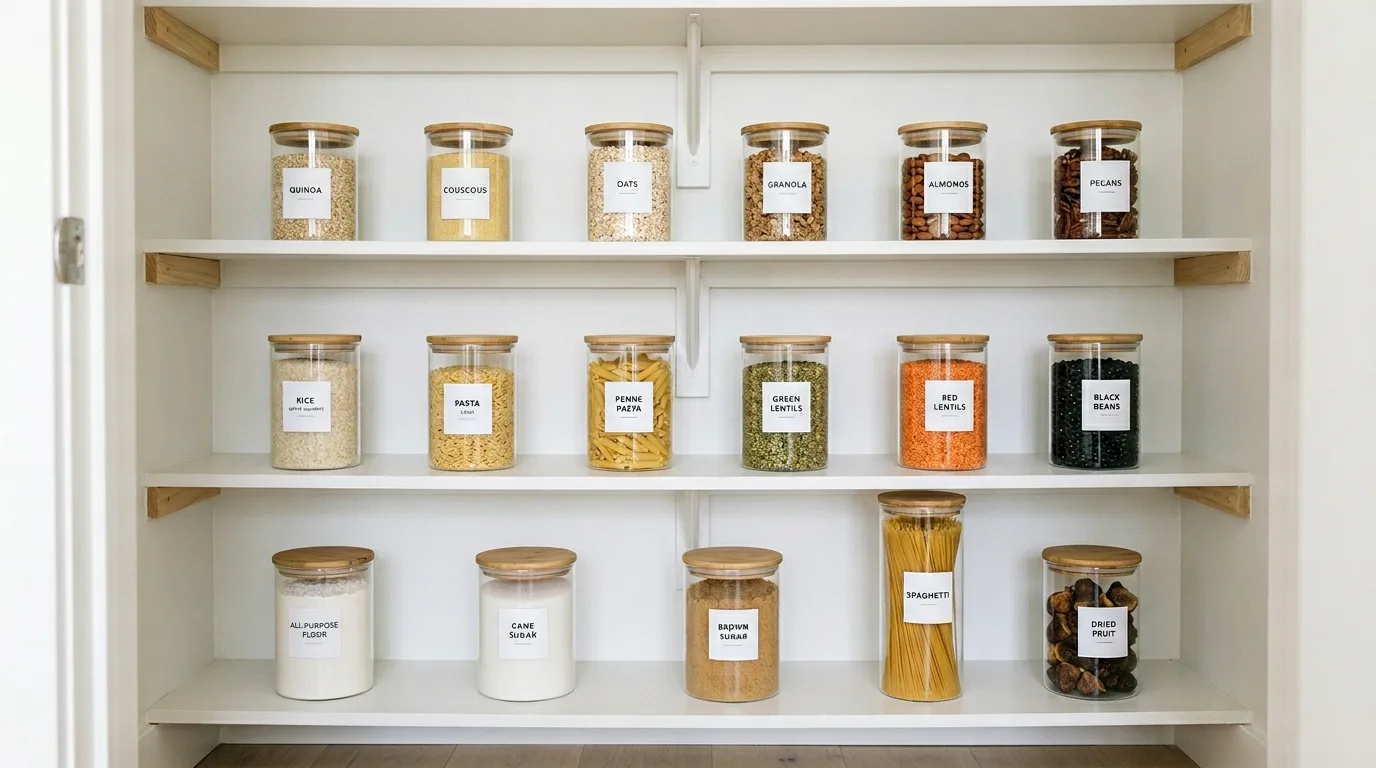
Decant dry goods when it helps
Uniform containers for flour, sugar, pasta, or cereal can save space and create a cleaner look. They are especially useful when boxes and bags are awkwardly shaped.
Styling tip: Focus on containers and labels matter most when the pantry is tight on space.
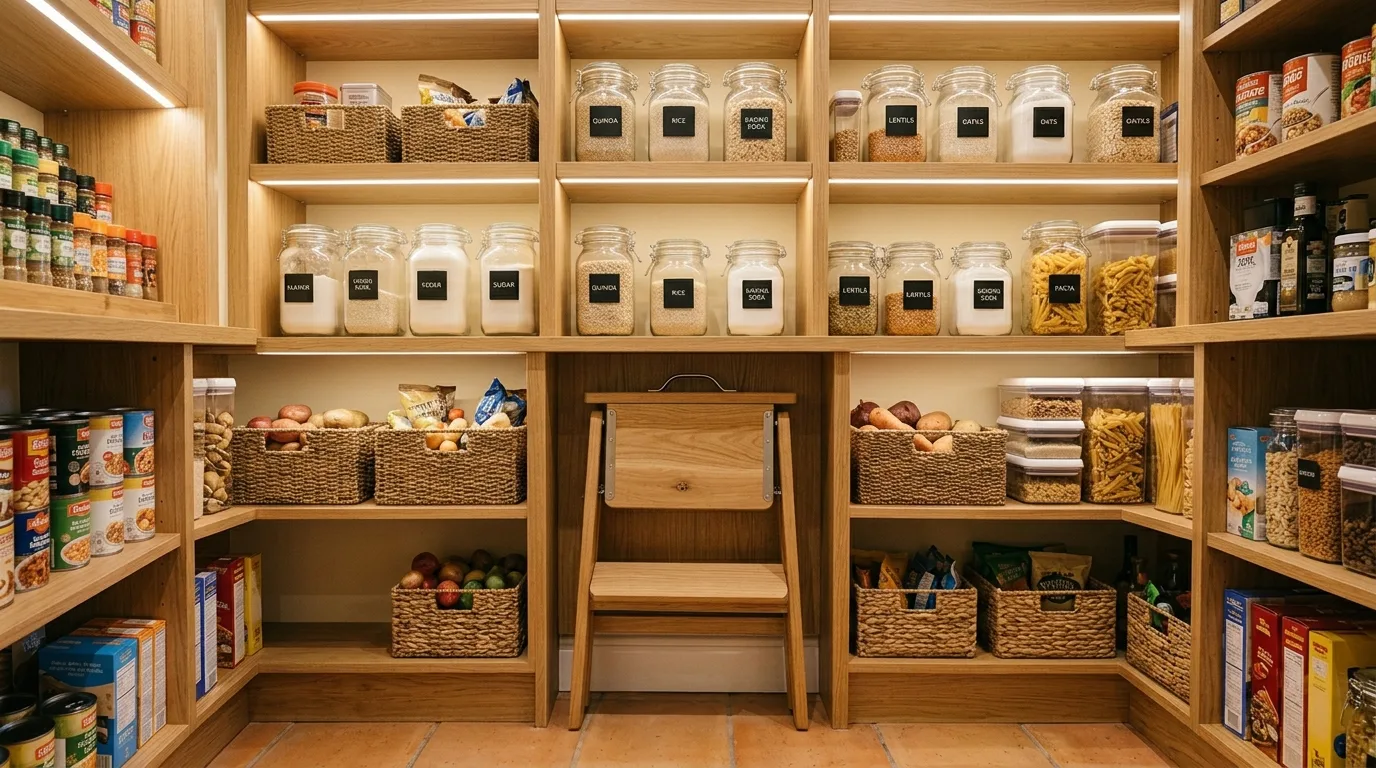
Use upper shelves for seasonal extras
Holiday baking items, party supplies, and less-used appliances can live higher up so the most reachable shelves stay reserved for daily essentials.
Styling tip: Give the wall feature enough blank space around it so it can read as a focal point.
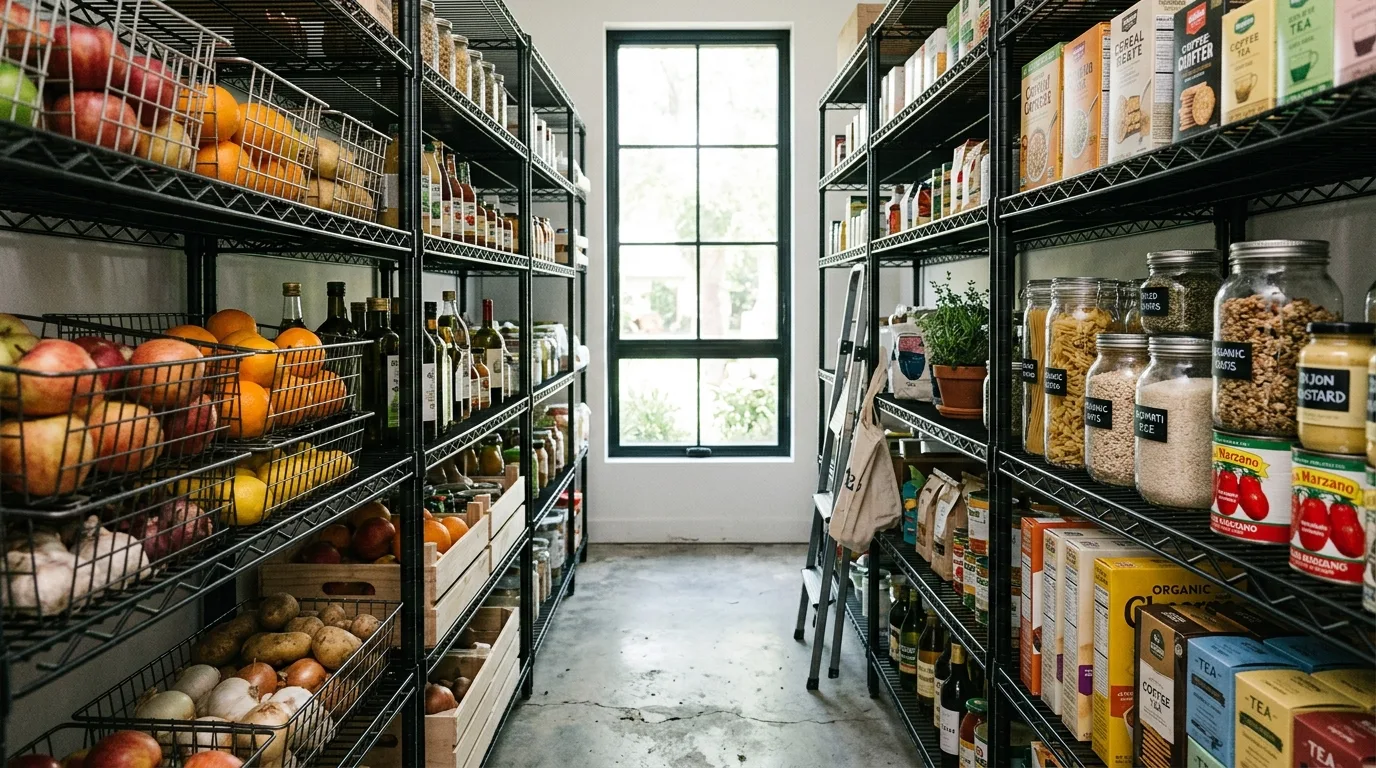
Label broadly and consistently
Clear labels reduce visual guesswork and help the whole household keep the pantry in order. Simplicity works better than overcomplicated systems.
Styling tip: Focus on organize by category and frequency of use.
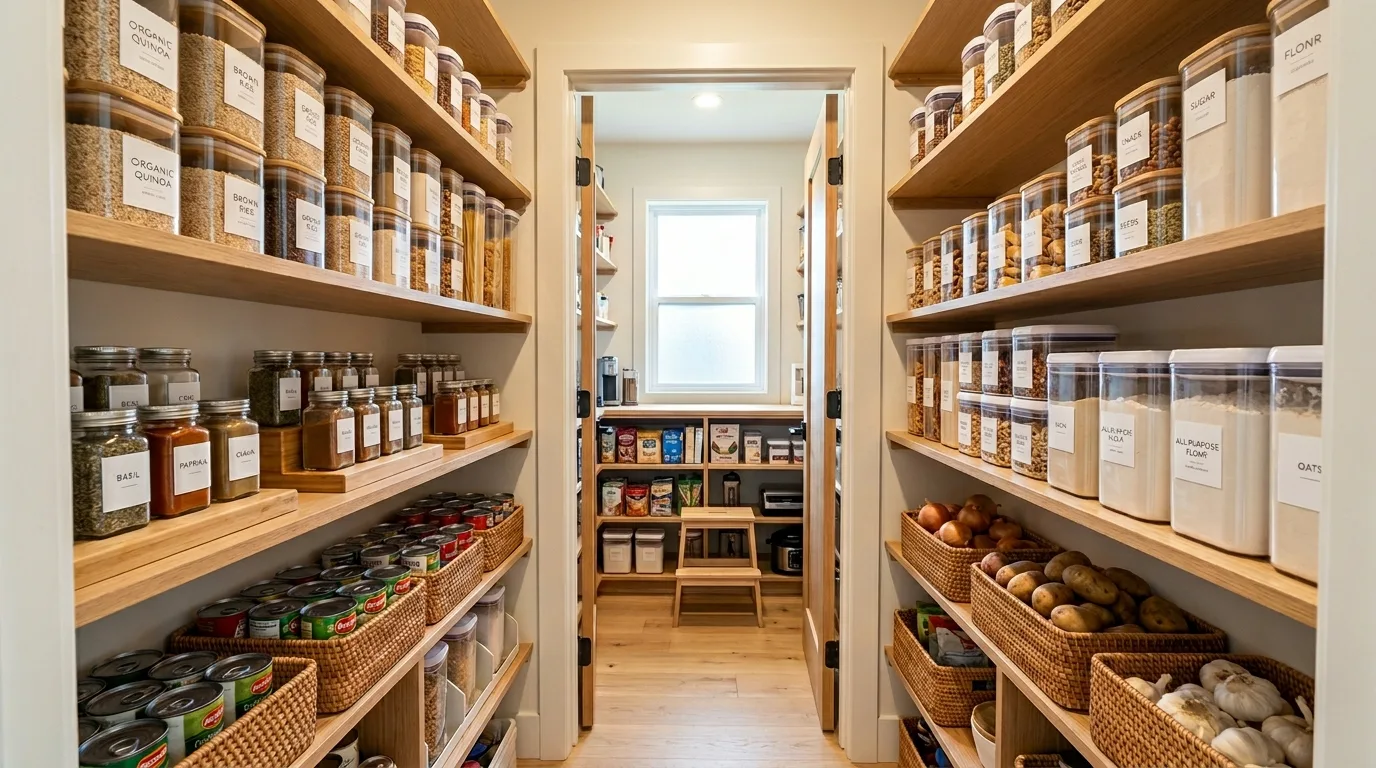
Leave a little breathing room
A pantry is easier to maintain when every shelf is not packed to the limit. A bit of empty space makes the whole setup feel calmer and more usable.
Styling tip: Use one contained storage zone so the room stays easier to maintain day to day.
Final Takeaway
A small walk-in pantry can hold a surprising amount when the shelves are used intentionally. Start with vertical layers so shelves hold more without feeling chaotic, then build around the pieces that make the space feel easier to use and nicer to look at every day.