A Thanksgiving centerpiece should help the table feel abundant and welcoming without taking over the meal. The best versions balance natural harvest beauty with candlelight and a little restraint so the whole table still feels comfortable to gather around.
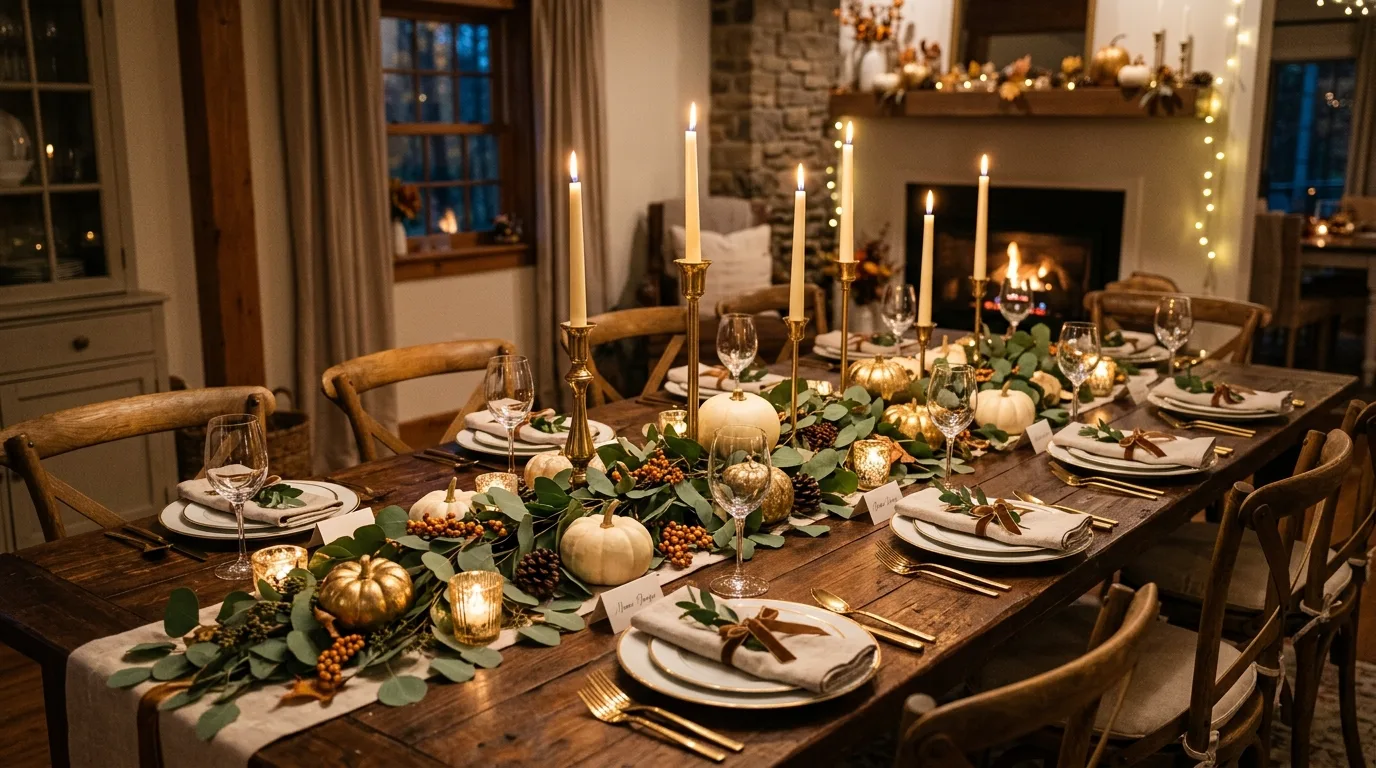
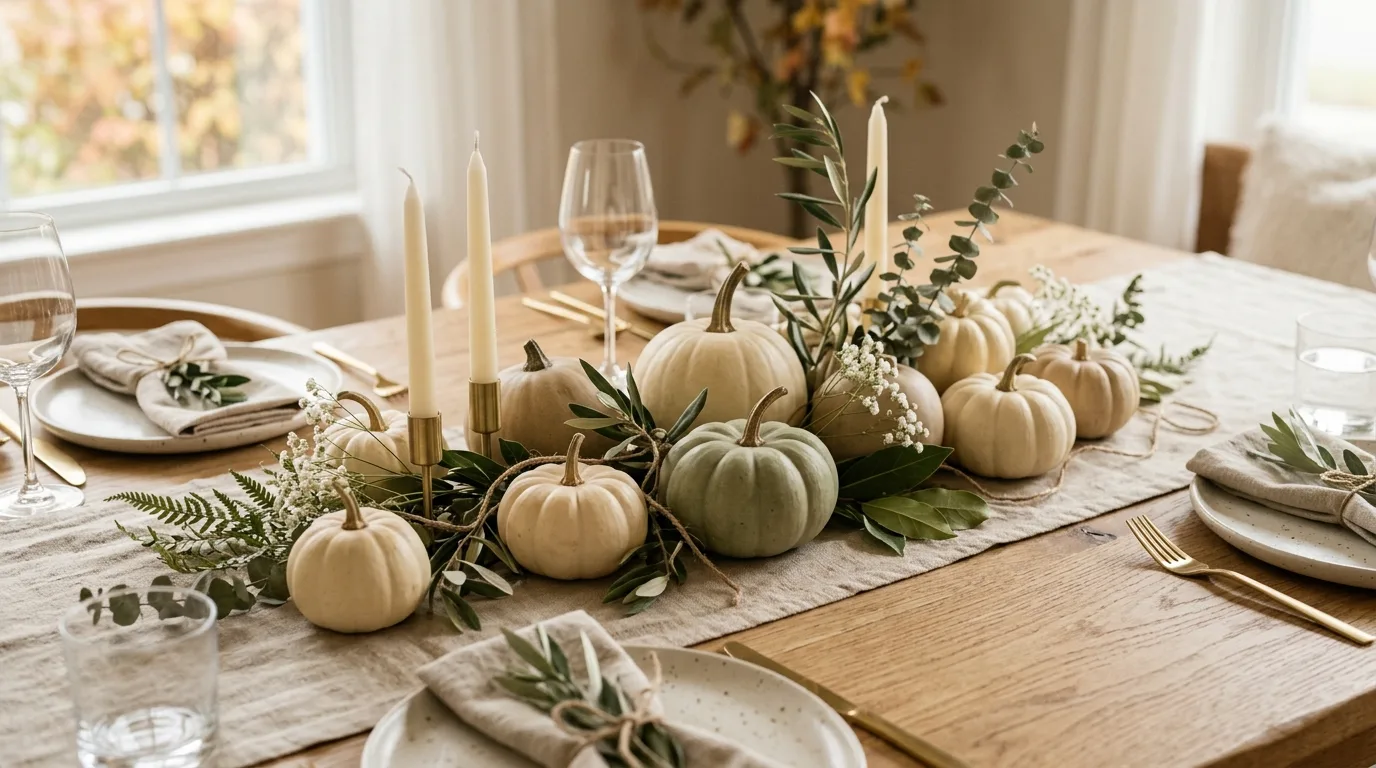
Use pumpkins in a softer palette
Cream, sage, muted orange, or dusty green pumpkins often feel more elegant than very bright tones and are easy to mix with candles and greenery.
Styling tip: Layer one or two soft textures instead of adding too many decorative extras.
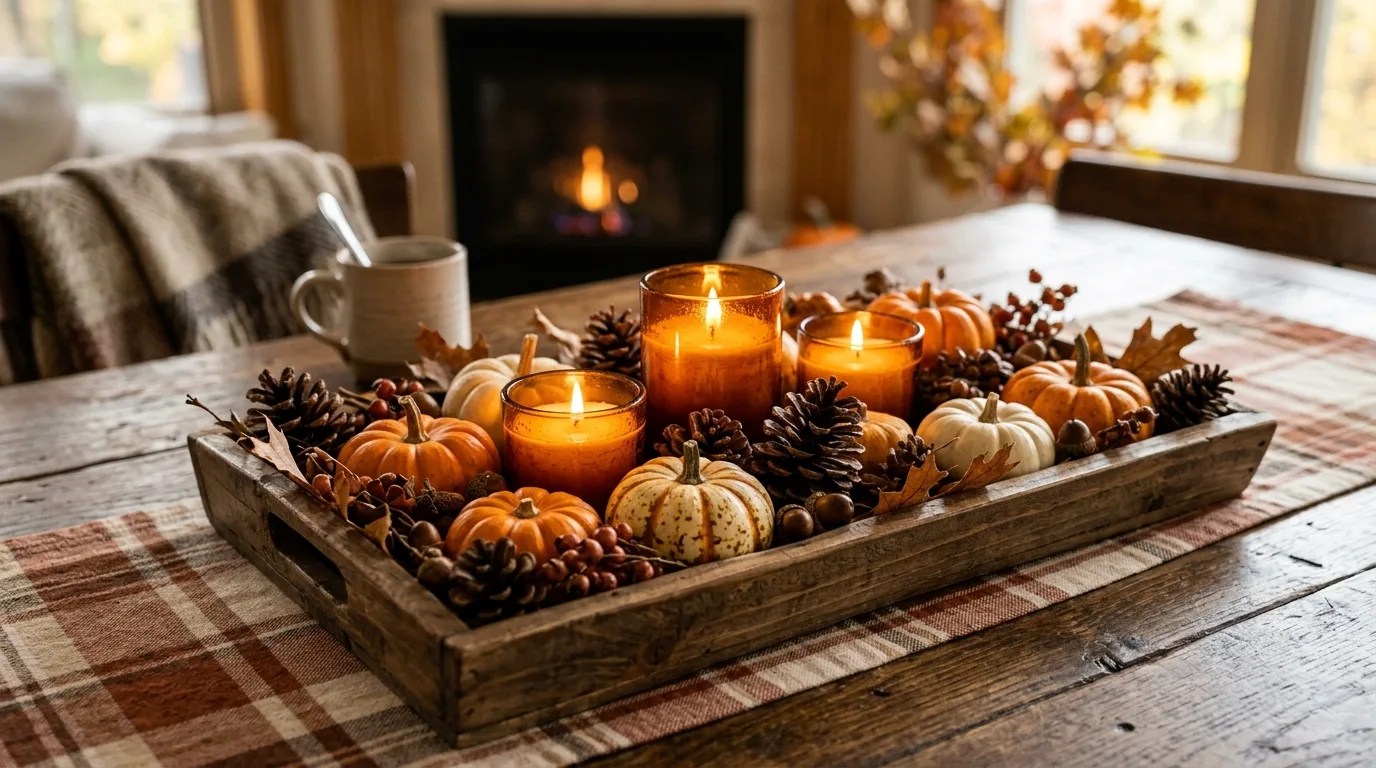
Add taper candles for warmth
Candles create the glow that makes a Thanksgiving table feel especially welcoming. Mixed heights often look rich without trying too hard.
Styling tip: Keep the lighting warm and soft so the setup feels inviting instead of harsh.
Style a garland of greenery and leaves
A long greenery base can help the whole table feel connected and full, especially when layered with smaller fall accents.
Styling tip: Leave a little breathing room around the main pieces so the space does not feel crowded.
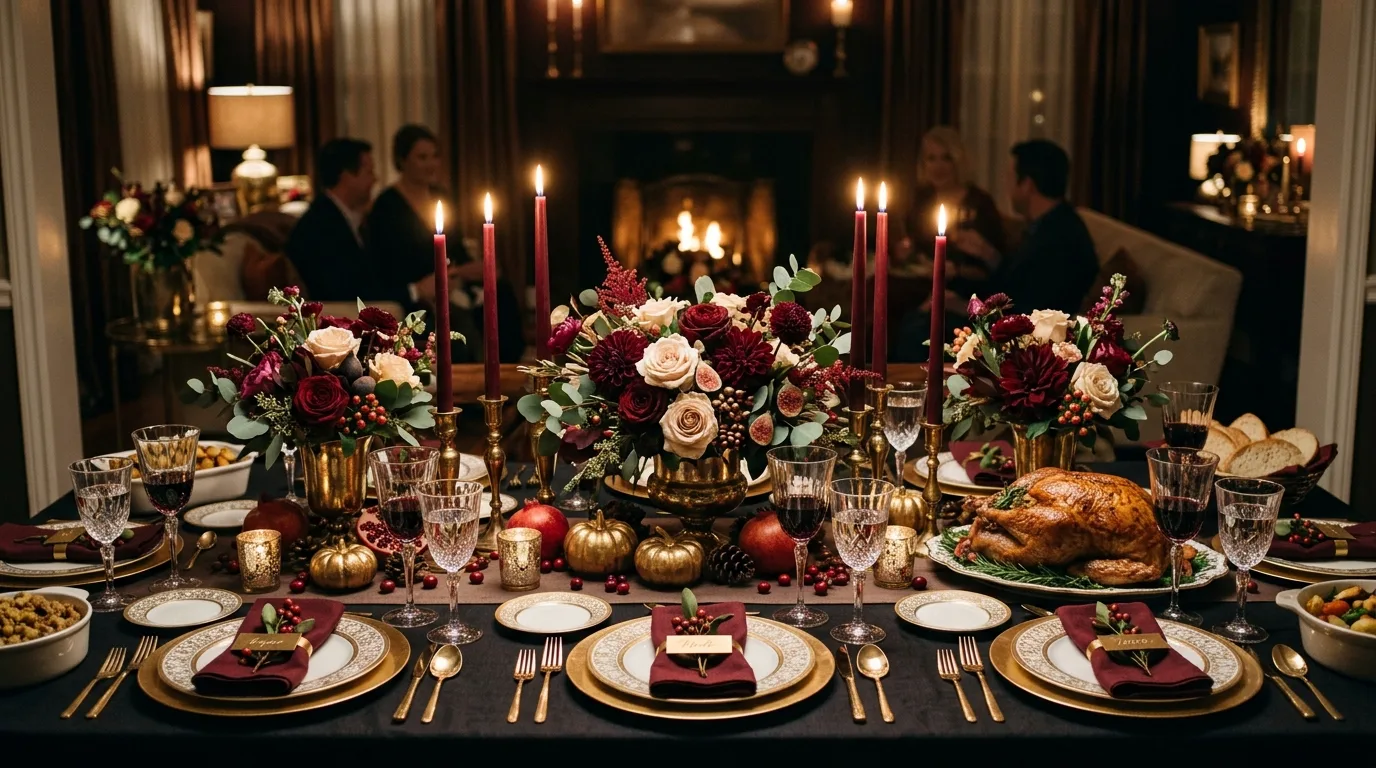
Use fruit for richness
Pears, figs, grapes, and pomegranates make the centerpiece feel abundant and harvest-inspired while also adding beautiful color variation.
Styling tip: Repeat the main color in a few places so the look feels connected instead of random.
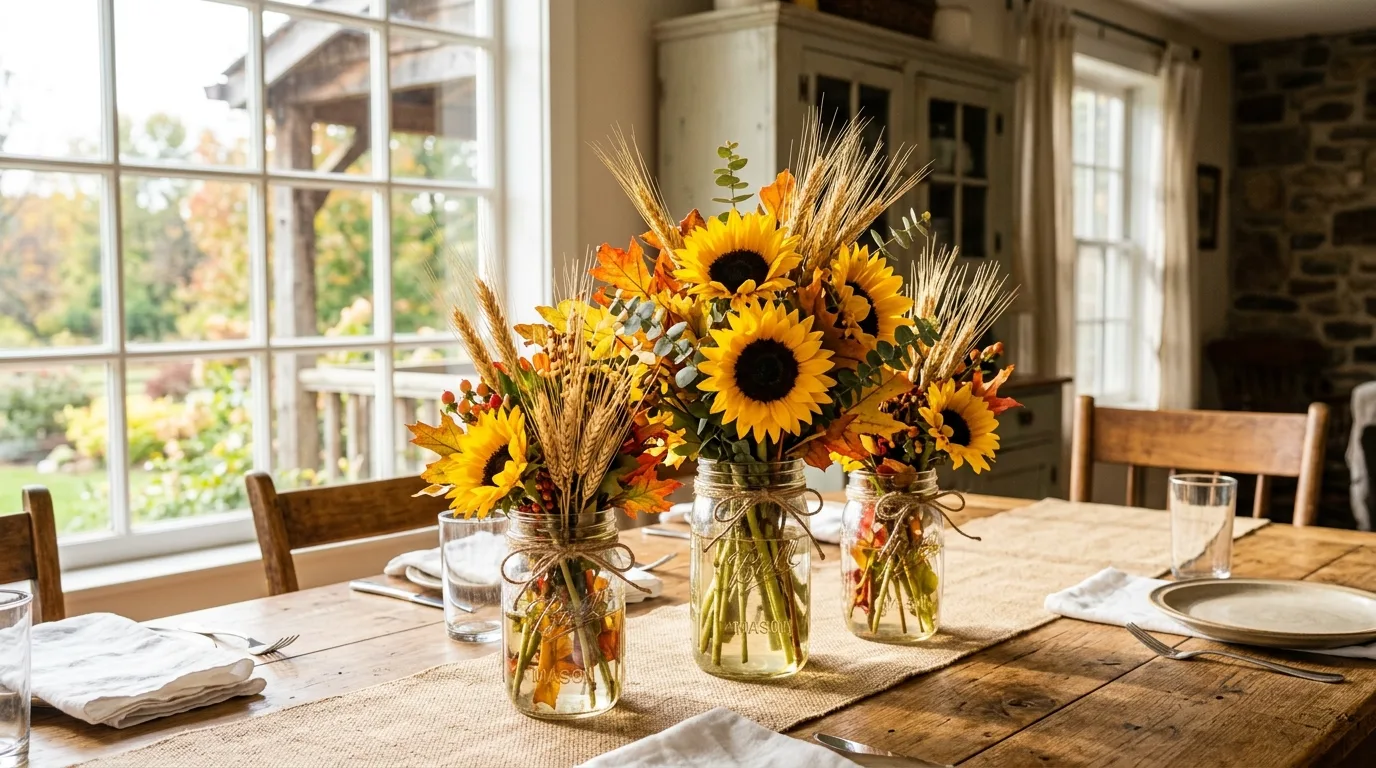
Try a compote bowl arrangement
A lifted floral or fruit arrangement in a compote bowl brings elegance and helps the centerpiece feel more composed.
Styling tip: Focus on natural texture and soft lighting create the strongest mood.
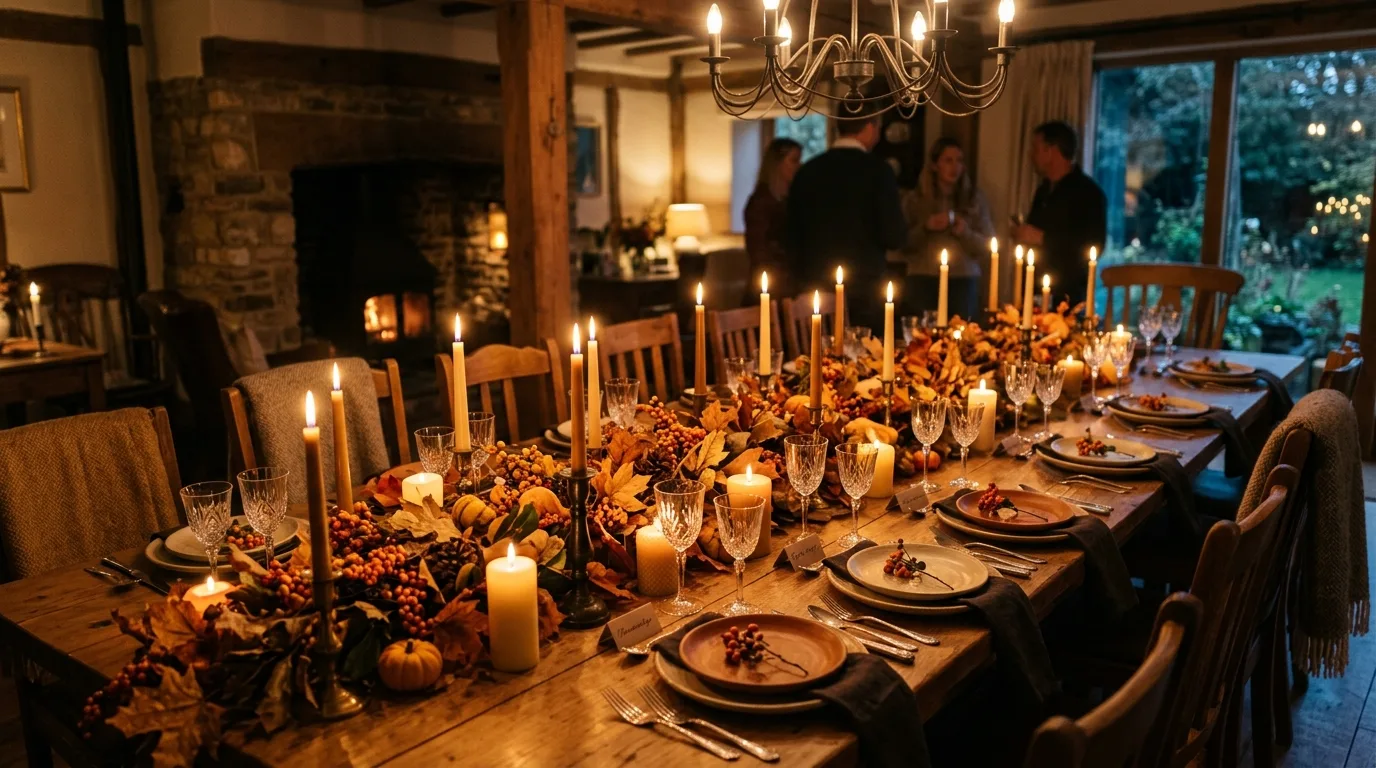
Mix ceramics with natural wood
Smooth pottery, wood boards, and woven chargers create a lovely balance of refinement and rustic warmth on a Thanksgiving table.
Styling tip: Repeat the same natural material in a few spots to make the room feel more intentional.
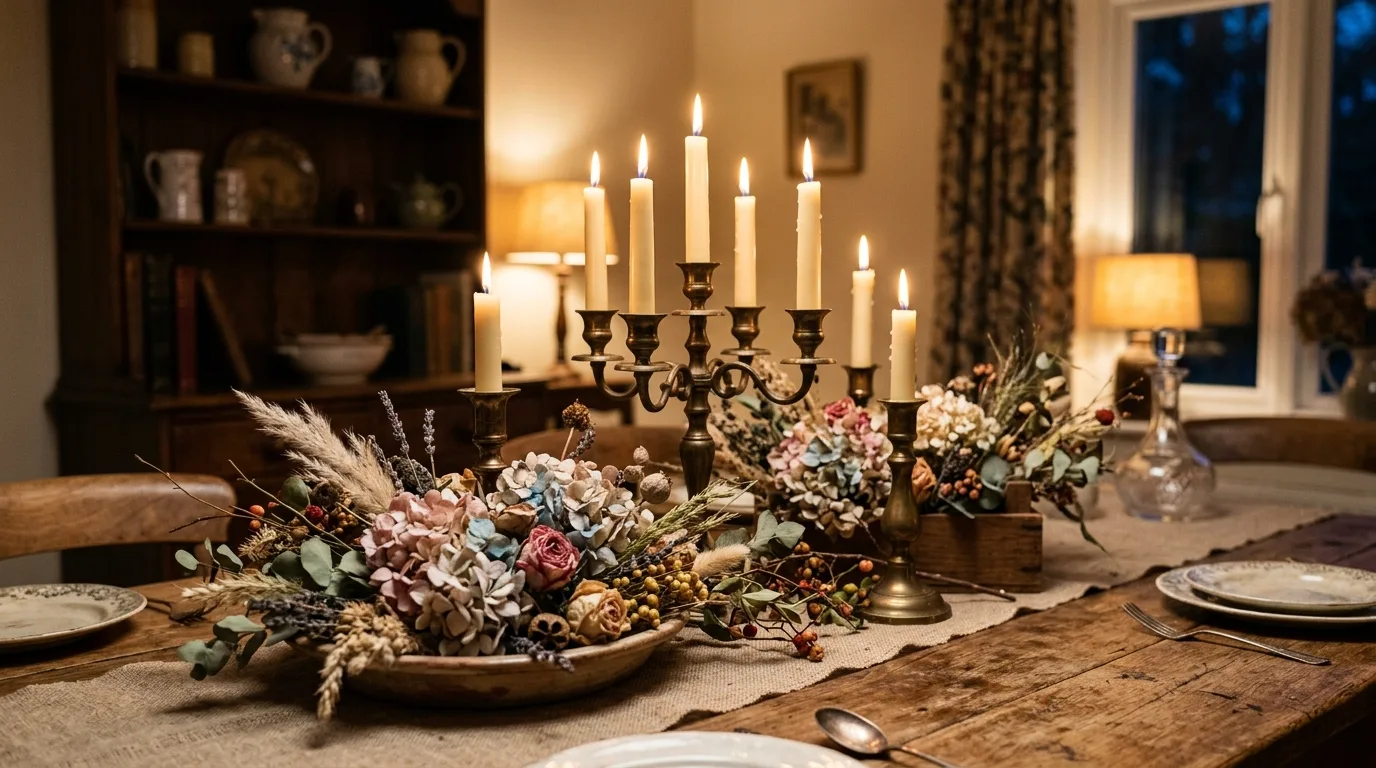
Keep florals loose and seasonal
Fall flowers and branches feel most natural when they are a little airy and organic. That gathered quality suits Thanksgiving beautifully.
Styling tip: Focus on thanksgiving centerpieces should feel warm and generous, not crowded.
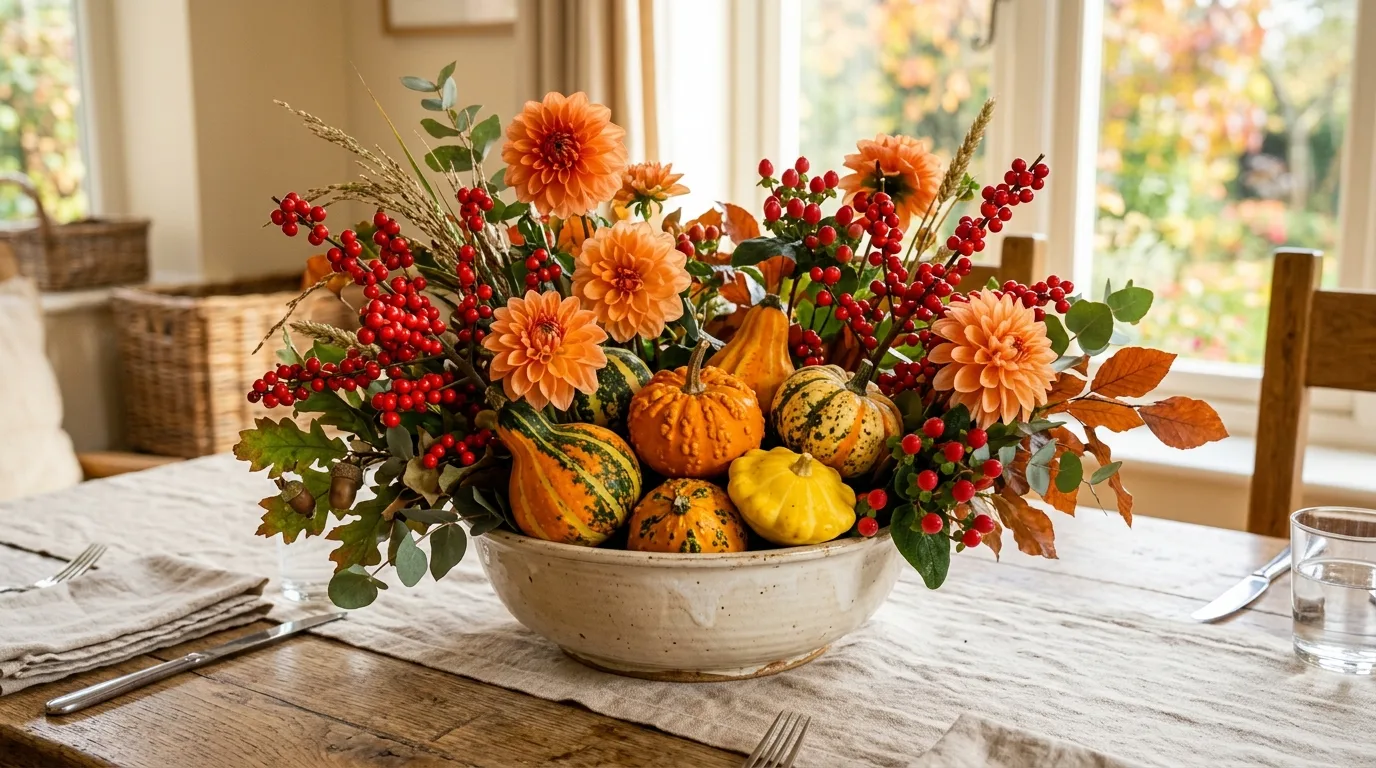
Use a lower centerpiece if the table is narrow
Guests should still be able to talk comfortably across the table. Lower arrangements often work better than very tall ones for that reason.
Styling tip: Keep the surface edited so the functional pieces still have room to look styled.
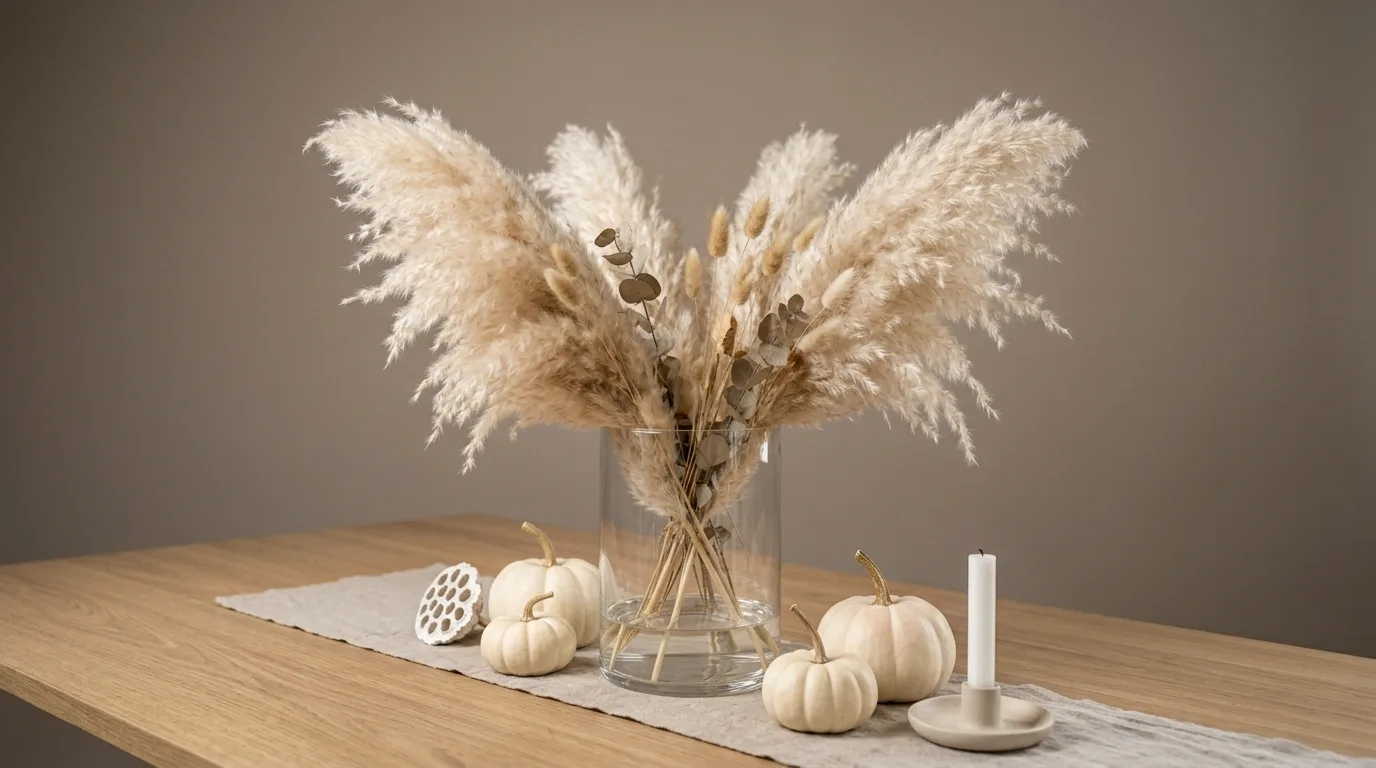
Repeat one element at each place setting
Tiny pumpkins, herbs, or a small leaf detail at each seat can help the centerpiece feel connected to the whole table.
Styling tip: Leave a little breathing room around the main pieces so the space does not feel crowded.
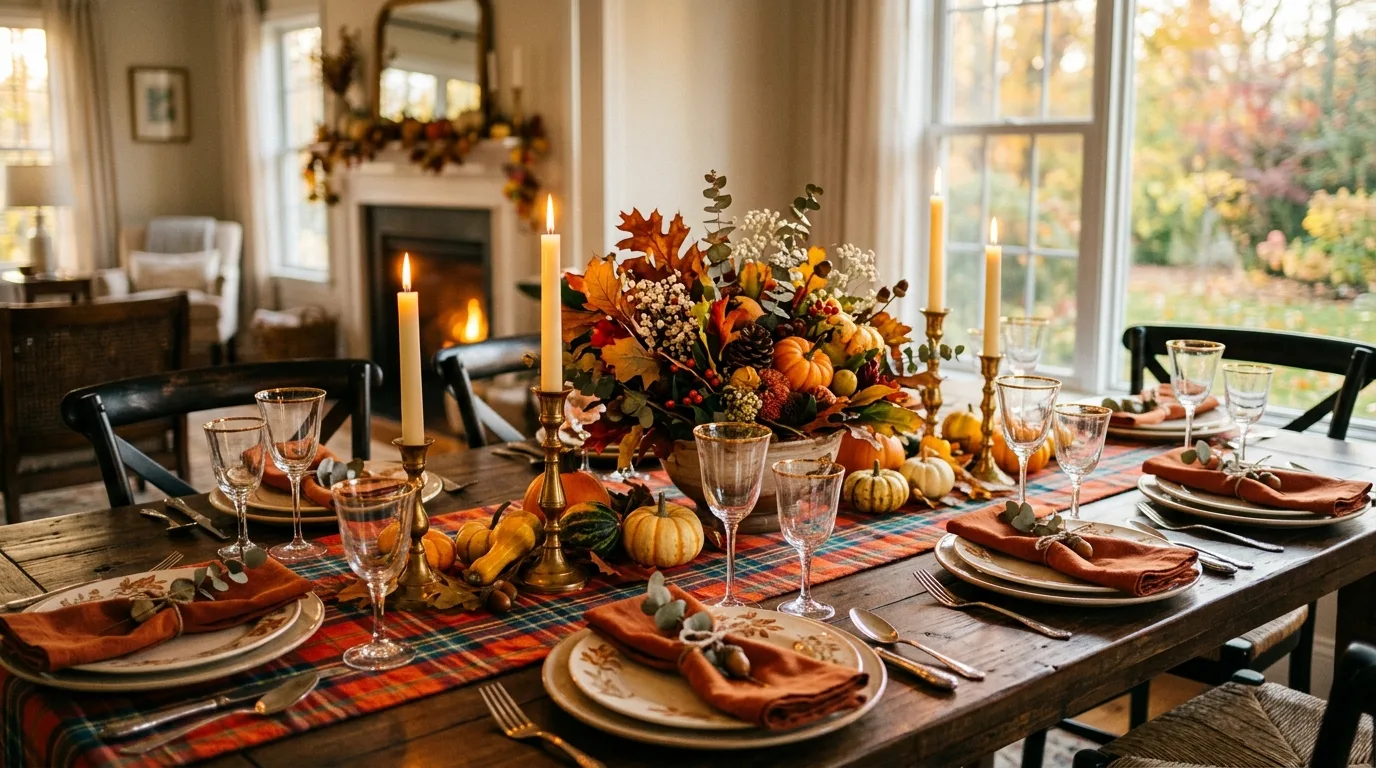
Let the centerpiece support the meal
A great Thanksgiving table leaves enough room for serving dishes, glasses, and conversation. Beauty should work with function here.
Styling tip: Keep the surface edited so the functional pieces still have room to look styled.
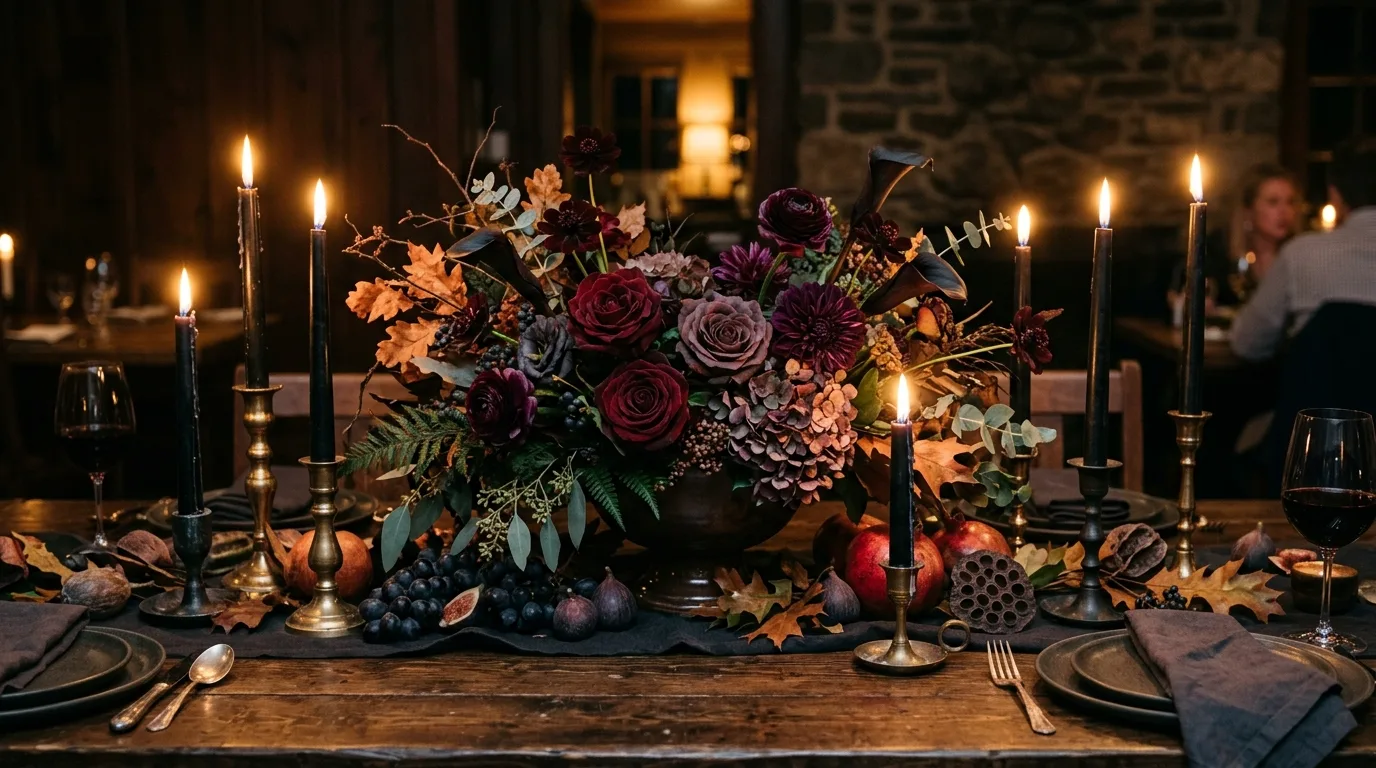
Choose one fall palette and stick to it
A controlled palette makes the centerpiece feel calmer and more elegant. Too many competing tones can make the table feel busy.
Styling tip: Keep the surface edited so the functional pieces still have room to look styled.
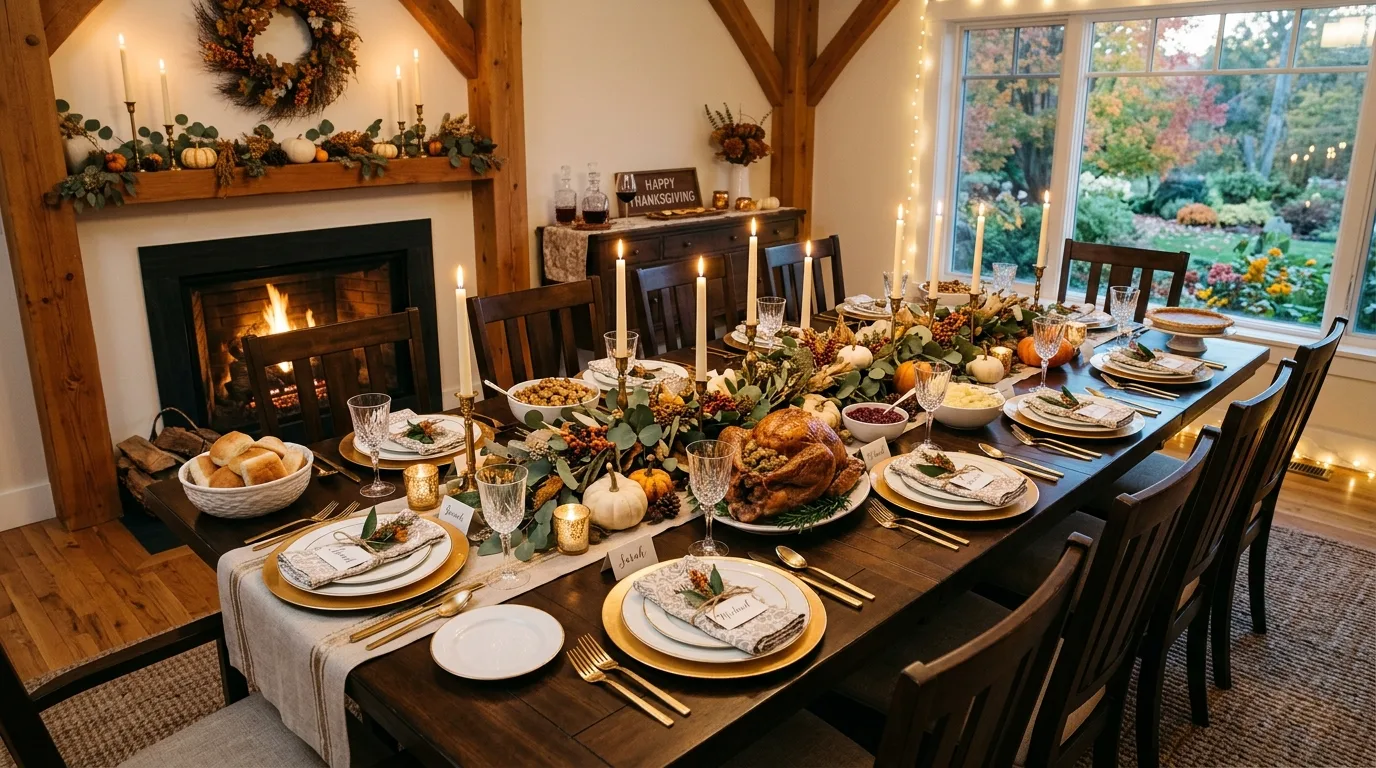
Aim for warm and generous, not overfilled
Thanksgiving decor feels best when it suggests abundance without crowding the table. A little breathing room helps every element look better.
Styling tip: Keep the surface edited so the functional pieces still have room to look styled.
Final Takeaway
A Thanksgiving centerpiece should help the table feel abundant and welcoming without taking over the meal. Start with thanksgiving centerpieces should feel warm and generous, not crowded, then build around the pieces that make the space feel easier to use and nicer to look at every day.